





How Packet-Derived Telemetry Satisfies Federal Logging Mandates
Aviz Deep Network Observability and OMB M-21-31 / NIST SP 800-92r1
Federal agencies face a converging set of logging mandates. OMB Memorandum M-21-31 established a maturity model for event logging and investigative capability across civilian agencies. NIST Special Publication 800-92r1, "Cybersecurity Log Management Planning Guide," provides the technical framework behind it and explicitly connects logging quality to Zero Trust Architecture (ZTA) trust algorithm decisioning.
Both documents share a common problem statement: traditional device-generated and application-generated logs are insufficient. Adversaries know how to manipulate, suppress, and spoof them. The logging infrastructure itself has become an attack surface.
This guide explains where Aviz Deep Network Observability (DNO) fits in that picture specifically, how the Aviz pipeline delivers the packet-derived telemetry that federal logging frameworks increasingly demand, and how that telemetry feeds both your security detection stack and your ZTA trust algorithm.
The federal logging mandate, in plain terms
OMB M-21-31 (August 2021) "Improving the Federal Government's Investigative and Remediation Capabilities Related to Cybersecurity Incidents." Issued in the wake of the SolarWinds and Microsoft Exchange incidents, M-21-31 directs federal civilian agencies (CFO Act agencies) to advance their logging maturity through four levels:
- EL0 Event Logging Not Performed
- EL1 Basic Logging (network-derived records, passive DNS, reliable IP-to-MAC mapping, 72-hour full packet capture)
- EL2 Intermediate Logging (encrypted traffic visibility, decryption capability)
- EL3 Advanced Logging (cloud and East-West virtual visibility, automation, and orchestration)
Agencies were required to reach EL1 within 12 months, EL2 within 18 months, and EL3 within 24 months of the memo's issuance. The requirements remain in effect and feed directly into Zero Trust maturity assessments under M-22-09 and subsequent OMB guidance.
NIST SP 800-92r1 (Initial Public Draft, 2023 finalization ongoing) the technical companion to M-21-31. It expands the definition of what counts as a log, connects logging directly to ZTA, and raises a point that is increasingly central to federal security thinking: not all logs are created equal. Device and application logs can be tampered with. Packet-derived telemetry observed at the wire level, independent of the devices being monitored provides a ground-truth record that is significantly harder for an adversary to manipulate.
The problem with device-generated logs alone
The MITRE ATT&CK framework documents the specific techniques adversaries use to defeat logging:
T1070 Indicator Removal:
Deleting or clearing log files, event logs, and audit trails on compromised hosts.
T1562 Impair Defenses:
Disabling logging services, suppressing audit records, or reducing logging verbosity on compromised endpoints.
How Aviz DNO Maps to the M-21-31 Maturity Levels.
EL1 Basic Logging
M-21-31 EL1 requires agencies to:
- Provide network-derived syslog records
- Enable passive DNS monitoring (offloading DNS server reporting burden)
- Enable 72-hour full packet capture capability
- Forward events for centralized storage
Aviz delivers all of these through the Aviz Packet Broker (APB) and Aviz Elastic Node.
The APB captures traffic at line rate from 1G to 400G across physical, virtual, and hybrid environments. It produces packet-derived metadata flow records, DNS visibility, session data, protocol metadata that provides the network-derived syslog records M-21-31 EL1 requires. The metadata is independent of device reporting: it is derived from actual packets on the wire, not from what any endpoint chooses to log.
The Aviz Elastic Node receives this packet-derived metadata and feeds it into the observability and monitoring stack, enabling the centralized storage and analysis that EL1 requires.
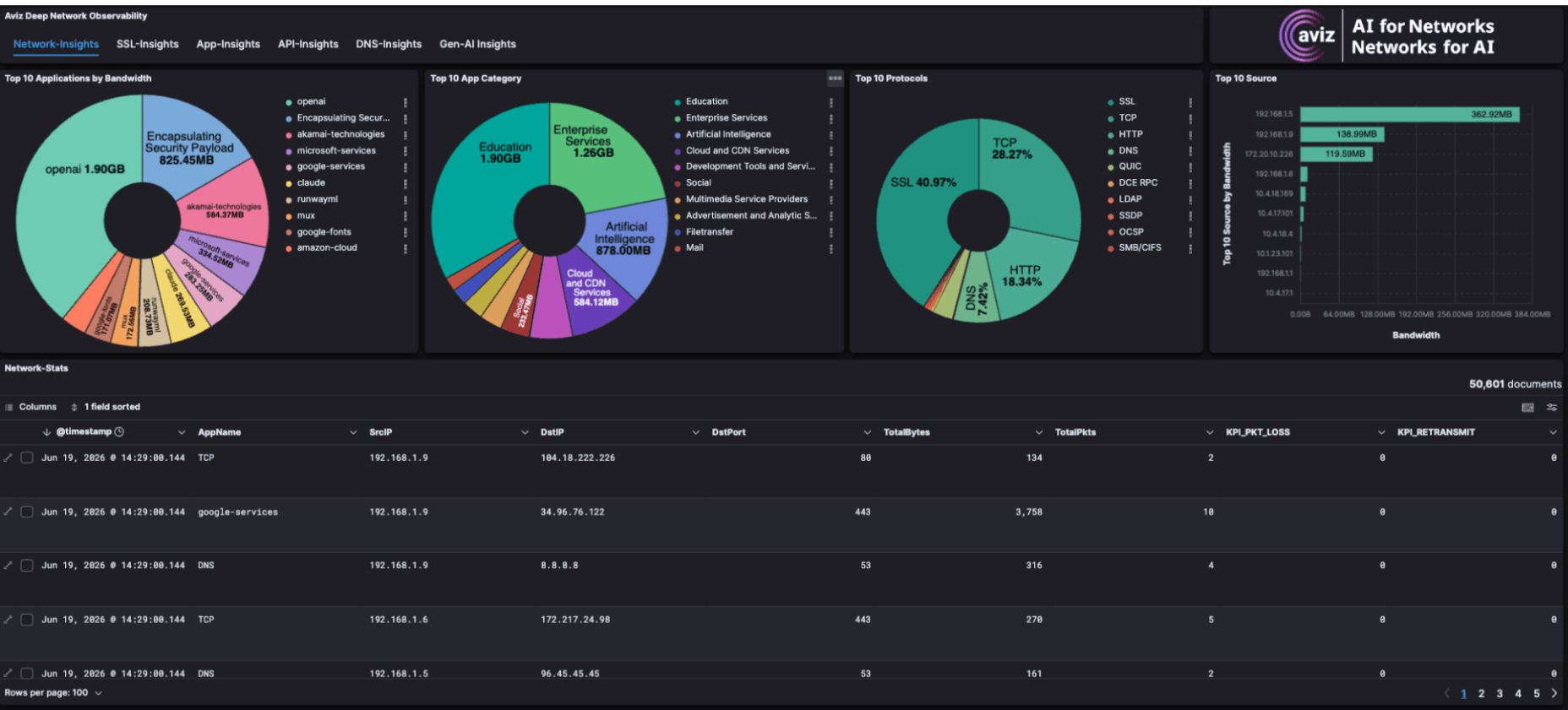
Packet-derived metadata from the Aviz DNO fabric - flow records, source/destination IP mapping, protocol breakdown, application identity.
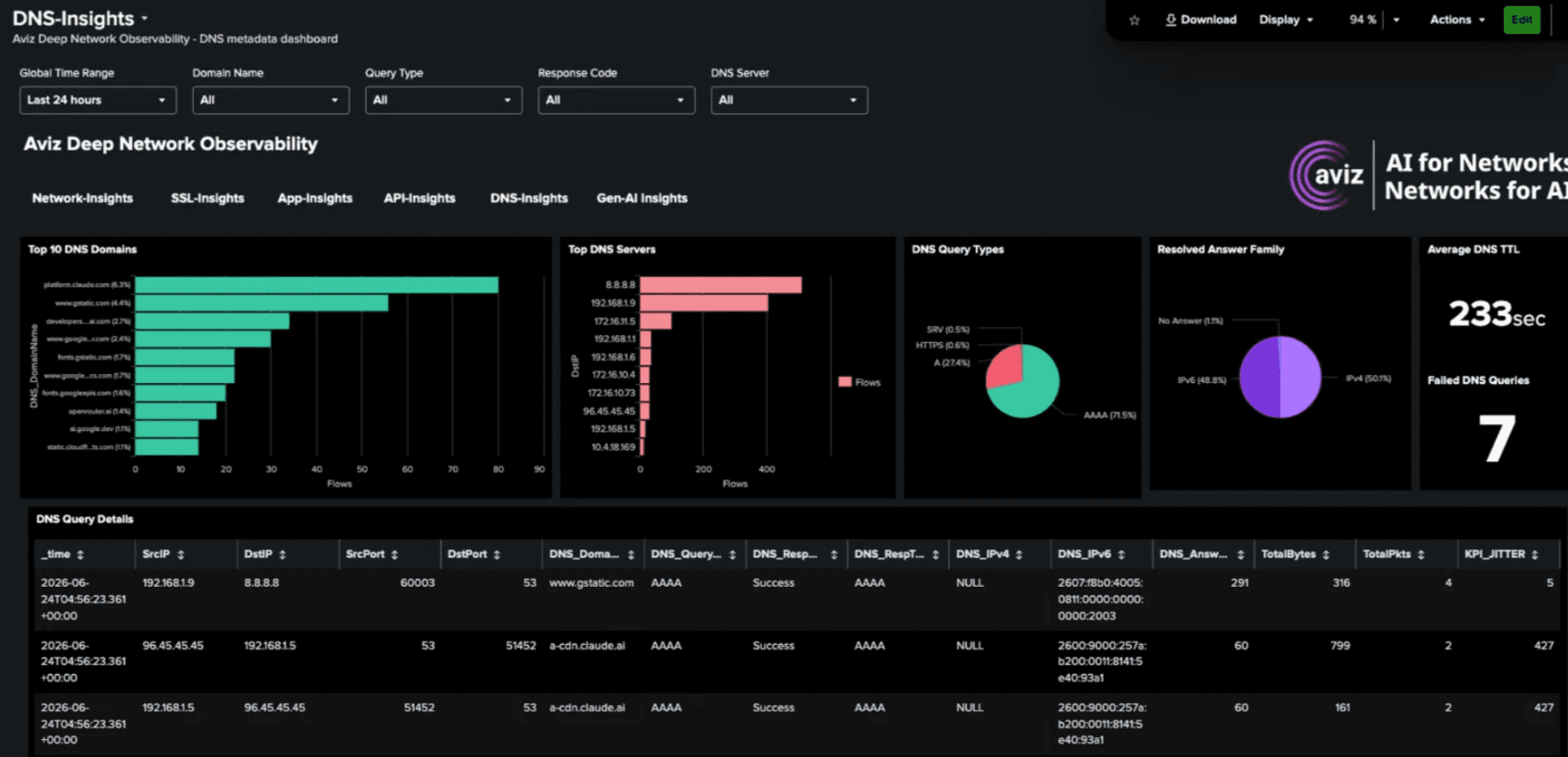
DNS query telemetry derived from wire-level packet analysis - domain names, query types, response codes, DNS server mapping, failed queries - delivered to Splunk without burdening DNS servers with their own logging. This is the passive DNS monitoring EL1 requires, sourced entirely from packet observation.
EL2 - Intermediate Logging
M-21-31 EL2 requires encrypted traffic visibility the ability to inspect TLS-encrypted sessions that would otherwise be blind spots.
This is one of the most operationally difficult requirements for federal agencies. The majority of network traffic is now encrypted. Threat actors operate inside encrypted channels. Without the ability to inspect encrypted traffic, network-based detection is severely degraded.
The Packet Broker along with Service Node delivers optimized raw packets including traffic that can be routed to out-of-band inspection tools enabling your security stack to achieve the encrypted traffic visibility EL2 requires. The architecture keeps decryption capability in the hands of your security tooling (IDS/IPS, NDR, SIEM ingest pipelines) while the Aviz Deep Network Observability stack ensures those tools receive clean, filtered, deduplicated traffic at the volumes they can process.
Security detection tools receive optimized raw packets directly from the APB operating on packet-level traffic, not on downstream logs that could have been tampered with.
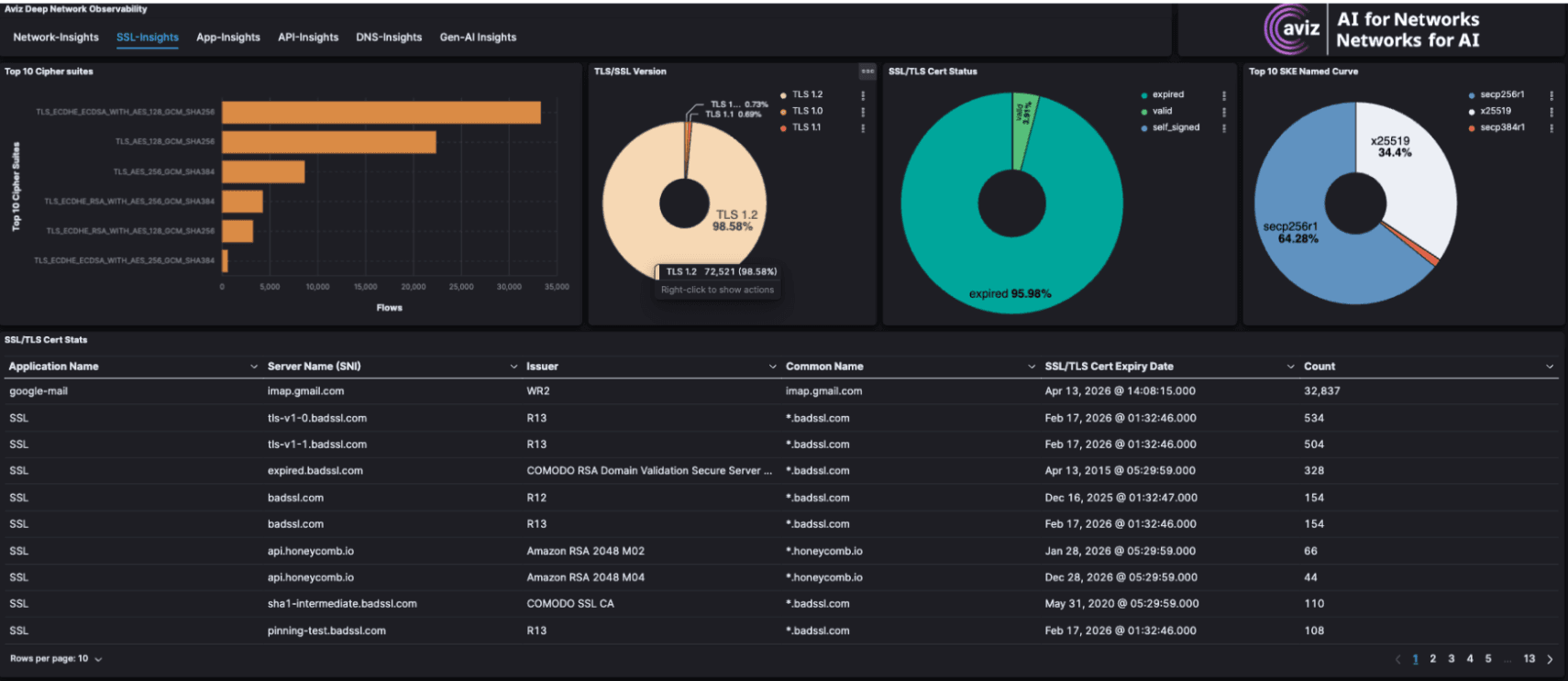
TLS/SSL metadata extracted from wire-level packets cipher suites, TLS versions, certificate status, issuer, expiry dates, SNI indexed into Aviz Elastic Node without requiring decryption of the payload. EL2 requires, surfaced from packet-derived metadata alone.
EL3 - Advanced Logging
M-21-31 EL3 requires East-West virtual visibility the ability to observe lateral traffic between virtualized workloads, containers, and cloud-hosted environments that traditional network taps cannot reach along with orchestration and automation of logging collection.
This is where East-West lateral movement visibility becomes a logging requirement, not just a security aspiration. An adversary conducting internal reconnaissance, credential harvesting, or data staging inside a federal network environment generates East-West traffic that is invisible to perimeter-focused logging architectures.
The Aviz DNO pipeline extends packet-level visibility into virtualized and hybrid environments, capturing the East-West traffic flows that EL3 requires. Packet-derived metadata from these flows feeds both the Elastic Node observability stack and security tools, including IDS, NDR, and SIEM platforms providing the comprehensive coverage that M-21-31 EL3 demands.
EL3 demands visibility into East-West traffic and application behavior that perimeter logging cannot surface. In this deployment, Aviz DNO packet-derived metadata delivered to Splunk identified 14 Gen-AI applications in use, including shadow AI applications unauthorized tools accessing external AI APIs from internal hosts with per-flow source IP, destination, HTTP hostname, and traffic volume. This is the East-West application visibility that EL3 advanced logging requires, and that only wire-level packet observation can reliably provide.
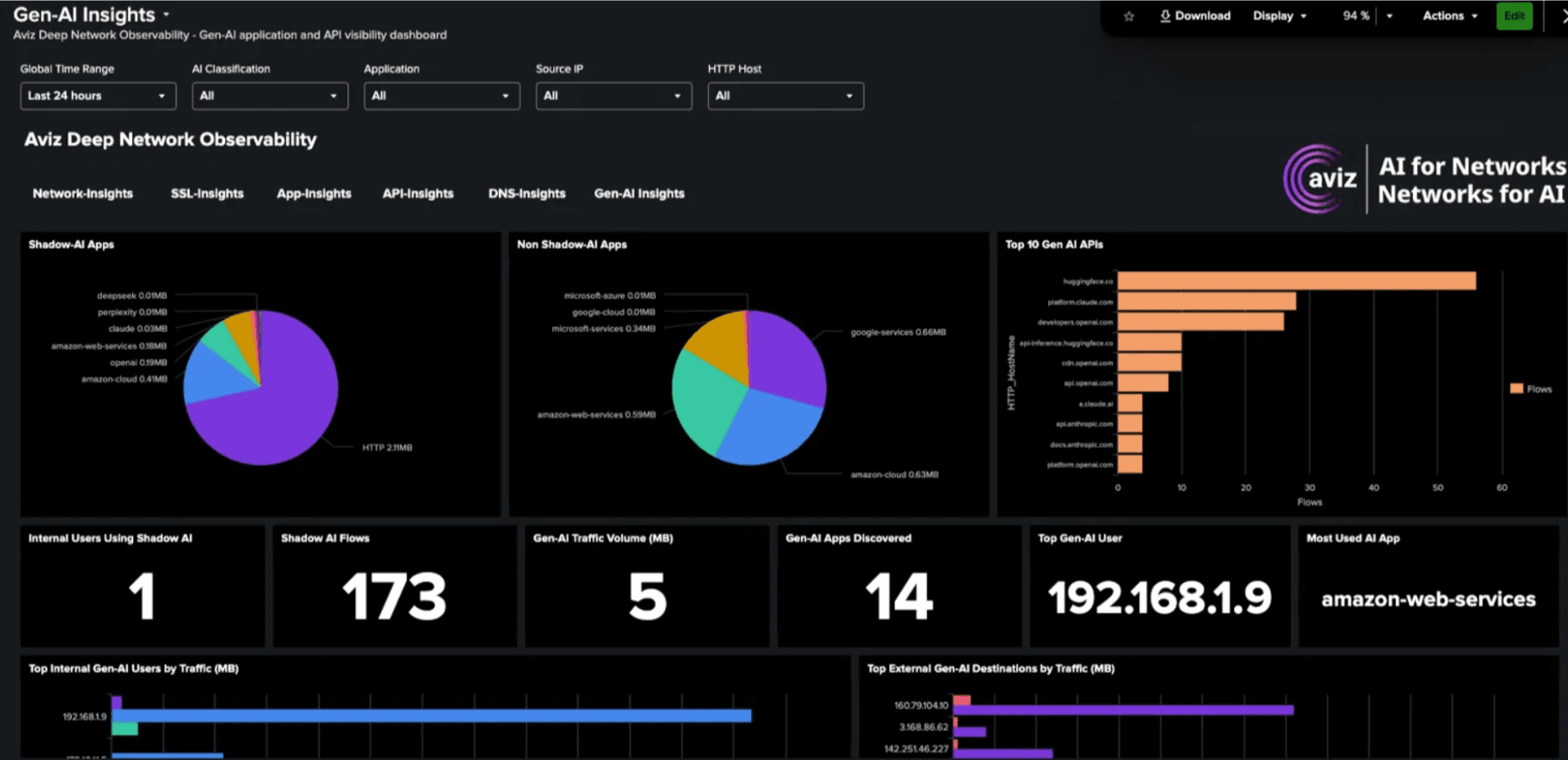
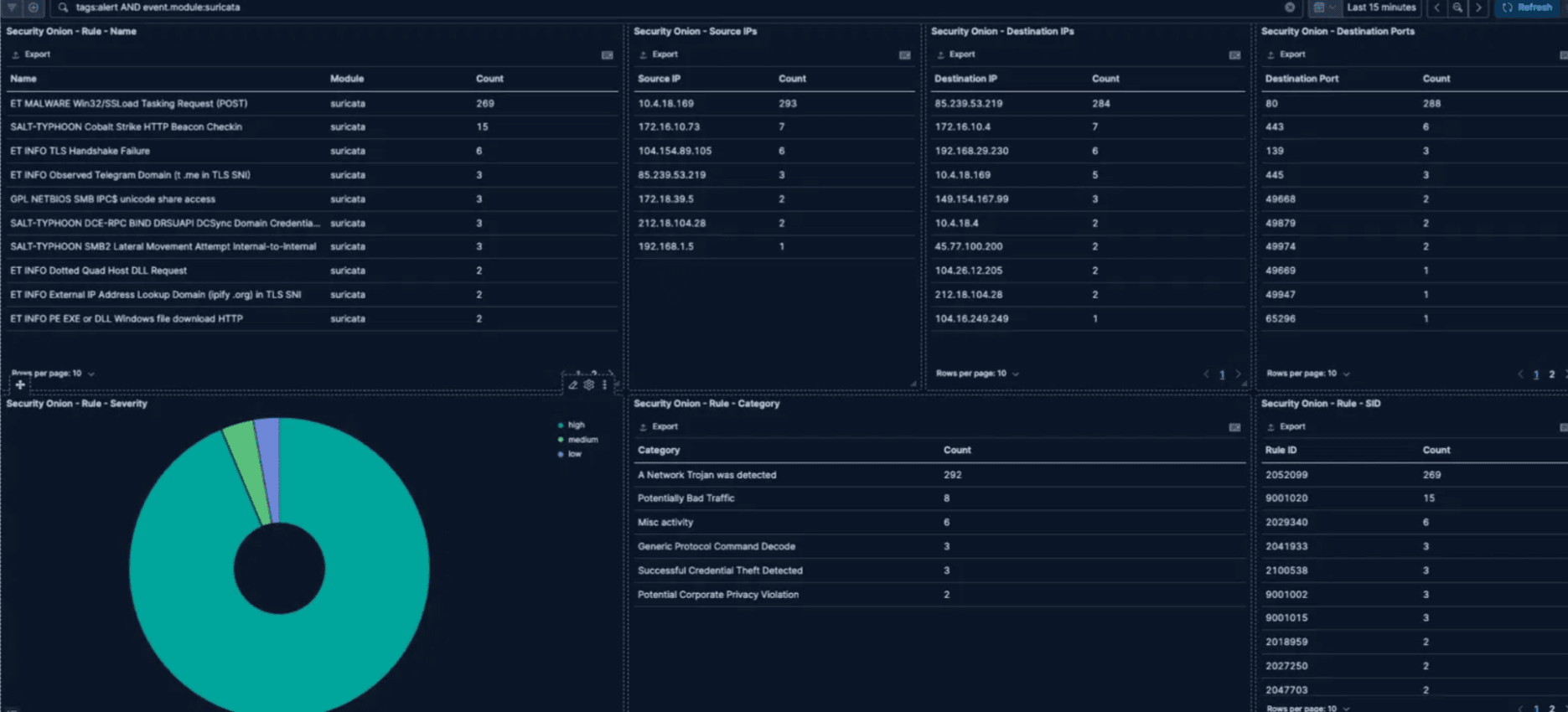
Figure 5 - Security alerts detected on Suricata IDS fed by Aviz DNO
What Real East-West Lateral Movement Detection Looks Like
The value of packet-derived telemetry for federal logging is not theoretical. The Aviz reference architecture with an IDS receiving optimized raw packets from the APB demonstrates what EL3-level detection capability looks like in practice.
Active attack patterns including C2 beacon check-ins, Active Directory credential harvesting, lateral movement between internal hosts, and malware command-and-control were identified on Suricata IDS receiving optimized raw packets directly from the Aviz DNO fabric. These are East-West detections on traffic the perimeter never sees, and were not available from device-generated logs alone. The detection capability comes from the wire-level packet stream Aviz delivers Suricata, or any IDS/NDR receiving the same feed, sees what actually traversed the network.
Internal-to-Internal lateral movement detection is precisely what the East-West visibility M-21-31 EL3 and NIST SP 800-92r1 are designed to mandate. It is also the detection that only packet-level telemetry not endpoint or application logs can reliably provide against an adversary that has already achieved internal persistence.
Packet-Derived Telemetry and the ZTA Trust Algorithm
NIST SP 800-92r1 makes an explicit connection between logging quality and Zero Trust Architecture. The ZTA trust algorithm described in NIST SP 800-207 makes continuous access decisions based on a stream of input signals. The quality of those decisions is directly bound by the quality of the telemetry feeding them.
Device and application logs that can be tampered with are unreliable inputs to a trust algorithm. An adversary who has suppressed endpoint logging while continuing lateral movement is, in effect, poisoning the trust algorithm's inputs causing the policy engine to make access decisions on stale or falsified data.
Packet-derived telemetry, observed independently of the devices being monitored, provides a ground-truth input that is structurally resistant to this class of attack. When the Aviz APB generates network metadata from wire-level observation, that record reflects what actually happened on the network not what a potentially compromised device reported.
This is why NIST SP 800-92r1 is pushing the definition of "log" beyond device and application records, toward network-observed telemetry. The Aviz DNO pipeline is already delivering exactly the telemetry quality that this evolution demands.
The Aviz DNO Pipeline and M-21-31 / 800-92r1
The Aviz architecture delivers telemetry through two parallel paths from a single packet capture point. Traffic is ingested via Tap/SPAN from every environment Hybrid Cloud, Data Center, Field Offices, Remote Edge, IT/IoT, and Mobile/Unmanaged aggregated, optimized, enriched, and distributed simultaneously to your Security and Observability Tools Stack.
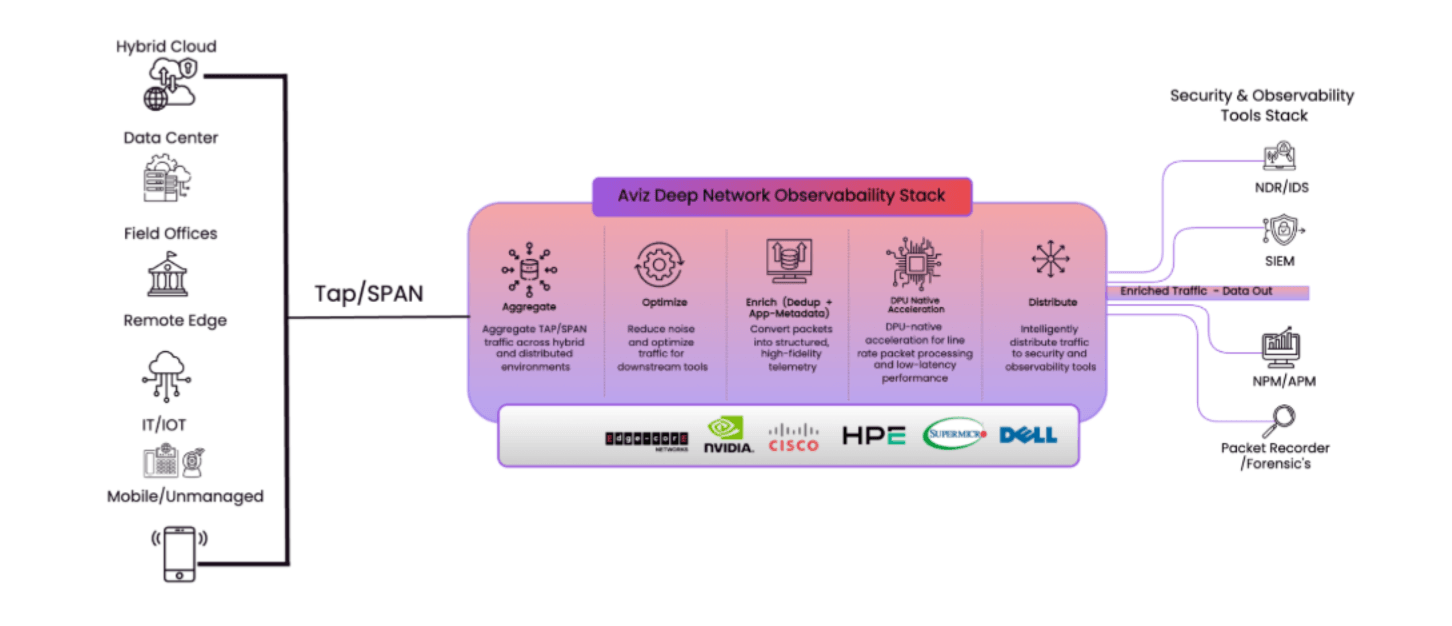
Figure 6: Aviz Deep Network Observability Stack feeding optimized RAW Packets and packet derived telemetry to Security and Observability Stack
Traffic ingested via Tap/SPAN from Hybrid Cloud, Data Center, Field Offices, Remote Edge, IT/IoT, and Mobile/Unmanaged environments aggregated, optimized, enriched with application metadata, DPU-accelerated, and distributed simultaneously to NDR/IDS, SIEM, NPM/APM, and Packet Recorder/Forensics tools. One pipeline. Every source. Every consumer.
Path 1- Optimized Raw Packets to Security Detection Tools
The APB delivers filtered, deduplicated, optimized packet streams to NDR, IDS, and inline inspection platforms. These tools operate on wire-level traffic the highest-assurance telemetry source available independent of what any monitored device reports.
This path satisfies:
- M-21-31 EL2 encrypted traffic visibility (packets available for inspection)
- M-21-31 EL3 East-West virtual visibility (APB captures lateral traffic)
- NIST 800-92r1 telemetry assurance (wire-observed, tamper-resistant record)
- DoD ZT Capability 2.7 Continuous Threat Detection and Response
- DoD ZT Capability 7.1 Log Collection and Analysis
Path 2 - Packet-Derived Metadata to Observability and Monitoring
The APB simultaneously generates rich, structured metadata from the same packet flows flow records, session data, DNS visibility, protocol metadata, application context and delivers it to SIEM platforms, network performance monitoring tools, and observability stacks in open formats (JSON, Kafka, NetFlow/IPFIX). Any platform your agency already runs can consume this stream without proprietary integration.
This path satisfies:
- M-21-31 EL1 network-derived syslog records
- M-21-31 EL1 passive DNS monitoring
- NIST 800-92r1 log normalization and enrichment
- DoD ZT Capability 7.4 Identity and Entity Behavior Baselines
- DoD ZT Capability 5.1 Mature Segmentation to Lowest Level (segmentation verification via traffic analysis)
Both paths originate from a single APB capture point. There is no traffic duplication burden on the production network, no separate tap infrastructure for each tool, and no inconsistency between the packet-level record and the metadata record they are derived from the same wire-observed source.
What Aviz Is, and What It Is Not
Aviz DNO is the network telemetry foundation of your federal security and compliance architecture. It is not a SIEM, not an IDS, not a policy engine, and not a log management platform. It is the source the packet-level observation layer that produces the high-assurance telemetry that all of those tools depend on. Aviz does not replace Security Onion, Splunk, Elastic SIEM, or any other tool in your existing stack. It optimizes what those tools receive, extends their reach into environments they cannot directly instrument, and ensures that the telemetry feeding your compliance posture and your ZTA trust algorithm reflects what is actually happening on your network not just what your devices are willing to report.
No single product achieves M-21-31 compliance or NIST 800-92r1 conformance in isolation. Aviz DNO is the network visibility layer that makes the rest of your compliance stack work at the fidelity federal mandates now require.
Summary: Aviz DNO and Federal Logging Requirements
| Requirement | Framework | Aviz Capability |
|---|---|---|
| Network-derived syslog records | M-21-31 EL1 | APB along with ASN for packet-derived metadata → Elastic Node |
| Passive DNS monitoring | M-21-31 EL1 | DNS metadata extracted from wire-level packets using Aviz Service Node (ASN) |
| 72-hour full packet capture | M-21-31 EL1 | APB + Aviz Service Node, along with a leading packet recorder tool such as Endace |
| Encrypted traffic visibility | M-21-31 EL2 | Optimized packets delivered to inspection tools |
| East-West virtual visibility | M-21-31 EL3 | Aviz DNO fabric captures lateral traffic in both on-premises and virtualized environments |
| Tamper-resistant telemetry | NIST 800-92r1 | Wire-observed, independent of the monitored device reporting |
| ZTA trust algorithm input | NIST 800-207 / 800-92r1 | Packet-derived metadata as ground-truth network signal |
| Continuous threat detection | DoD ZT Cap. 2.7 | Raw packets to IDS/NDR; lateral movement detection |
| Log collection and analysis | DoD ZT Cap. 7.1 | Metadata pipeline to SIEM and Elastic Stack |
| Behavior baselines | DoD ZT Cap. 7.4 | Flow and session metadata for UEBA ingestion |