





CISO's Guide to HIPAA Compliance in Healthcare
How packet-derived evidence and intelligent traffic delivery power continuous Security Rule compliance for hospitals, payers, and life sciences organizations
HIPAA Has Become an Evidence Discipline
Healthcare has overtaken every other sector as the most-attacked industry in the world. The attacks are not confined to one geography - the UK's NHS, Ireland's HSE, Australian Medibank, and hospital systems across Europe and Asia have all suffered major incidents in recent years. But in the United States, the scale of the problem has crystallized in a single event. The Change Healthcare ransomware attack of February 2024 is now confirmed by the HHS Office for Civil Rights to have affected 192.7 million individuals - nearly two-thirds of the U.S. population - making it the largest healthcare data breach ever reported to U.S. federal regulators.
The structural reason for the scale is hidden in the architecture of modern care delivery: a single hospital network now connects clinical workstations, EHR systems, imaging archives, lab platforms, infusion pumps, ECG monitors, MRI consoles, telehealth endpoints, business associate APIs, and an expanding fleet of cloud services. Most of these systems cannot host security agents. Many run unsupported operating systems. All of them generate continuous traffic that touches PHI. When a breach happens at this scale, the consequences are no longer just financial studies submitted to HHS during the recent rulemaking process documented that cyberattacks against hospitals correlate with measurable declines in clinical quality, longer patient stays, and, in the worst cases, increased mortality. Healthcare cybersecurity has become a duty-of-care discipline, not just an IT discipline.
For Healthcare CISOs, HIPAA is no longer a policy framework treated as a checkbox program. It is the standard against which every clinical, administrative, and technical decision is now graded and the standard auditors, regulators, and patient-safety advocates are actively using to question the institution's evidence base. The challenge for most healthcare organizations is not the policies. It is the evidence. HIPAA's Security Rule assumes the institution can demonstrate, on any given day, what is happening across every system that creates, receives, maintains, or transmits PHI. That assumption breaks down quickly when the evidence is self-reported logs, agent telemetry from compromised hosts, or BAA attestations updated annually.
Where Aviz Fits in HIPAA Compliance
HIPAA's Security Rule has three categories of safeguards: Administrative, Physical, and Technical. Aviz Deep Network Observability does not address all three with equal directness, and this guide is honest about that. Aviz strengthens the Technical Safeguards the safeguards where evidence quality, continuous monitoring, and packet-level visibility are foundational:
§164.312(b) Audit Controls
Continuous, immutable audit logs of every PHI access flow, captured independently of any workload.
§164.312(c) Integrity
Wire-level evidence of unauthorized alteration patterns, lateral movement, and exfiltration attempts.
§164.312(d) Person or Entity Authentication
TLS posture on every authentication endpoint.
§164.312(e) Transmission Security
Continuous cryptographic evidence on every system transmitting PHI.
HIPAA Security Rule Where Aviz DNO Contributes
The table below maps the HIPAA Security Rule sections to where Aviz Deep Network Observability contributes evidence and where it does not. The 2025 HHS update expands several Technical Safeguards to require continuous, demonstrable controls. Aviz strengthens the safeguards where packet-level evidence is foundational; for Administrative and Physical Safeguards, the institution's HIPAA program, GRC platform, and IAM tooling remain the primary control.
| Section | Standard | 2025 Expansion | Aviz DNO Contribution |
|---|---|---|---|
| §164.308(a)(1) | Technology Asset Inventory | • | Network-observed traffic feeding workload and asset inventory through IT/OT/IoMT intelligence platforms (Armis, Forescout, Nozomi, others) & Aviz Elastic node along with observability platforms such as SIEM. |
| §164.308(a)(2) | Risk Analysis | • | Continuous network telemetry to ground risk assessments in observed reality. |
| §164.308(a)(3) | Evaluation | • | Performance and behavioral evidence for technical evaluations. |
| §164.308(a)(7) | Information System Activity Review | • | Network-layer activity evidence flows, sessions, transaction patterns. Complements host/EDR/EHR logs that capture user identity and command-level activity. |
| §164.308(a)(10) | Information Access Management | • | Network segmentation drift detection complementary to IAM, RBAC, and PAM tooling that owns the primary access management controls. |
| §164.308(a)(12) | Security Incident Procedures | • | Lateral movement detection; forensic evidence captured out-of-band. |
| §164.310(a) | Facility Access Controls (IT/OT) | Network traffic from facility systems (badge readers, door locks, HVAC, cameras) flows into IT/OT asset intelligence platforms for device identification and behavior analysis. | |
| §164.310(b) | Workstation Use | Network-level workstation traffic patterns. Workstation-use policy enforcement remains with EDR, DLP, and UEBA tooling. | |
| §164.312(a) | Access Control · Network Segmentation | • | Pre/post-segmentation traffic verification, drift detection. |
| §164.312(b) | Encryption Enforcement & Verification | • | Continuous TLS, cipher, and certificate evidence on every PHI flow. |
| §164.312(c) | Configuration Management | • | Shadow IT and unauthorized application discovery on the network. |
| §164.312(d) | Audit Trail and System Log Controls | • | Packet-derived audit metadata; tamper-resistant from the moment of capture. |
| §164.312(e) | Integrity | Detection of unencrypted or weakly encrypted PHI in transit supporting (not enforcing) integrity controls. | |
| §164.312(h) | Vulnerability Management · Pen Testing | • | Network detection of pen-testing activity validating that defenders can identify lateral movement during authorized red-team engagements. Vulnerability scanning remains with Qualys, Tenable, Rapid7. |
| Other §164.308 / §164.310 / §164.312(f), (g), (i) | Workforce, facility, IAM, transmission MFA, and backup safeguards | varies | Outside Aviz scope covered by GRC, IAM, EDR, backup, and physical security tooling. |
Legend: • = direct evidence contribution · = no expansion in 2025 update / no Aviz contribution
Where Aviz Fits in the Healthcare Security Ecosystem
For most HIPAA Technical Safeguards - encryption posture, audit logging, lateral movement, business associate oversight, and forensic evidence, Aviz Deep Network Observability delivers the evidence directly to the SIEM and observability platforms the institution already runs. For the dimension of HIPAA that requires device-level asset intelligence on connected medical equipment - IoMT discovery, vulnerability prioritization, FDA premarket cybersecurity alignment, and clinical-criticality risk scoring - Aviz integrates with leading asset intelligence platforms: Armis Centrix, Forescout, Nozomi Networks, and others.
In these joint deployments, Aviz delivers optimized, deduplicated, and normalized packet metadata to the asset platform, which transforms it into device-level audit, exposure, and compliance evidence. The institution gets one visibility foundation feeding both its security operations stack and its medical device security program.
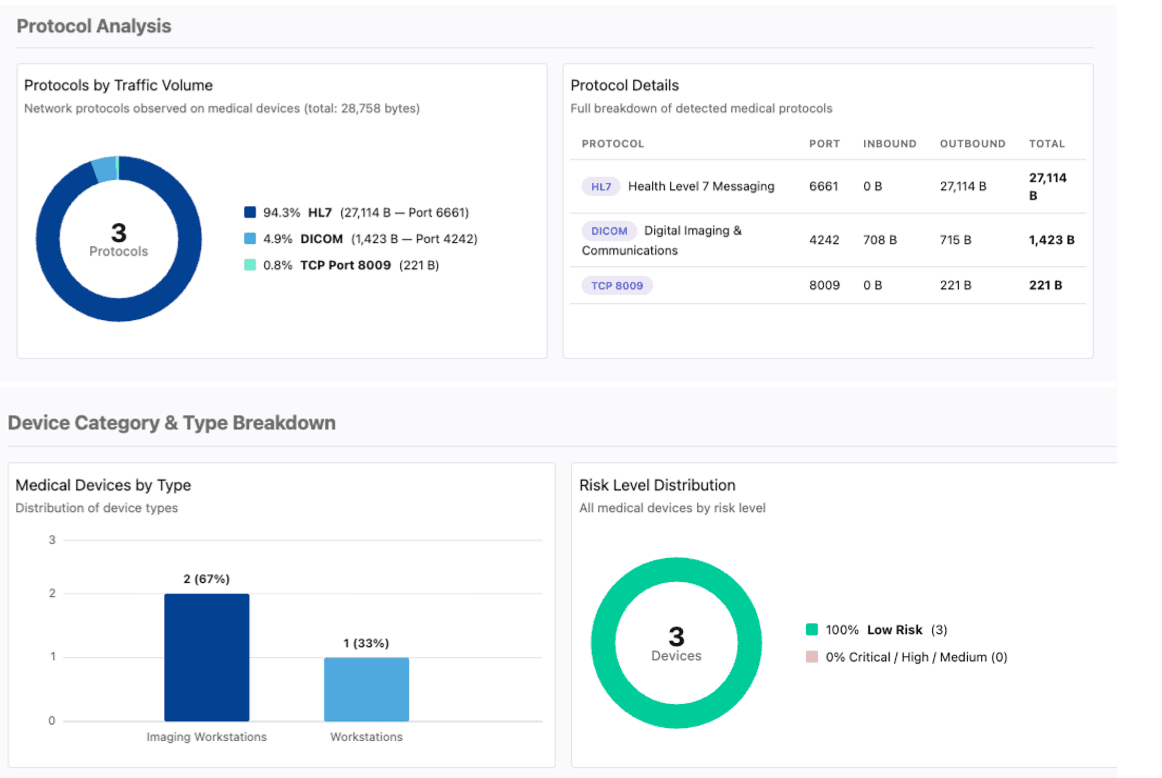
Figure 1: Armis Centrix consuming Aviz-optimized packet to deliver device-level asset intelligence and compliance evidence for connected medical equipment - one illustrative example of the joint deployment pattern Aviz supports with leading asset intelligence platforms.
The five questions that follow are the ones Healthcare CISOs are answering most frequently in 2026 - and the dimensions of HIPAA where packet-derived evidence makes the most material difference.
How Aviz DNO produces HIPAA-aligned evidence
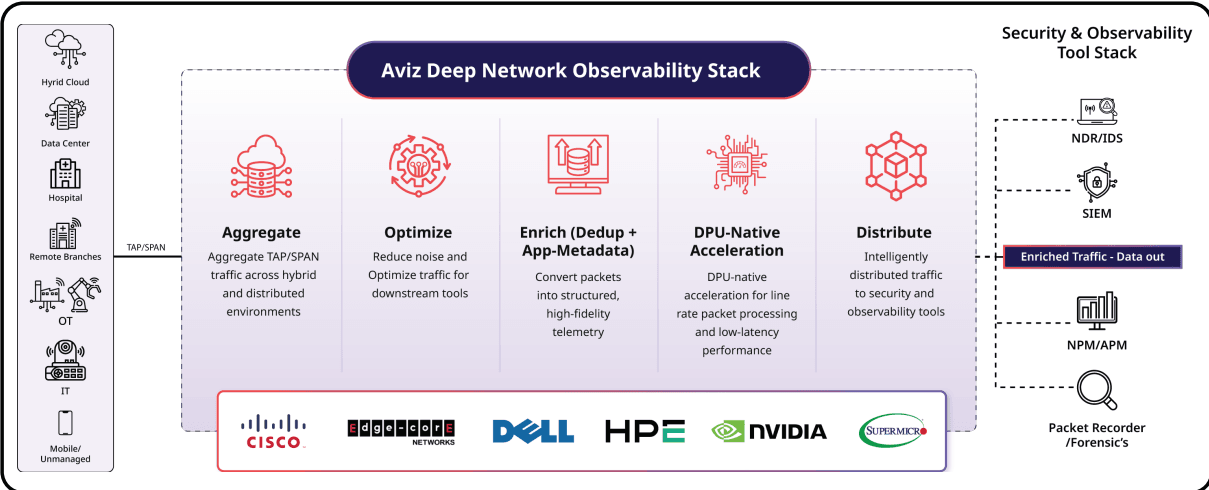
Figure 2: Aviz Deep Network Observability Intelligence Stack
Aviz Deep Network Observability is a five-stage pipeline Aggregate → Optimize → Enrich → DPU-Native Acceleration → Distribute running on open white-box switches and commodity x86 with DPU-native acceleration up to 400G. Traffic is sourced directly from the network fabric across hospital data centers, hybrid cloud, branch clinics, ambulatory centers, telehealth platforms, and connected medical device environments via SPAN, physical, and virtual taps. The result is structured, packet-level metadata covering every PHI flow on the network captured out-of-band, independent of the workload, immutable from the moment the session crosses the wire.
Aviz is vendor-agnostic by design and streams enriched metadata in open formats (JSON and Kafka) into whichever observability or SIEM platform the institution already runs Splunk, Elastic, Datadog, Dynatrace, New Relic, Kentik, Chronicle, Sentinel, and others. The HIPAA evidence the platform generates is the same regardless of where the customer chooses to consume it.
What Aviz Delivers for the Healthcare CISO
The questions below are the ones Healthcare CISOs ask most often when they are sitting in front of their HIPAA program - and the ones recent OCR enforcement activity shows most institutions cannot fully answer today.
PHI Encryption Posture, Continuously Proven
"Can I prove every PHI flow is encrypted in transit every endpoint, every cipher, every certificate?"
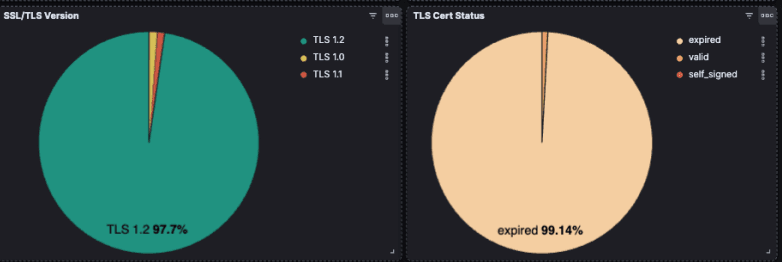
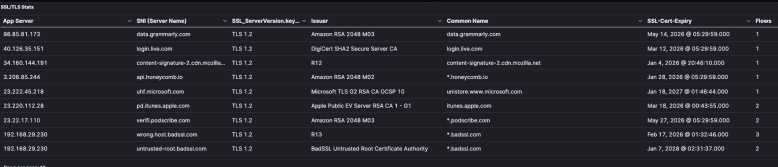
Why this matters for the CISO: Cryptographic posture is the most tangible technical evidence of HIPAA compliance an institution can produce. With a continuously observed view of TLS, ciphers, and certificate health, the question moves from "we believe encryption is enforced" to "here is the evidence, every session, every day."
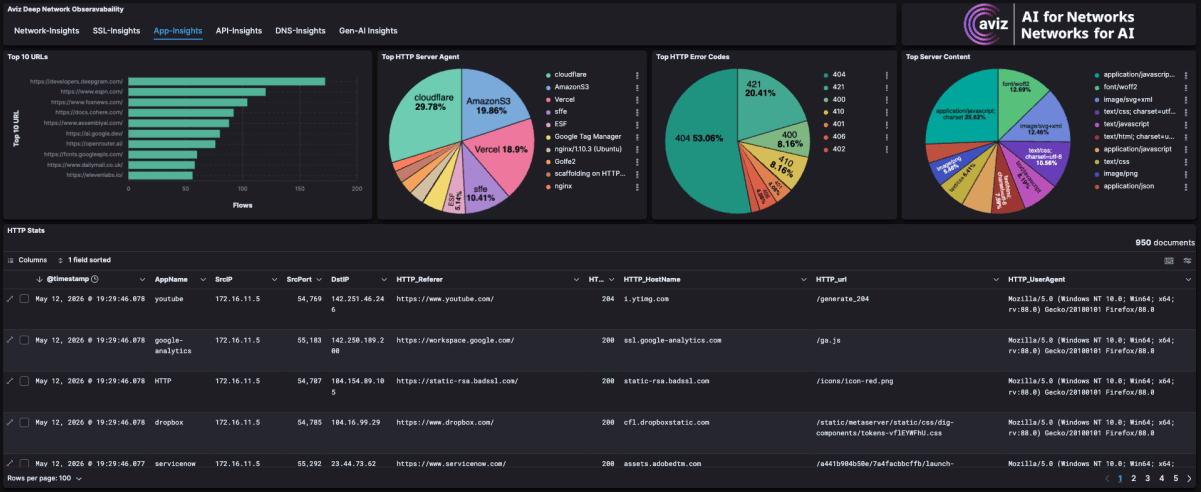
Continuous Audit Logs of PHI Access
"Can I demonstrate continuous audit logs of every system that touches PHI - beyond what the EHR itself records?"
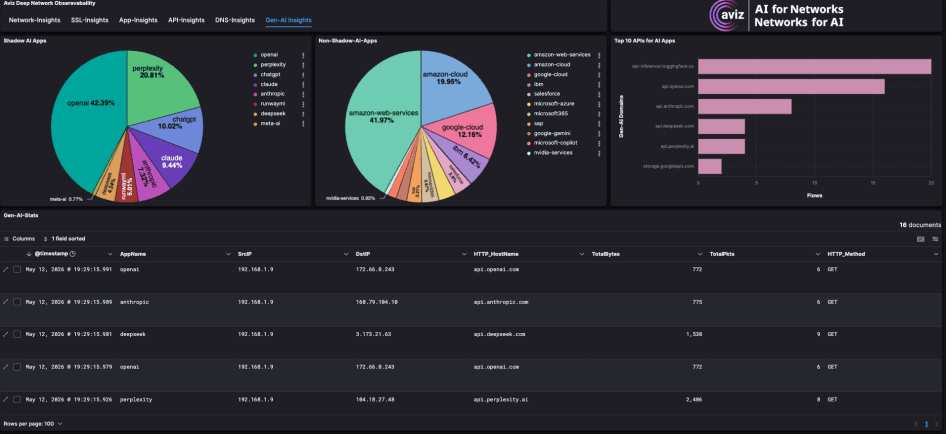
Business Associate and Third-Party API Visibility
"Can I see every connection to a Business Associate - including the AI services no one signed a BAA for?"
The cost of getting this wrong:
- OCR findings on inadequate BA oversight and missing BAA coverage
- Reportable breaches when a BA is compromised, and the institution cannot quantify the data flow
- Sensitive PHI is leaking to unsanctioned AI services with no contractual data protection
- Reputational exposure when a developer's AI prompt becomes the next viral incident
Lateral Movement and Anomalous Access Detection
"Can I detect anomalous PHI access or lateral movement before it becomes a reportable breach?"
The cost of getting this wrong:
- Extended dwell time on networks before detection
- Reportable breaches are escalating in scope while attackers move laterally
- Inability to evidence Breach Notification Rule investigations and 60-day reporting windows
- OCR findings on inadequate intrusion detection and incident response
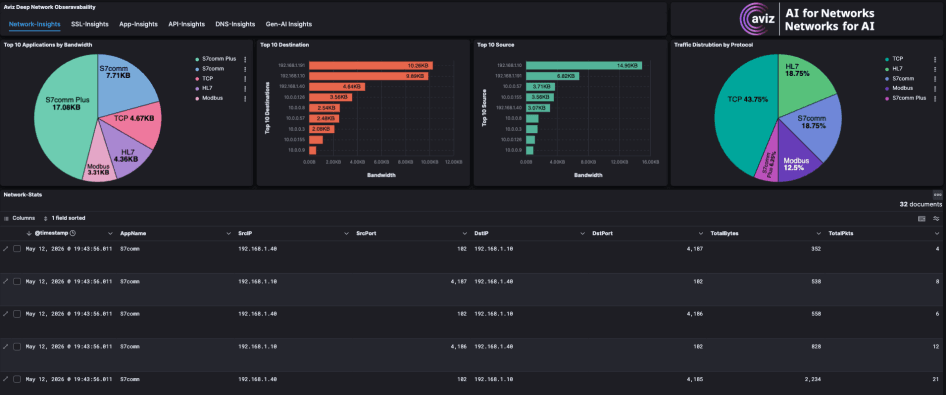
Why this matters for the CISO: Lateral movement is the defining characteristic of every major healthcare breach of the last five years. With Aviz, East-West traffic is no longer invisible every PHI-system-to-PHI-system connection is observed, timestamped, and available for Breach Notification Rule investigations the moment OCR asks.
Forensic Evidence That Survives a Compromise
"Can I produce forensic evidence within the Breach Notification window even if the compromised system's logs are gone?"
The cost of getting this wrong:
- Missed 60-day reporting deadlines, escalating OCR enforcement
- Forensic reports built on partial or potentially tampered evidence
- Increased breach scope estimates due to incomplete investigation
- Counsel exposure when the evidence base cannot be defended in regulatory proceedings
Why this matters for the CISO. Breach Notification deadlines are unforgiving, and forensic provenance is increasingly scrutinized. The institution that can produce defensible forensic evidence within hours and prove its provenance is the institution that contains scope, meets the deadline, and emerges from the investigation with its OCR posture intact.
What this means for your HIPAA program
OCR enforcement in 2026 is sharper than it has been in two decades, and the gap between policy and production reality is the single largest source of audit findings in healthcare. The institutions that will pass OCR scrutiny over the next three years are those that treat continuous, packet-derived evidence as the foundation of their HIPAA Security Rule program not as a feature, but as the substrate every Technical Safeguard runs on.
With that foundation in place, every other dimension of HIPAA gets stronger: encryption posture becomes continuously observed, audit controls become tamper-resistant, BA oversight becomes a lived reality rather than an annual attestation, lateral movement becomes detectable before it becomes reportable,
and breach forensics becomes defensible from the first hour of investigation.
HIPAA does not name a specific technology. It requires reasonable and appropriate safeguards - and after Change Healthcare, reasonable and appropriate now means continuously evidenced. Packet-derived visibility is the most direct path to that evidence.
See it on your traffic. Bring a day of real packet captures to the Aviz ONE Center. We will set up the full Aviz DNO pipeline on your actual healthcare traffic clinical, administrative, partner, and telehealth and walk you through the exact HIPAA Security Rule evidence the platform generates.