




Why Are General-Purpose LLMs Not Enough for SONiC Network Support Operations?
 November 16, 2026
 Network Copilot ™
TL;DR
General-purpose LLMs understand networking concepts, but they don't know the operational history, known issues, workarounds and support procedures that network support depends on. Aviz builds a domain-specialized Network Copilot for SONiC using three complementary technologies: Continued Pre-Training (CPT), Supervised Fine-Tuning (SFT) and Retrieval-Augmented Generation (RAG). Training data comes from internal documentation, runbooks and Zendesk support knowledge, and subject matter experts review generated examples in Argilla before fine-tuning. The result helps engineers with known issues, troubleshooting, upgrade guidance and vendor-specific operations.
Introduction
General-purpose Large Language Models (LLMs) have demonstrated impressive reasoning and language capabilities. However, operating complex enterprise and data center networks requires more than general knowledge. Network engineers deal with vendor-specific implementations, hardware-dependent behavior, platform-specific bugs, operational runbooks, troubleshooting procedures, and years of accumulated support knowledge.
Consider a few real-world questions:
- Why does a particular BMC upgrade cause a network interface failure on a specific hardware platform?
- Which vendor-specific workaround resolves a known EVPN issue?
- Why are BGP sessions flapping even though interface counters show no errors?
- Which counter semantics differ between network operating systems and ASIC vendors?
- What is the recommended production upgrade procedure for a particular platform?
A general-purpose LLM may understand networking concepts, but that does not mean it knows the specific operational history, known issues, workarounds, and support procedures required to answer these questions reliably. At AVIZ, we approach this challenge by building a domain-specialized Network Copilot using three complementary technologies:
- Continued Pre-Training (CPT): Adapt the foundation model to networking and operational domain knowledge.
- Supervised Fine-Tuning (SFT): Teach the assistant how to respond to network engineering and support-specific questions.
- Retrieval-Augmented Generation (RAG): Ground responses in relevant documentation, support knowledge, and operational information.
These components work together to create a specialized network assistant rather than relying exclusively on a general-purpose model.
How is the SONiC Support Assistant model trained?
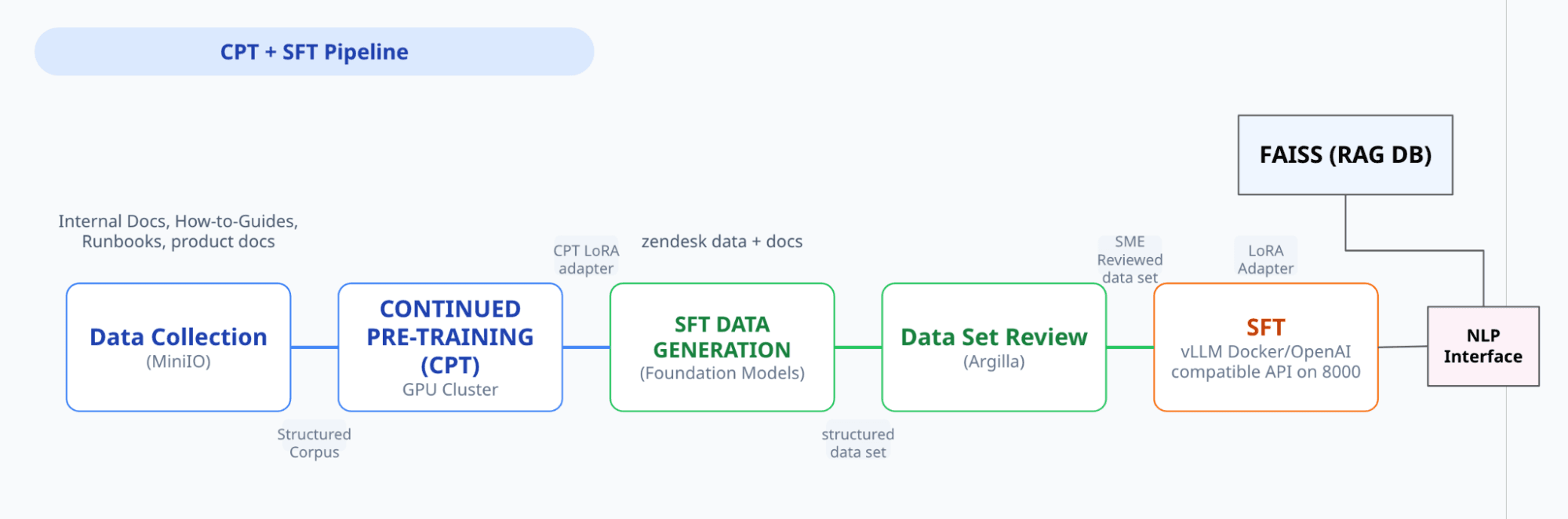
The Network Copilot training architecture consists of a data collection pipeline, model adaptation, supervised dataset generation and review, model serving, and a retrieval knowledge base. The pipeline is designed to transform internal networking knowledge and support experience into a model
High-level training pipeline
How does data collection build the networking knowledge foundation?
The first step is collecting high-quality domain-specific information.
Network Copilot uses internal knowledge sources, including:
- Internal technical documentation.
- Network configuration and operational guides.
- Troubleshooting runbooks.
- Product documentation.
- Support knowledge and relevant Zendesk data.
These sources contain valuable information that is often unavailable in public training datasets.
For example, an internal support case may document a known issue involving a specific switch platform, firmware release, ASIC behavior, and an associated workaround. This information is particularly valuable because network troubleshooting frequently depends on the exact hardware, software version, and operational environment. The collected information is stored in MinIO and prepared for subsequent processing.
Objective: Build a structured networking corpus that captures product knowledge, operational procedures, and support experience.
How does Continued Pre-Training teach the model networking domain knowledge?
General-purpose foundation models are trained on broad datasets. They understand language and many technical concepts, but may lack the depth required for specialized network operations. Continued Pre-Training extends the model's training using a domain-specific corpus. In the Network Copilot pipeline, the collected internal documentation, runbooks, and product knowledge are transformed into a structured corpus for CPT. The model is trained on a GPU cluster using a CPT pipeline with a LoRA adapter.
LoRA (Low-Rank Adaptation) provides a parameter-efficient approach to adapting a model without requiring full fine-tuning of all its parameters.
This stage helps the model become more familiar with:
- Networking terminology and concepts.
- Network operating system behavior.
- Vendor-specific implementations.
- Network architecture and protocols.
- Operational procedures and technical documentation.
The intention is to improve the model's familiarity with the networking domain before teaching it specific assistant behaviors.
Objective: Adapt the foundation model to the language, concepts, and technical knowledge of network engineering.
How is support knowledge turned into SFT training examples?
Domain knowledge alone does not make a model an effective network operations assistant.
The model also needs to learn how to respond to engineering questions, interpret troubleshooting requests, explain findings, and provide actionable operational guidance. This is where Supervised Fine-Tuning (SFT) comes into the pipeline. The SFT dataset is generated using foundation models and curated source material, including Zendesk support data and internal documentation. The objective is to transform existing knowledge into structured training examples.
Examples include:
- Question-and-answer pairs for known network issues.
- Troubleshooting scenarios and recommended investigation steps.
- Hardware-specific workarounds.
- Network upgrade procedures.
- Vendor-specific command examples.
- Root-cause analysis explanations.
- Operational recommendations.
For example, a support case describing a BGP instability issue can be transformed into a structured training example containing the symptoms, relevant environment details, investigation steps, and documented resolution. The generated dataset provides the examples needed to teach the assistant how to respond to real network engineering questions.
Objective: Convert accumulated networking and support knowledge into structured instruction-following training data.
How do experts validate the training data in Argilla?
Generated training data should not automatically be treated as ground truth.
Network support knowledge can contain outdated recommendations, incomplete troubleshooting steps, or environment-specific workarounds that should not be generalized.
The SFT dataset therefore goes through a review process using Argilla.
Subject Matter Experts (SMEs) review the generated examples before they are accepted into the structured training dataset.
The review process focuses on:
- Technical correctness.
- Completeness of troubleshooting steps.
- Accuracy of vendor-specific recommendations.
- Consistency with documented support procedures.
- Relevance to the intended network operations use cases.
This human-review stage is particularly important for network engineering because an incorrect operational recommendation can affect production infrastructure.
The reviewed dataset becomes the input for the SFT stage.
Objective: Improve training data quality through expert validation before model fine-tuning.
How is the fine-tuned model served to Network Copilot?
Once the dataset has been reviewed, it is used for Supervised Fine-Tuning. SFT teaches the model how to follow instructions and generate responses aligned with the intended Network Copilot behavior.
The objective is to improve the assistant's ability to:
- Understand network troubleshooting questions.
- Follow structured investigation workflows.
- Explain technical findings.
- Provide consistent support-oriented answers.
- Generate responses aligned with internal operational knowledge.
The resulting model is served using a vLLM-based Docker deployment with an OpenAI-compatible API on port 8000, as represented in the architecture. The deployment uses a LoRA adapter for the adapted model. This provides an inference endpoint that Network Copilot can integrate with through its NLP interface.
Objective: Make the domain-adapted assistant available through a scalable model-serving interface.
How does RAG give the assistant relevant knowledge at inference time?
Model training and knowledge retrieval solve different problems. Training adapts the model's domain knowledge and response behavior. However, operational documentation and support knowledge continue to evolve. A model cannot be expected to contain every new support case, product update, or operational procedure. Network Copilot therefore complements CPT and SFT with Retrieval-Augmented Generation (RAG). The FAISS-based RAG database provides a retrieval layer for relevant knowledge. When an engineer asks a question, the NLP interface can retrieve relevant information from the knowledge base and make it available as context for the model.
For example: An engineer asks: "Is there a known issue with BMC upgrade on this particular hardware platform?"
The retrieval layer can identify relevant documentation or support knowledge, which can then ground the model's response. This is particularly useful for information that changes frequently and should remain accessible without requiring another complete model-training cycle.
Objective: Ground model responses in relevant and maintainable knowledge sources.
How do CPT, SFT and RAG work together?
CPT, SFT, and RAG are complementary rather than interchangeable.
| Technology | Primary purpose | What it contributes |
|---|---|---|
| CPT | Domain adaptation | Networking terminology, concepts, and technical familiarity |
| SFT | Behavioral adaptation | Support-oriented responses, troubleshooting patterns, and instruction following |
| RAG | Knowledge retrieval | Access to relevant documentation and evolving support knowledge |
The distinction is important.
CPT does not replace support-specific training. SFT does not guarantee access to the latest documentation. RAG does not independently teach the model how to reason or follow operational instructions.
Together, they provide a more complete foundation for a specialized network assistant.
What can the SONiC AI assistant help network engineers do?
The resulting architecture combines a domain-adapted LLM, a support-oriented fine-tuning pipeline, and a retrieval knowledge base behind a unified NLP interface. This provides a foundation for Network Copilot to support use cases such as:
Known issue identification: Identify documented issues associated with specific network platforms, hardware, and software versions.
Troubleshooting and RCA: Help engineers investigate network failures using relevant support knowledge, technical documentation, and troubleshooting procedures.
Production upgrade guidance: Retrieve and explain platform-specific upgrade procedures and operational runbooks.
Vendor-specific operational guidance: Provide context-aware information about vendor commands, counter semantics, hardware behavior, and documented workarounds.
Support knowledge reuse: Make accumulated engineering and customer support experience accessible through natural-language interaction.
The goal is to make years of network engineering and support knowledge accessible through a specialized AI assistant.
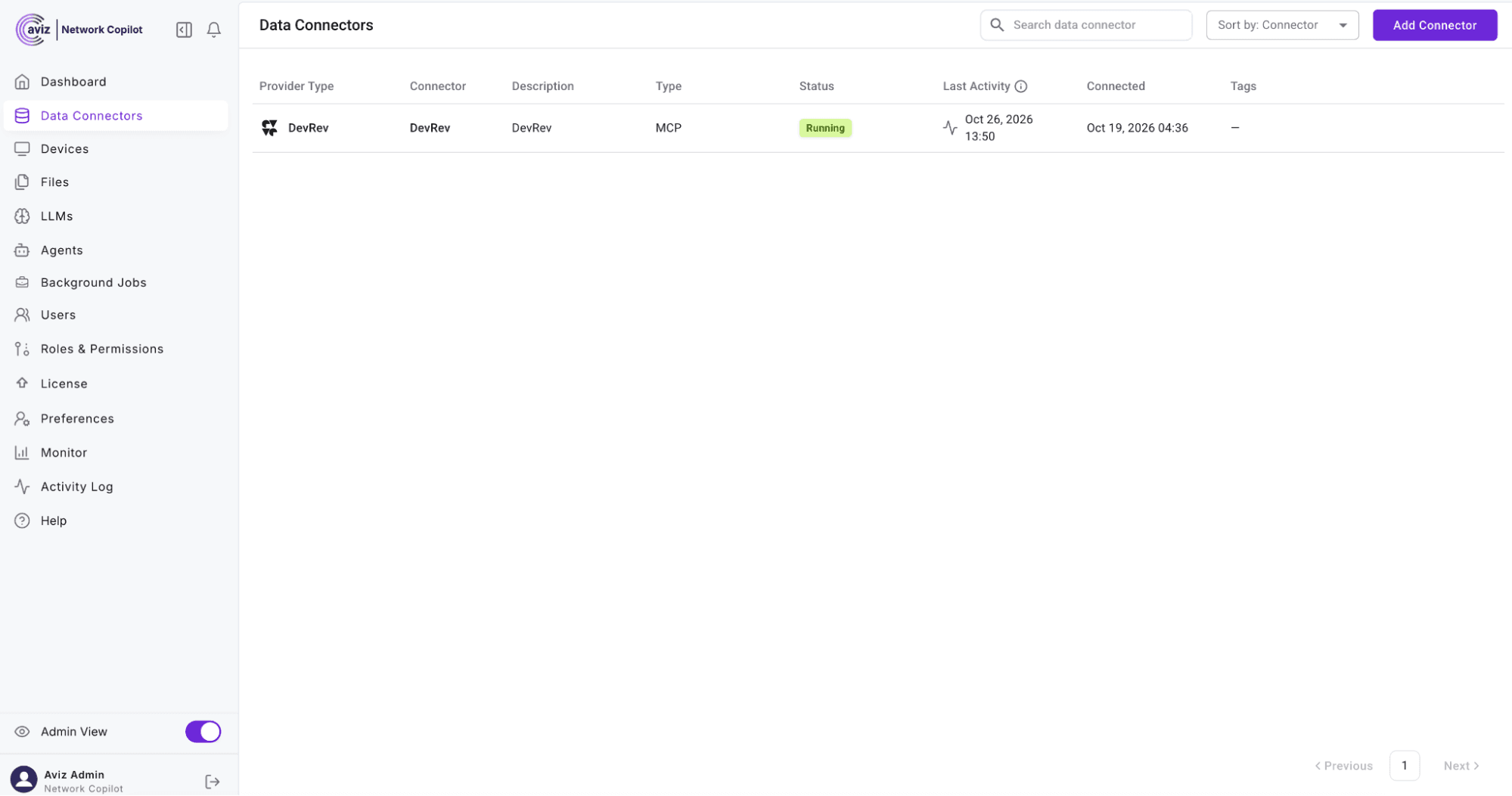
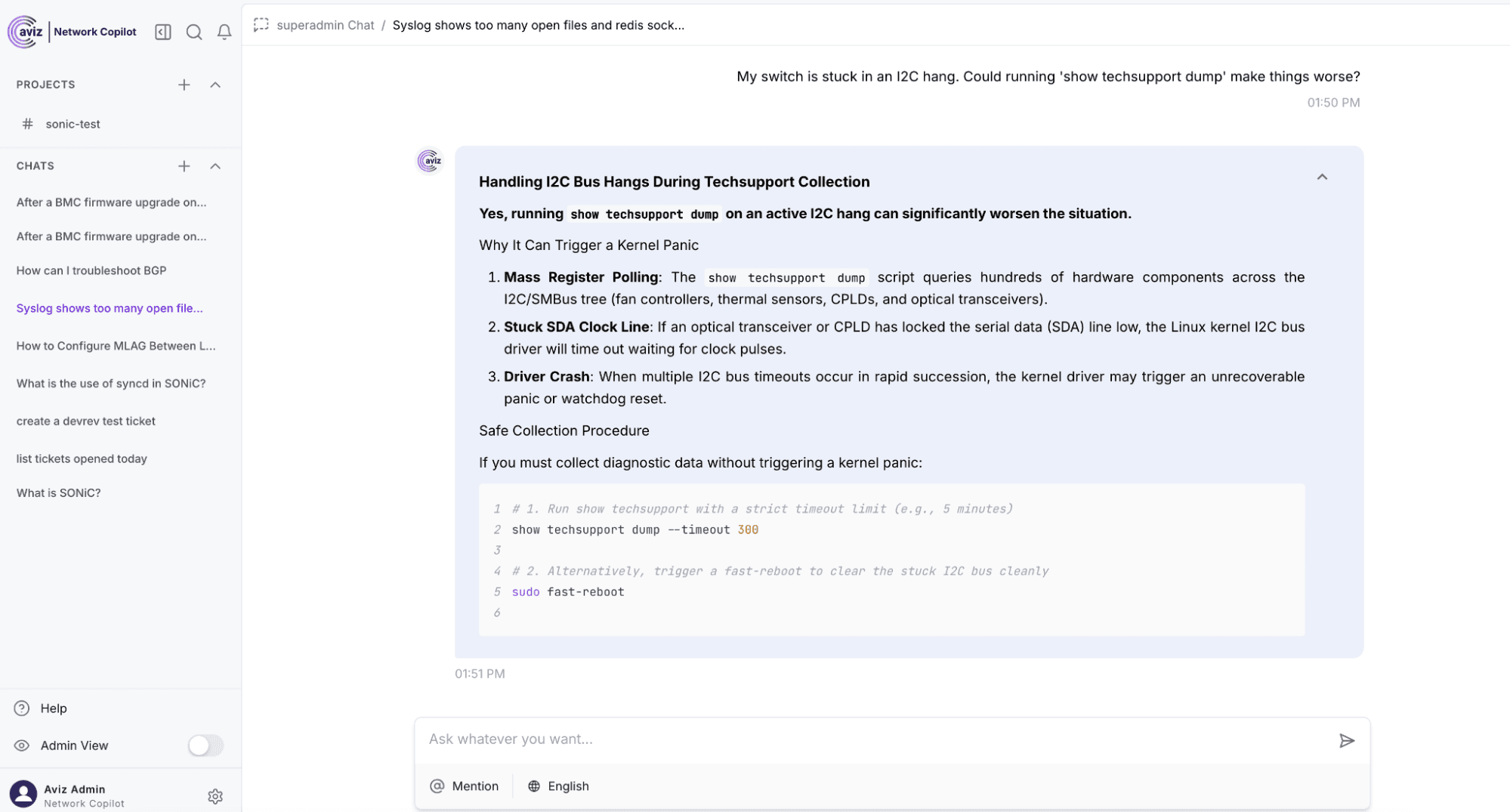
See how Network Copilot makes network engineering and support knowledge accessible through natural language: explore Network Copilot.
Conclusion: From General-Purpose AI to Network-Domain Intelligence
The effectiveness of an AI assistant for network operations depends on more than the size of its foundation model. It depends on the quality of domain knowledge, the relevance of training data, the accuracy of retrieval, and the ability to translate technical knowledge into useful operational guidance. Network Copilot combines Continued Pre-Training, Supervised Fine-Tuning, and Retrieval-Augmented Generation to address these requirements.
- CPT builds networking domain familiarity.
- SFT teaches support-specific behavior.
- RAG provides access to relevant and evolving operational knowledge.
The objective is not simply to build another chatbot for networking. It is to build an AI assistant that understands network operations, learns from engineering experience, and makes specialized support knowledge accessible when engineers need it.
FAQs
Why isn’t a general-purpose LLM enough for network support?
General-purpose models understand networking concepts, but they don’t know the operational history that real support depends on: platform-specific bugs, known issues tied to particular firmware versions, vendor workarounds, and internal upgrade procedures. That knowledge lives in support cases and internal documentation, not in public training data.
What technologies does SONiC Support Assistant use to specialize its model?
Three technologies that complement each other:
• Continued pre-training (CPT) adapts the model to networking terminology and domain knowledge.
• Supervised fine-tuning (SFT) teaches it to answer like a support engineer.
• Retrieval-augmented generation (RAG) gives it access to current documentation at the moment a question is asked.
Why use all three instead of just one?
Each solves a different problem. CPT doesn’t teach support behavior. SFT doesn’t give access to the latest documentation. RAG doesn’t teach the model how to reason or follow troubleshooting workflows. Together they cover knowledge, behavior, and freshness.
What data is the model trained on?
Internal technical documentation, configuration and operational guides, troubleshooting runbooks, product documentation, and relevant support ticket data from Zendesk. The collected data is stored in MinIO before processing.
What is continued pre-training, and how is it done here?
CPT extends a foundation model’s training with a domain-specific body of text. SONiC Support Assistnat runs CPT on a GPU cluster using LoRA (Low-Rank Adaptation), which adapts the model without retraining all of its parameters.
How is the fine-tuning data created?
Foundation models turn source material, such as support cases and internal documentation, into structured training examples: question-and-answer pairs, troubleshooting scenarios, hardware workarounds, upgrade procedures, and root-cause explanations.
Is AI-generated training data checked by people?
Yes. Subject matter experts review every generated example in Argilla before it is accepted. They check technical correctness, completeness of troubleshooting steps, accuracy of vendor-specific recommendations, and consistency with documented support procedures.
Why is human review necessary?
Support knowledge can include outdated recommendations, incomplete steps, or workarounds that only applied to one customer’s environment. Because an incorrect recommendation can affect production infrastructure, generated data isn’t treated as ground truth until an expert has reviewed it.
How does the assistant stay current without constant retraining?
Through RAG. A FAISS-based knowledge base retrieves relevant documentation and support knowledge when a question is asked, so new support cases and product updates are available without another training cycle.


