





What Llama-3 Reveals About GPU Cluster Failures And How ONES 4.0 Helps Prevent Them
 September 18, 2025
 ONES & SONiC
TL;DR:
- Meta's Llama-3 training exposed how fragile GPU clusters are: 78% of failures were hardware-related.
- Faulty GPUs, memory errors, switches, and NICs were the top culprits.
- ONES 4.0 offers proactive monitoring, health dashboards, and customizable alerts to prevent outages.
- Vendor-neutral design supports NVIDIA, AMD, SONiC, and Arista environments.
Introduction
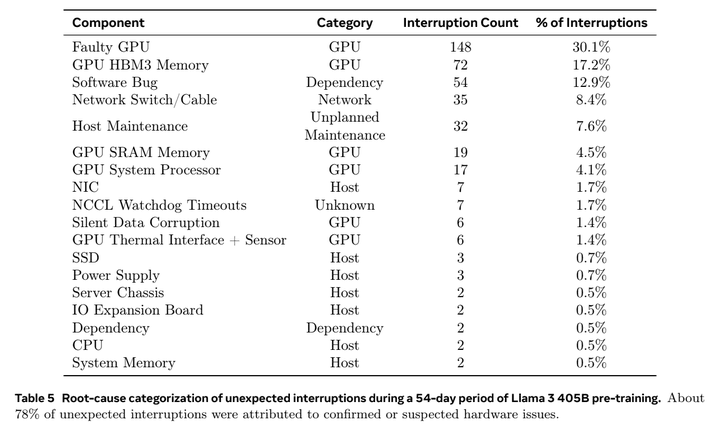
When Meta trained Llama-3 405B across 24,000 GPUs on a three-layer Clos fabric, the scale was impressive. But the real lesson was sobering: 78% of interruptions in a 54-day run came from hardware issues not training strategies.
- Faulty GPUs → 30% of failures
- Memory issues → 17%
- Network switches/cables → 8%
- Even host maintenance/software bugs contributed
This fragility isn't unique to Meta. Any enterprise building AI factories today faces the same risks.
How Can Enterprises Get Ahead of GPU Cluster Failures?
By adopting proactive, multi-component monitoring. ONES 4.0 detects GPU, network, and hardware anomalies early, ties them to root causes, and enables faster recovery before workloads are disrupted.
Why Does GPU Health Matter in AI Infrastructure?
- Overutilization → Some GPUs run at 100% while others idle at <20%.
- ECC errors → Single-bit (warning) vs. double-bit (critical).
- Thermal/power issues → Throttling due to rack-level cooling.
- Hardware degradation → Failing health checks before replacement.
Without continuous monitoring, these issues silently waste compute cycles and delay experiments.
How Does ONES 4.0 Monitor AI Infrastructure?
- End-to-end coverage: GPUs, CPUs, NICs, memory, SSDs, power, switches.
- Proactive checks: ECC errors, thermal throttling, and degraded GPU detection.
- Cross-vendor: NVIDIA Spectrum-X, AMD, SONiC fabrics, Arista EOS.
Example Output (nvidia-smi):
- GPU 0 → 4 single-bit ECC errors (warning).
- GPU 1 → 1 double-bit ECC error (critical).
ONES surfaces these with severity levels (Green/Yellow/Red) so operators can act immediately.
What Does the ONES GPU Dashboard Provide?
- Inventory view of GPUs in the cluster.
- Error visibility: ECC single vs. double-bit errors.
- Color-coded health: Green (healthy), Yellow (warning), Red (critical).
- Quick audit: Spot vulnerable GPUs in seconds.
From the dashboard, admins can drill down into root cause or escalate via ServiceNow, Zendesk, or Slack.
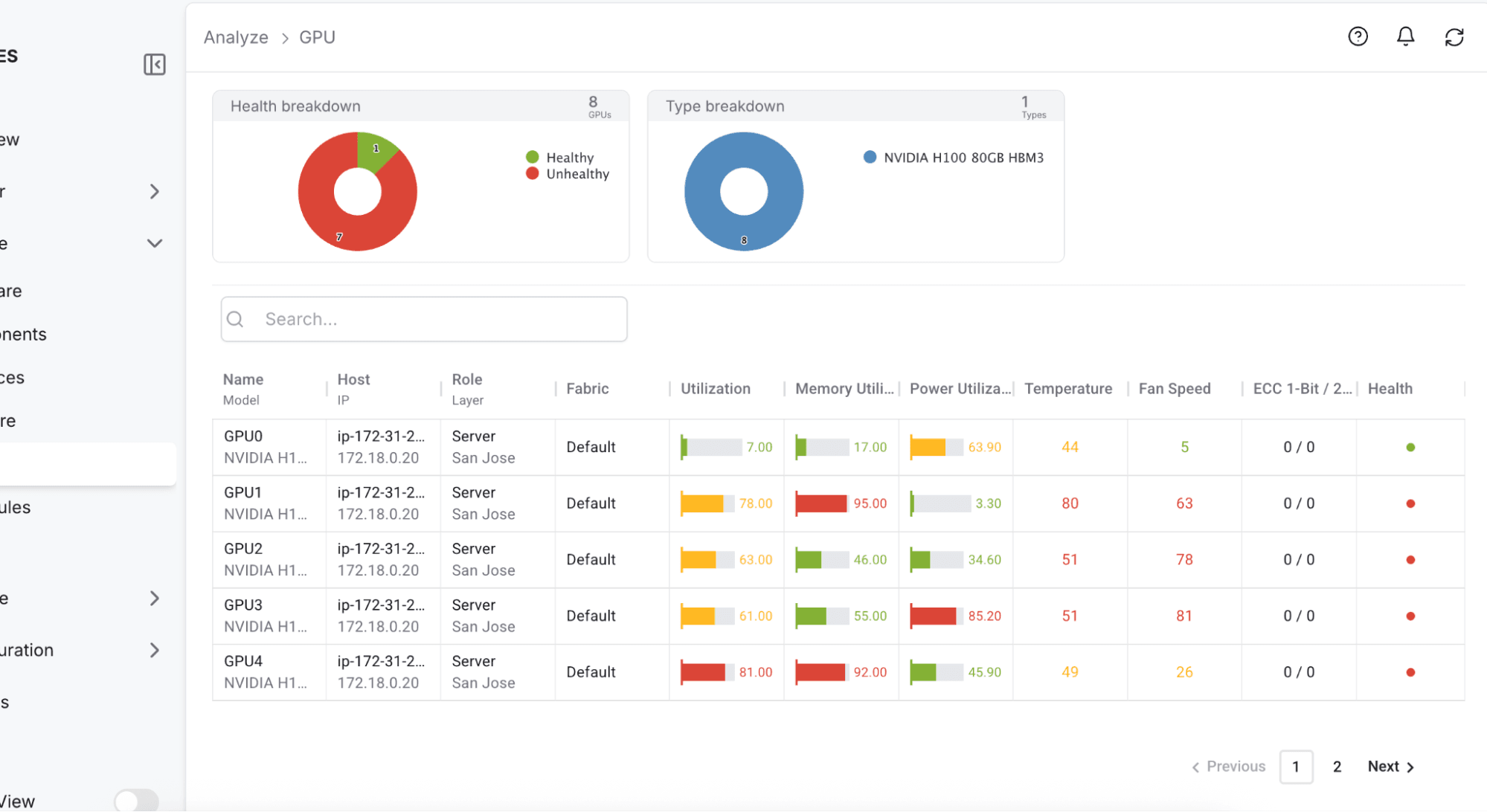
Figure 1: GPU Dashboard
How Do Thresholds and Rules Work in ONES?
-
Thresholds: Define GPU health states.
- Example: Utilization >60% = Yellow, >80% = Red.
-
Rules: Trigger alerts/notifications.
- Example: Notify Slack if any training GPU >75% for 5 min (warning), >85% (critical).
Together, thresholds + rules form a layered safety net - like cockpit instruments + alarms.
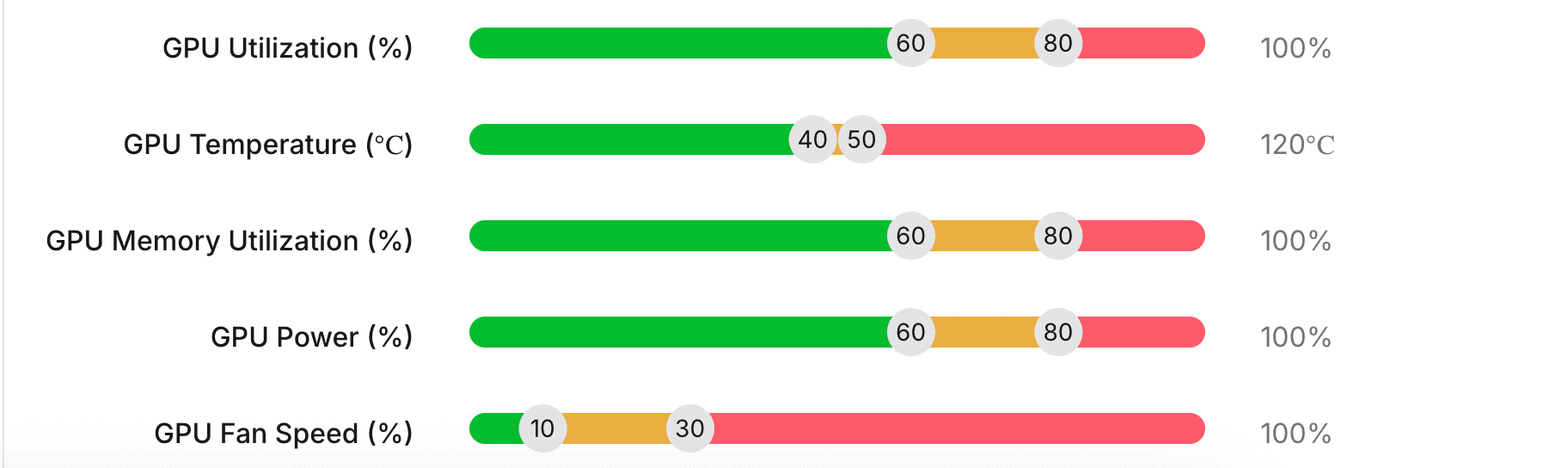
Figure 2: GPU thresholds
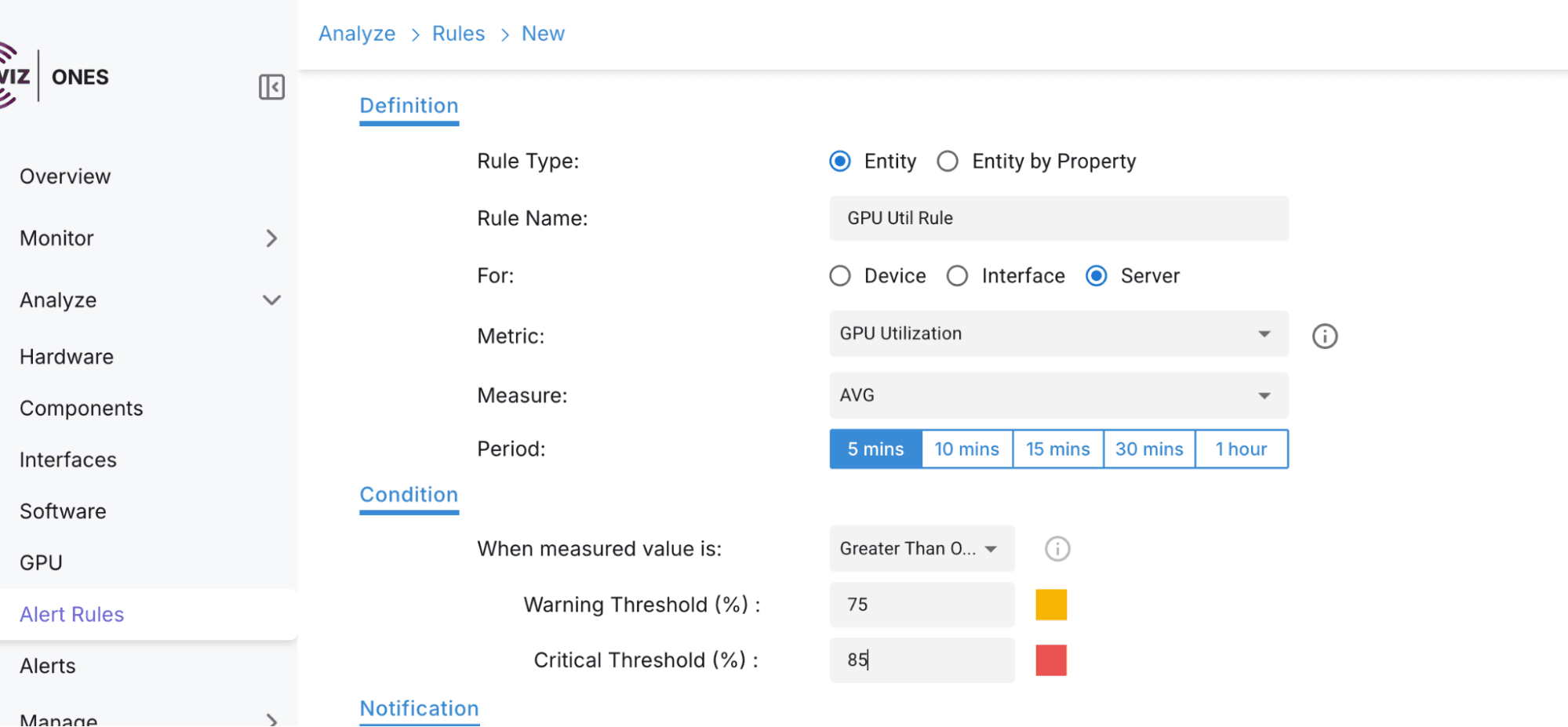
Figure 3: Rule creation
What Can Enterprises Learn from Meta's Experience?
- Early Warnings → Act before GPU issues hit workloads.
- Root Cause Clarity → Faster fixes and remediation.
- Customizable Policies → Align monitoring with priorities.
- Vendor-Neutral Design → Works across NVIDIA, AMD, SONiC, Arista.
ONES 4.0 acts as the standardization fabric for AI infrastructure, giving enterprises the confidence to scale without fear of hidden fragility.
Conclusion:
ONES 4.0 transforms GPU monitoring into resilience:
- Detect anomalies early.
- Tie issues to root causes.
- Automate alerts and remediation.
- Standardize across vendors and fabrics.
With ONES, you're not just monitoring GPUs - you're building a resilient AI factory.
Ready to make your GPU clusters resilient?
Book a demo with Aviz and see how ONES 4.0 protects your AI factory from failures.


