





Unveiling New Capabilities in Aviz ONES: NVIDIA Spectrum™-X, Orchestration for Small Networks and Conversational SONiC Troubleshooting
 March 5, 2025
 ONES & SONiC
We are excited to introduce ONES 3.1, a major milestone in our continuous innovation with the Open Networking Enterprise Suite (ONES). This latest release reinforces our vision of building "Networks for AI and AI for Networks," raising the bar for network management, configuration, and operations. With enhanced visibility and superior support, ONES 3.1 is more than just an update; it's a transformative leap forward. This version delivers cutting-edge features that elevate the intelligence and efficiency of network operations, reflecting our unwavering commitment to redefining the possibilities in network management, orchestration, and support.
Key Features of ONES 3.1

Spectrum ™-X Observability:
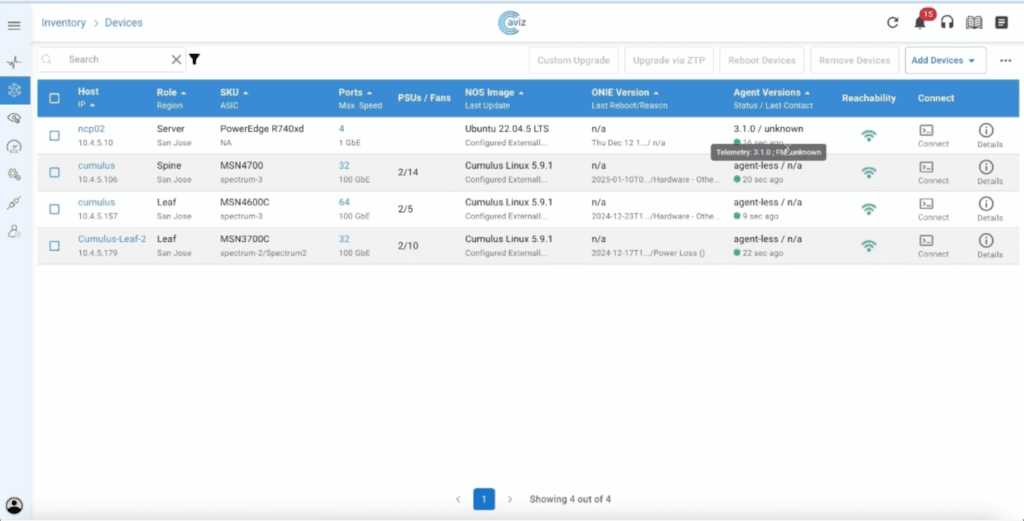
Building on our existing support for Cumulus NOS, ONES 3.1 now extends compatibility to NVIDIA Spectrum™-X platforms running the latest NOS. This enhancement provides comprehensive visibility into Inventory, Environment, Firmware Versions, CPU/Memory Utilization, Transceivers, Interface Counters, LACP, BGP, RoCE Metrics including PFC, RoCE Traffic, and Queue Counters.
Additionally, ONES 3.1 brings enhanced NVIDIA GPU metrics for GPU-accelerated servers, offering a centralized dashboard that showcases the Top 10 GPU Utilization, allowing for real-time tracking and analysis of the most demanding GPU workloads.
Orchestration for Small Networks
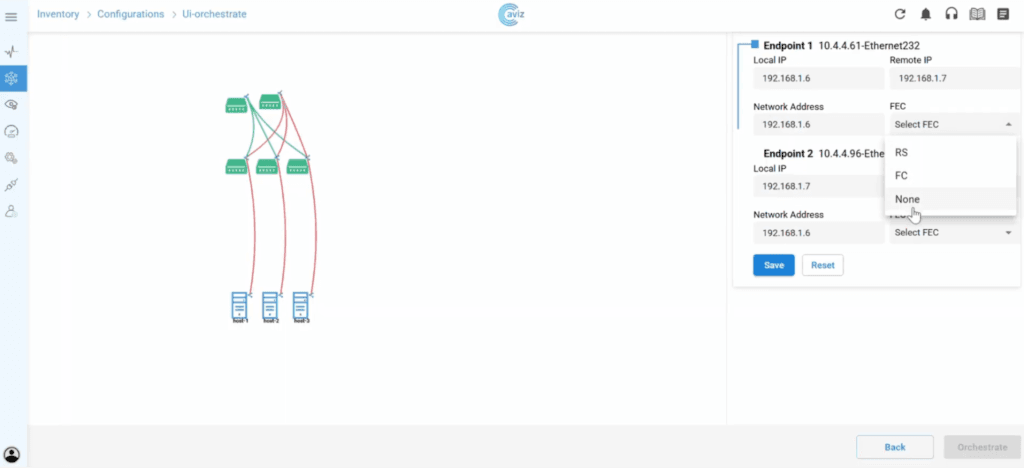
ONES Fabric Manager introduces a simplified, intent-based orchestration experience through an intuitive GUI, enabling seamless fabric orchestration with just a few clicks. New capabilities such as Config Execution and Editor Window, Configuration Comparison, and Backups before upgrades or reboots enhance the efficiency, reliability, and manageability of data center fabric operations.
AI assistant: Conversational Troubleshooting (BETA)
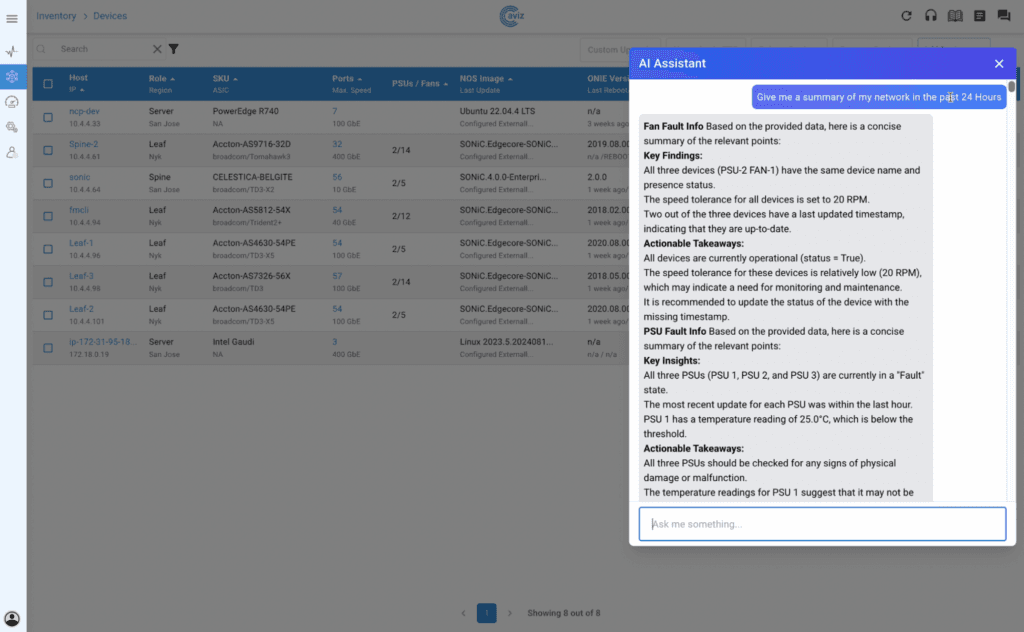
ONES 3.1 introduces the AI Assistant, an intelligent conversational interface that enables users to interact effortlessly with network health and inventory data. It provides real-time insights, streamlines management, and responds to a wide range of queries, enhancing operational efficiency. Designed for on-premises deployment, the AI Assistant operates efficiently on a CPU, eliminating the need for a GPU or any tokens to process user queries.
IP Tracking & Alerting
ONES 3.1 introduces intelligent tracking of network device IP changes in real-time. A dedicated widget enables operators to monitor per-node IP changes and receive instant alerts in case of unexpected changes. Despite IP changes, telemetry streaming remains uninterrupted, ensuring continuous network monitoring without any impact on live status visibility.
Enhanced Support & Proactive Monitoring
ONES 3.1 brings a comprehensive set of default rule templates for critical metrics, ensuring instant anomaly detection and alerts with a simple one-click activation. This release expands monitoring capabilities with Docker CPU/Memory Utilization, Docker Down Status, and Unhealthy Device Detection. Additionally, users can now download a detailed summary of existing rules, enhancing visibility and control over network health.
Additional Enhancements
ONES 3.1 also introduces powerful new features, further strengthening its position as a leading network management solution:
- 1. Inbound/Outbound Traffic Comparison
- 2. VLAN Metrics Monitoring
- 3. Docker Status Transition Monitoring
- 4. Dashboard for Top CPU/Memory-Consuming Services
- 5. Transceiver Inventory Visualization
- 6. Unhealthy Device Notifications
- 7. Logical Grouping of MCLAG Interfaces in Topology
These enhancements make ONES smarter, more efficient, and even more indispensable for modern networking.
Redefining Network Management with ONES 3.1
ONES 3.1 introduces a cutting-edge suite of features and an enhanced user experience, redefining network management, orchestration, and support. This release empowers users with advanced tools and intelligence, ensuring they stay ahead in an increasingly complex network environment.
To explore the full potential of ONES 3.1 and discover how it can transform your network operations, visit us at Aviz Networks. Embark on your journey toward seamless network monitoring and orchestration today.
FAQs
1. What is Aviz ONES 3.1 and how does it improve network operations?
Aviz ONES 3.1 is the latest version of the Open Networking Enterprise Suite, designed to optimize AI-driven data center networks. It introduces powerful enhancements in orchestration, observability, and support—tailored to modern networking needs such as RoCE fabrics, NVIDIA Spectrum™-X integration, and small-network scalability.
2. How does ONES 3.1 provide observability for NVIDIA Spectrum™-X platforms?
ONES 3.1 extends support to NVIDIA Spectrum™-X NOS by offering deep visibility into:
- Inventory and transceiver health
- Interface counters and RoCE traffic
- LACP, BGP, PFC, and queue-level metrics
- GPU utilization monitoring on accelerated servers
This makes it easier for operators to monitor, troubleshoot, and optimize NVIDIA-based AI fabrics.
3. What is Conversational Troubleshooting in ONES 3.1?
Conversational Troubleshooting is a new AI assistant in ONES 3.1 that lets users interact with their network via natural language. It answers real-time questions about device health, inventory, and metrics—without requiring CLI knowledge or GPU-based LLMs—making diagnostics more intuitive for NetOps teams.
4. How does ONES 3.1 simplify orchestration for small networks?
ONES 3.1 introduces an intent-based orchestration GUI that's purpose-built for small to mid-size networks. It allows users to:
- Execute and edit configurations visually
- Compare changes before deployment
- Create backups before upgrades or reboots
This streamlines network management without the complexity of CLI-heavy operations.
5. What proactive monitoring features are included in ONES 3.1?
ONES 3.1 enhances proactive monitoring with a library of pre-built rules for key metrics. Administrators can now monitor:
- Docker CPU and memory usage
- Transition status of containerized services
- IP address changes across network nodes
- Unhealthy devices or service disruptions in real time
Alerts and anomaly detection are now just one click away—ideal for fast-moving AI environments.
6. How does Spectrum™-X observability enhance GPU-centric network performance?
Deep observability tools help operators:
- Monitor RoCE metrics like PFC and queue counters in real time
- Track top GPU workloads to balance compute clusters efficiently
- Visualize transceiver and interface health to prevent data flow bottlenecks
- Correlate high GPU utilization with network congestion for faster troubleshooting
7. What makes an AI network assistant useful for day-to-day troubleshooting?
A conversational AI assistant can:
- Answer plain-language questions about device status and logs
- Pull up inventory, health metrics, and alerts instantly
- Guide junior engineers through standard diagnostics
- Reduce dependency on complex CLI commands for routine checks
8. How does intent-based orchestration help small network teams?
Intent-based orchestration tools:
- Let admins push configurations with a few clicks instead of manual scripts
- Offer side-by-side config comparisons to catch mistakes early
- Automate backups before reboots or upgrades, reducing rollback headaches
- Empower lean IT teams to manage fabrics with enterprise-grade consistency
9. How does proactive IP tracking improve network security and stability?
Real-time IP tracking and alerts:
- Notify admins of unexpected IP changes, which may signal misconfigurations or threats
- Keep telemetry streams uninterrupted despite address shifts
- Help audit trail logs for compliance and forensics
- Strengthen overall network stability by avoiding misrouted traffic
10. What new network observability metrics can admins monitor in ONES 3.1?
Admins gain expanded visibility into:
- VLAN-level traffic patterns
- Docker CPU and memory trends
- Inbound vs outbound traffic for anomaly spotting
- Top services consuming CPU/Memory
- Logical MCLAG groups and their live link states
- Alerts for unhealthy nodes and transitions in container status


