





Unlocking Real-Time Diameter GX Session Insights with ASN
 August 20, 2026
 Deep Network Observability

TL;DR
ASN gives real-time visibility into Diameter GX sessions by parsing and correlating CCR and CCA messages to build subscriber policy session records. It provides visibility into subscriber identity and their corresponding PCC rules, QoS, charging information, and access contexts, as well as session lifecycle events. It supports up to 3 million Diameter GX sessions, plus Kafka-based export.
Introduction
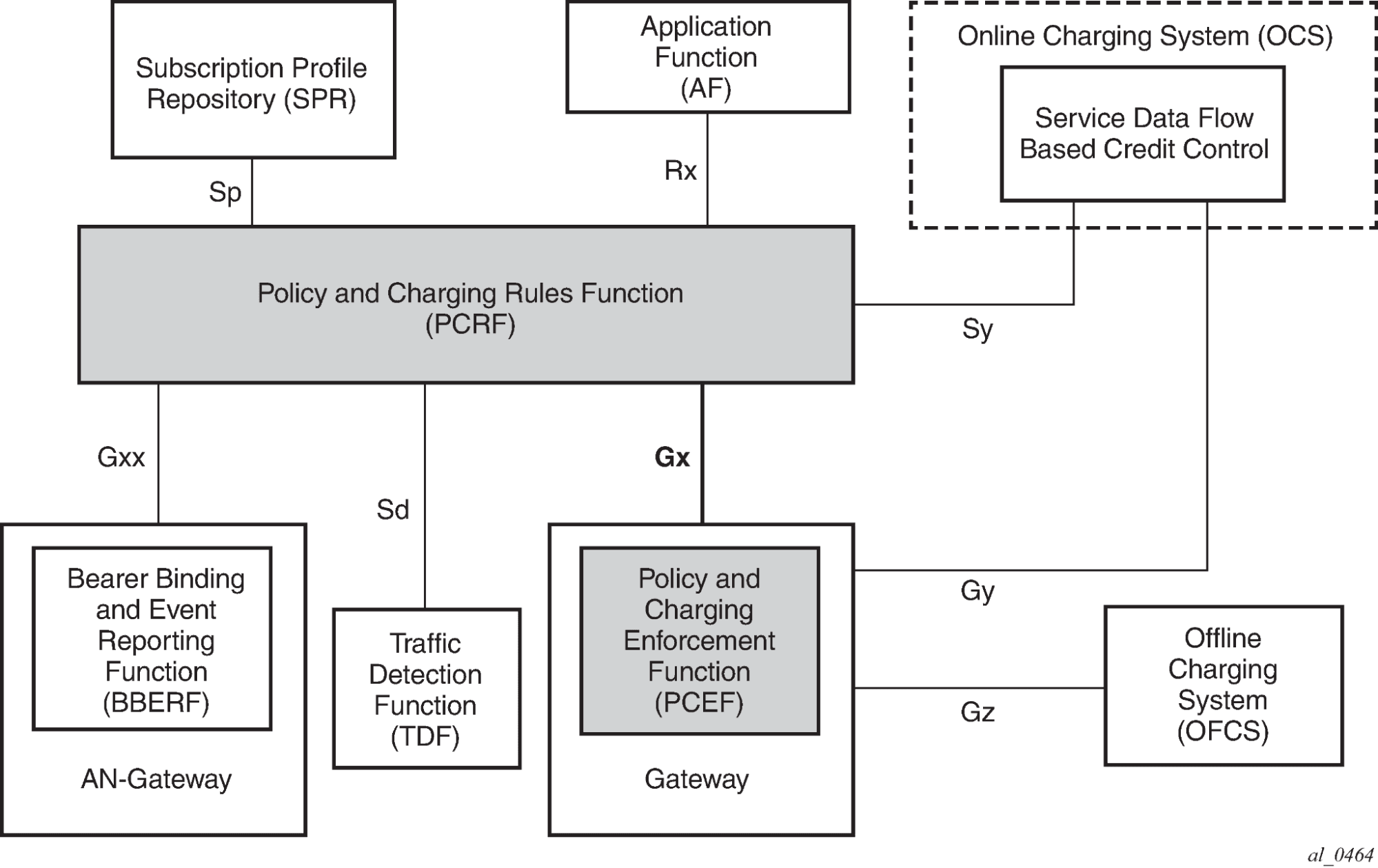
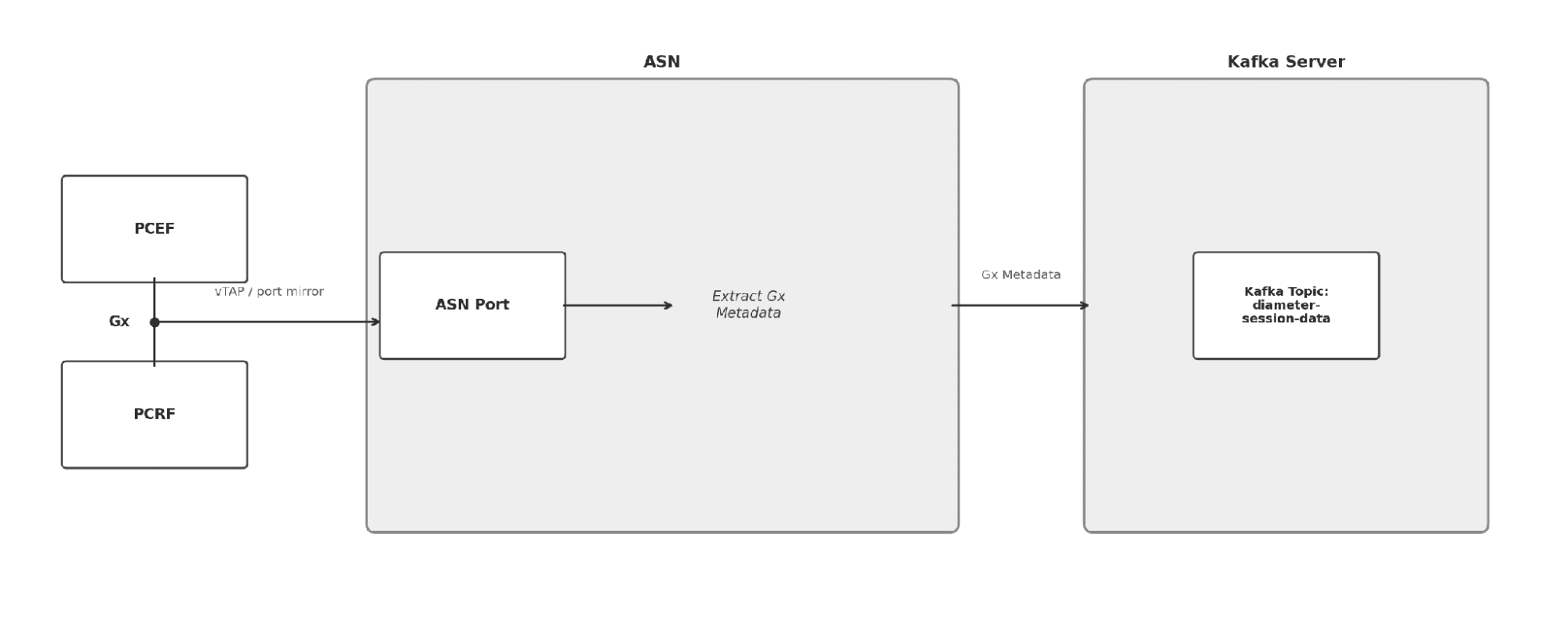
Modern mobile core networks use Diameter GX interface for dynamic delivery of policy and charging control for subscriber sessions. The Gx interface joins the Policy and Charging Rules Function (PCRF) with the Policy and Charging Enforcement Function (PCEF) for the provision of real-time policy control and charging for subscribers.
The Diameter protocol is used for communication across the Gx interface. The PCRF uses CCR and CCA messages to create, modify, and delete policy sessions for subscribers.
The Gx interface is a critical operating system data infrastructure for the mobile core as each message contains charging rules, QoS parameters, flow definitions, bearer usage policies, and access network information. Diameter GX delivers all policy decisions that define a subscriber's experience.
Each session is individually created and managed by the Diameter GX Signaling so it gives complete insight to traffic management across the network.
By processing, correlating, and maintaining the state of GX sessions, ASN (Aviz Service Node) gives complete insight into subscriber policy sessions during their related active stages.
Why Does Diameter GX Visibility Matter?
Diameter GX is the primary tool for the transport of policies and charging rules to enforcement. It also provides the complete traffic control lifecycle monitoring for the subscriber.
Every Diameter GX session contains operational information such as:
- Subscriber identity (IMSI, IMEI, MSISDN)
- Session identifiers and interface routing information
- Charging rule definitions and rule base names
- QoS parameters per bearer and per APN
- Flow-level traffic policies (uplink and downlink)
- Access network context (RAT type, SGSN/GGSN addresses, APN)
- Bearer usage and IP-CAN type
This equipment allows operators to identify if a subscriber has an active session. Furthermore, operators are able to control and charge for every subscriber session.
Deep visibility into Diameter GX sessions enables operators to:
- Validate PCC rules delivered to the enforcement plane
- Verify QoS parameters applied to subscriber bearers
- Monitor charging rule installation and updates across sessions
- Troubleshoot session establishment, policy update, and termination events
- Improve operational visibility across the policy control layer
- Export rich session information for external analytics platforms
Operators no longer have to analyze Diameter packets individually. They now have a comprehensive view of the subscriber policy session and the related rules.
How Does ASN Generate Rich Diameter GX Metadata?
ASN transforms Diameter GX signaling and correlates data across the entire lifecycle of a subscriber session.
ASN supports all CCR and CCA messages needed for Gx observability.
When dealing with subscriber session updates, ASN employs an AVP merge model within a session state. Updates to AVPs overwrite previously stored values and newly observed AVPs are stored. This results in every session state export being the most current state of the session.
ASN also manages multiple sessions for an International Mobile Subscriber Identity (IMSI). In such cases, ASN automatically replaces older sessions with newer sessions and initiates priority exports to preserve historical data.
ASN extracts comprehensive Diameter GX metadata, including:
| Metadata Category | Attributes | Why It Matters |
|---|---|---|
| Subscriber Information | IMSI, IMEI, MSISDN | Identifies the subscriber to correlate sessions for analytics. |
| Interface Info (GX General) | Session-ID, Origin-Host, Destination-Host, Origin-Realm, Destination-Realm, Command Name, Last Seen Message | Tracks Diameter GX sessions and provides routing path identification for PCEF and PCRF interaction. Summary of family assessment and treatment |
| User Information | UE IP Address, APN, IP-CAN Type, RAT Type, Bearer Usage, SGSN Address, GGSN Address, AN-GW Address | Provides access context, how the subscriber is connected and the network resources. |
| Charging Rule Information | Rule Base Name, Rule Name, Rule Type, Rating Group, Charging Mode, Flow Status, Flow Rules (UL/DL), up to 3 static rule names | Allows full transparency into PCC regulations sent to the PCEF, which is the policy control core element of 4G. |
| QoS Information | QCI, Max UL/DL Bit Rate, APN Aggregate DL/UL BPS, Priority Level, Pre-emption Capability, Pre-emption Vulnerability | Validates bandwidth limits and QoS policies placed on subscriber traffic through each bearer. |
| Default Bearer QoS | QCI, Max UL/DL Bit Rate, APN Aggregate BPS, Priority Level, Pre-emption settings | Sets the baseline QoS profile when the session commences. |
| Session Timestamps | Session Created Time, Session Last Seen Time, Session Published Time (milliseconds) | Tracks session lifecycle timing for operational reporting. |
| Session Status | Export Type (Normal / Priority), Priority Cause (GX Termination, GX Session Replace, GTPC-Delete) | Logs every point in time a track is loaded for operational reporting, along with the current state and reason for every export event. |
The latest Diameter GX session state is now exported through Kafka (keyed by IMSI), therefore downstream Analytics systems can now process a more advanced level policy session information for subscribers.
The system can handle up to 3 million concurrent Diameter GX sessions.
What Benefits Does Diameter GX Observability Provide?
ASN’s conversion of Diameter GX signals into usable operational knowledge empowers network operators to have increased awareness of subscriber policy sessions and helps to alleviate the difficulty associated with the day-to-day tasks of operating a network.
Complete Subscriber Session Visibility
Gain a consolidated view of subscriber identity, PCC rule configuration, QoS parameters, access network context, and session lifecycle events, all correlated across CCR/CCA exchanges into a single, coherent session record.
Faster Troubleshooting
Don’t have to correlate multiple Diameter messages as you identify the causes of policy session establishment failure, rule update anomalies, QoS misconfigurations, and session terminations. Critical state changes related to termination and session-replace events are prioritized for export, thus missed state changes are also never missed.
Policy and Charging Rule Validation
Ensure PCC rules, including charging rule definitions, flow policies, QoS parameters, and rule base assignments, are properly delivered, and are active for each subscriber session.
ASN's cumulative AVP merge model ensures the whole set of currently active rules, not just the latest rule, is described by the exported state.
Rich Subscriber Analytics
Send Diameter GX metadata as it is exported comprehensively through Kafka to analytics, monitoring, and observability tools. .
Conclusion
Diameter GX defines user plane policies for controlling user traffic in terms of governing, charging, and quality of service in the mobile core networks. Diameter GX defines policies at the point of enforcement.
By correlating and integrating Diameter GX signaling information, ASN offers a complete understanding of the delivery of PCC rules, enforcement of quality of service, charging, and session and their lifecycle management.
Frequently Asked Questions
What is Diameter GX session monitoring?
Diameter GX session monitoring is the process of parsing and correlating CCR and CCA messages across the Gx interface to build a complete view of subscriber policy sessions, including PCC rules, QoS parameters, charging information, and session lifecycle events.
What is the role of the Gx interface in mobile core networks?
The Gx interface connects the Policy and Charging Rules Function (PCRF) with the Policy and Charging Enforcement Function (PCEF), enabling real-time delivery of policy control and charging rules that define each subscriber's network experience.
What subscriber data does a Diameter GX session contain?
Each session includes subscriber identity (IMSI, IMEI, MSISDN), session identifiers, charging rule definitions, QoS parameters per bearer and APN, flow-level traffic policies, and access network context such as RAT type and SGSN/GGSN addresses.
How does ASN handle updates to an active Diameter GX session?
ASN uses an AVP merge model where updated AVPs overwrite previously stored values and newly observed AVPs are added, ensuring every exported session state reflects the most current configuration of that session.
How does ASN manage multiple sessions for the same subscriber?
When multiple sessions exist for the same IMSI, ASN automatically replaces older sessions with newer ones and initiates priority exports to preserve historical session data.
How many concurrent Diameter GX sessions can ASN support?
ASN supports up to 3 million concurrent Diameter GX sessions.
How is Diameter GX session data exported for analytics?
ASN exports the latest Diameter GX session state through Kafka, keyed by IMSI, so downstream analytics, monitoring, and observability tools can process rich subscriber policy session information in real time.
How does ASN help with troubleshooting policy session issues?
ASN eliminates the need to manually correlate individual Diameter messages by providing a consolidated session record, and it prioritizes exports for critical state changes such as session terminations and session-replace events so no key changes are missed.
What QoS information does ASN extract from Diameter GX sessions?
ASN captures QCI, maximum uplink and downlink bit rates, APN aggregate bandwidth settings, priority level, and pre-emption capability and vulnerability for both per-bearer and default bearer QoS profiles.
Turn Diameter GX signaling into actionable subscriber intelligence. Explore how Aviz Service Node can help improve policy validation, troubleshooting, and mobile-core observability.


