





Unlocking PFCP-Sxb Session Visibility with Aviz Service Node
 August 19, 2026
 Deep Network Observability
TL;DR
Aviz Service Node (ASN) offers detailed visibility into PFCP sessions traversing the Sxb interface within the mobile core network. By capturing and correlating PFCP signaling used during the establishment, modification, and deletion of sessions, ASN maintains an enriched database summarizing details for subscriber session, forwarding policies, QoS rules, charging configuration, usage records, and session states. These metadata are available for export via Kafka and IPFIX for use in downstream analytics and operational reporting.
Introduction
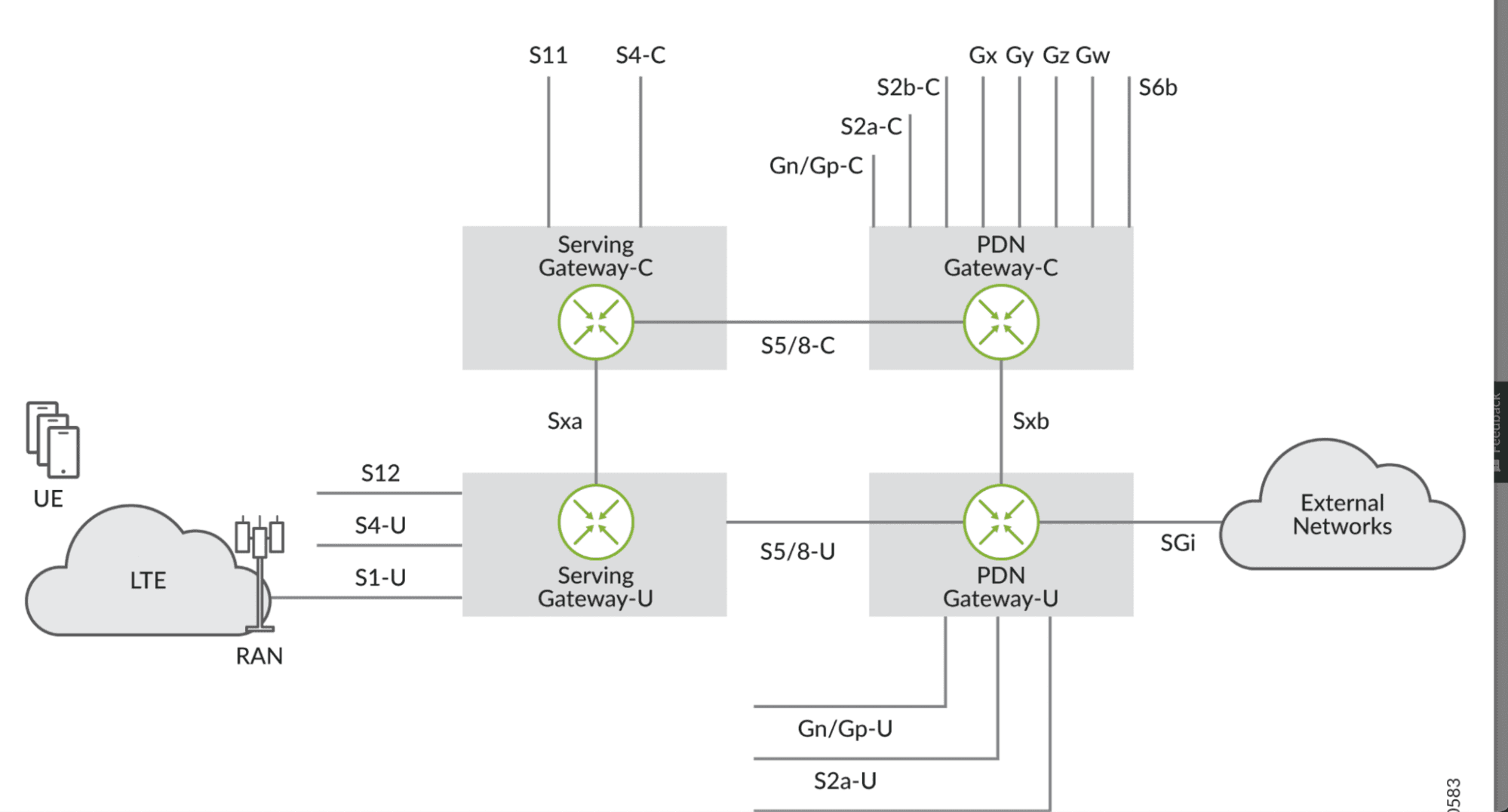
Mobile core networks leverage a Control and User Plane Separation (CUPS) architecture to enable more flexibility and scalability in their deployment and evolution. By disaggregating Control Plane (CP) and User Plane (UP) functions, both may be scaled individually and the CUPS architecture provides mechanisms for managing UP subscriber sessions from the CP. This is done over a new Sxb interface which connects a Packet Data Network Gateway Control Plane (PGW-C) and a Packet Data Network Gateway User Plane (PGW-U).
The Packet Forwarding Control Protocol (PFCP) is used on the Sxb interface to facilitate CP and UP communication. Via PFCP signaling, the CP creates and deletes subscriber sessions and sets-up any modification to those sessions, as well as provisioning the forwarding rules, Quality of Service (QoS) settings, charging configurations and usage reporting for handling customer traffic. Whenever customer traffic flow is altered, the PFCP messaging is sent on the Sxb interface so every activity affecting the User Plane must happen via message exchange on Sxb.
Given that the lifecycle of every subscriber session is established and modified by the exchange of PFCP signals, the Sxb is inherently one of the "goldmines" for network operators within the mobile core networks as PFCP messages are information-rich and contain important data around the customer sessions, flow of data, QoS parameters, charging setup and usage reports, endpoints of communication and etc., associated with all created sessions during its lifecycle.
ASN enables you to harvest the knowledge carried in the PFCP signals by collecting, collecting and updating sessions established on the Sxb interface. In essence, ASN gives you full visibility of the PFCP sessions and the customer sessions across the entire cycle from their establishment until their termination. Therefore you will be able to verify the provisioning of user traffic policies, troubleshoot service and customer session issues and get access to all the operational information from the PFCP signals for further analysis.
Why Does PFCP Visibility Matter?
PFCP mainly deals with how User plane traffic is programmed but at the same time it has good perspective about subscriber traffic over the full lifecycle.
Every PFCP session contains operational information such as:
- Subscriber information
- Session identifiers
- Packet forwarding policies
- QoS enforcement rules
- Charging configuration
- Usage reporting rules
- Traffic endpoint information
This data tells your operators where sessions are and what's going on within your network. The data tells operators so much about what's happening for those customers.
Deep visibility into PFCP sessions enables operators to:
- Validate forwarding policies configured in the User Plane
- Verify QoS policies applied to subscriber traffic
- Monitor charging and usage reporting configuration
- Troubleshoot subscriber session establishment, modification, and deletion
- Improve operational visibility across the mobile core
- Export rich session information for external analytics platforms
Instead of parsing each PFCP packet and extracting insights from it, operators get a big picture perspective of the entire subscriber's session and what policy to apply. .
How Does ASN Provide Rich PFCP Metadata?
ASN continuously processes PFCP signaling and correlates information across the complete subscriber session lifecycle.
The current implementation supports:
- PFCP Session Establishment Request and Response
- PFCP Session Modification Request and Response
- PFCP Session Deletion Request and Response
As subscriber sessions evolve, ASN continuously updates the stored session information and exports the latest state.
ASN extracts comprehensive PFCP metadata, including:
| Metadata Category | Attributes | Why It Matters |
|---|---|---|
| Subscriber Information | IMSI, MSISDN, Username, RAT Type | Identifies the subscriber and access technology for session correlation and subscriber analytics. |
| Session Information | Control Plane F-SEID, User Plane F-SEID, Session ID | Uniquely identifies the PFCP session and correlates control and user plane state. |
| Packet Detection Rules (PDR) | Rule ID, Source Interface, Traffic Endpoint, Precedence, Outer Header Removal, FAR/QER/URR Associations, SDF Filters | Defines how incoming traffic is matched and associated with forwarding, QoS, and reporting policies. |
| Forwarding Action Rules (FAR) | Rule ID, Forwarding Action, Destination Interface, TEID, Tunnel IP Address, Traffic Endpoint Association | Determines how matched packets are forwarded, encapsulated, or dropped in the user plane. |
| QoS Enforcement Rules (QER) | Gate Status, Maximum Bit Rate (MBR) | Provides visibility into bandwidth limits and QoS policies applied to subscriber traffic. |
| Usage Reporting Rules (URR) | Measurement Method, Volume Quotas, Volume Thresholds, Time Thresholds, Reporting Triggers | Tracks subscriber usage and controls when usage reports are generated for charging and monitoring. |
| Charging Information | Charging Group, AAA Group, GTPP Group | Associates subscriber traffic with charging and accounting policies. |
| Traffic Endpoint Information | Network Instance, UE IPv4 Address, UE IPv6 Address, QCI, Created TEID, Created IP Address | Shows where subscriber traffic terminates and how user-plane tunnels are established. |
| Session Status | Usage Reports, Last PFCP Cause | Shows the latest session outcome and helps identify the reason for successful or failed PFCP operations. |
What Charging Information Can ASN Extract?
- Charging Group
- AAA Group
- GTPP Group
With ASN, you can parse the compressed or uncompressed PFCP packets, providing uniform metadata to downstream systems across any deployment. You can export the latest PFCP session state out of Kafka/IPFIX.
What Benefits Does PFCP Session Visibility Provide Network Operators?
ASN transforms the PFCP signaling into operationally intelligence, so Operators have unprecedented insight into subscriber sessions and a less complicated daily network management, ASN said..
Complete Subscriber Session Visibility
Obtain an aggregated view of subscriber information, including forwarding policies, QoS configuration, charging details, usage reporting and session state from the beginning to the end of the subscriber lifecycle.
Faster Troubleshooting
Detect any session establishment errors, sessions forwarding changes, Quality of Service update, any charging update or sessions release reasons by quickly looking at PFCP messages rather than correlating information across multiple messages by yourself.
Policy Validation
Check for the proper implementation of the forwarding rules, QoS Policies, Charging configuration, and Usage Reporting on the user plane.
Rich Subscriber Analytics
Stream the entirety of the PFCP metadata to Kafka for your analytics and operational reporting tools. This will allow us to increase visibility into your subscriber.
Conclusion
PFCP is a critical control protocol that regulates the forwarding, enforcement, and oversight of subscriber traffic on User Plane devices. ASN collects and aggregates PFCP signaling to deliver comprehensive insight into a consolidated subscriber session. We've peeled back the protocol-layer complexity to provide visibility into forwarding policy, QoS controls, charging rules, usage stats, and session state, allowing network operators to derive valuable insights to simplify troubleshoot, validate policy, understand subscriber behavior and monitor their network.
Frequently Asked Questions
What is PFCP and why is it important in mobile core networks?
PFCP (Packet Forwarding Control Protocol) is used on the Sxb interface to facilitate communication between the Control Plane and User Plane in a CUPS architecture. It governs the creation, modification, and deletion of subscriber sessions, as well as forwarding rules, QoS settings, charging configurations, and usage reporting.
What is the Sxb interface and why does it matter?
The Sxb interface connects the PGW-C and PGW-U in a CUPS architecture, carrying all PFCP signaling that affects subscriber sessions. Because every change to a subscriber session must pass through this interface, it is a rich source of operational data for network operators.
What types of PFCP messages does Aviz Service Node (ASN) support?
ASN processes PFCP Session Establishment, Modification, and Deletion requests and responses. As sessions evolve, ASN continuously updates stored session information and exports the latest state.
What metadata does ASN extract from PFCP sessions?
ASN extracts subscriber information, session identifiers, Packet Detection Rules, Forwarding Action Rules, QoS Enforcement Rules, Usage Reporting Rules, charging information, traffic endpoint details, and session status. This metadata provides a comprehensive view of each subscriber session across its full lifecycle.
How does ASN help with troubleshooting subscriber sessions?
ASN aggregates PFCP signaling into a single enriched session view, allowing operators to quickly identify session establishment errors, forwarding changes, QoS updates, charging changes, and session release reasons without manually correlating data across multiple messages.
Can ASN be used to validate forwarding and QoS policies?
Yes, ASN enables operators to verify that forwarding rules, QoS policies, charging configurations, and usage reporting rules are correctly provisioned on the User Plane.
How can PFCP session data from ASN be used for analytics?
ASN exports PFCP session metadata via Kafka and IPFIX, making it available for downstream analytics platforms and operational reporting tools to support subscriber behavior analysis and network monitoring.
What charging information can ASN extract from PFCP sessions?
ASN extracts Charging Group, AAA Group, and GTPP Group information, associating subscriber traffic with the appropriate charging and accounting policies.
Want deeper visibility into PFCP subscriber sessions? Explore how Aviz Service Node (ASN) transforms PFCP signaling into actionable session intelligence for faster troubleshooting, policy validation, and subscriber analytics.


