




Turning Historical Data Into a Head Start: ONES Forecasting
 August 17, 2026
 ONES & SONiC
TL;DR
ONES Forecast converts infrastructure’s past data into something you can use: A prediction of what might go wrong next. Unveiled in ONES 4.3, this feature leverages your current monitoring data to predict short-term trends across several infrastructure areas including CPU, memory, storage, network bandwidth, power supply unit health, RoCE performance, capacity, and optical links. Predictions are displayed within your current ONES dashboard for both clarity in identifying problems and a visual representation of where behavior is heading. This allows teams to perform more predictive maintenance, improve capacity planning, upgrade hardware sooner, and deliver a more reliable infrastructure operation without using additional tooling or changing workstreams.
Introduction
We’ve all been there. The disk space that’s completely maxed out in less than a day. The CPU that’s steadily inching closer and closer to 100%. The power supply that unexpectedly blows.
These situations aren’t isolated and sudden. Often, you get a pretty good indication of problems brewing from your data anywhere from days to weeks ahead of time. The problem isn’t a lack of data, but rather a lack of tooling and time that can allow you to act on your data prospectively before a failure occurs.
This is the problem ONES Forecast was designed to solve. No longer do you have to wait to see what happened in order to plan. NOW you can look ahead in a proactive way to predict potential issues before they actually happen.
What Is ONES Forecast?
ONES Forecast was added in ONES 4.3 and provides predictive analytics on your time-based data without the need for additional configuration.
Based on the recent trend of a metric you’re already monitoring, it’s projected to behave in the short term future, just below the real data.
There are no new screens or functions to master - predictive analytics just simply shows as a new switch, on and off, directly from a chart you already use, with the trend projected as a dashed line.
All you get is visibility beyond today, with no change in workflow.
How Does ONES Forecast Work?
ONES Forecast is built into the pages your teams already use for day-to-day monitoring, including Health, Traffic, Capacity, and Links.
It covers a broad range of infrastructure signals, including:
- System health: CPU, memory, and CPU temperature across devices
- Component health: PSU temperature, voltage, current, and power, along with fan speed
- Disk and storage: drive temperature, usage, wear level, and endurance indicators
- Network traffic: interface throughput, link utilization, errors, and discards
- Advanced fabrics: RoCE traffic, queue and congestion counters for AI/ML and high-performance networks
- Capacity: routing table usage and ASIC resource utilization
- Optical links: transceiver power, temperature, and voltage
Turning on the Forecast toggle overlays a projected trend line directly on the historical chart, so current behavior and the expected trajectory are visible side by side. No separate report or export is required.
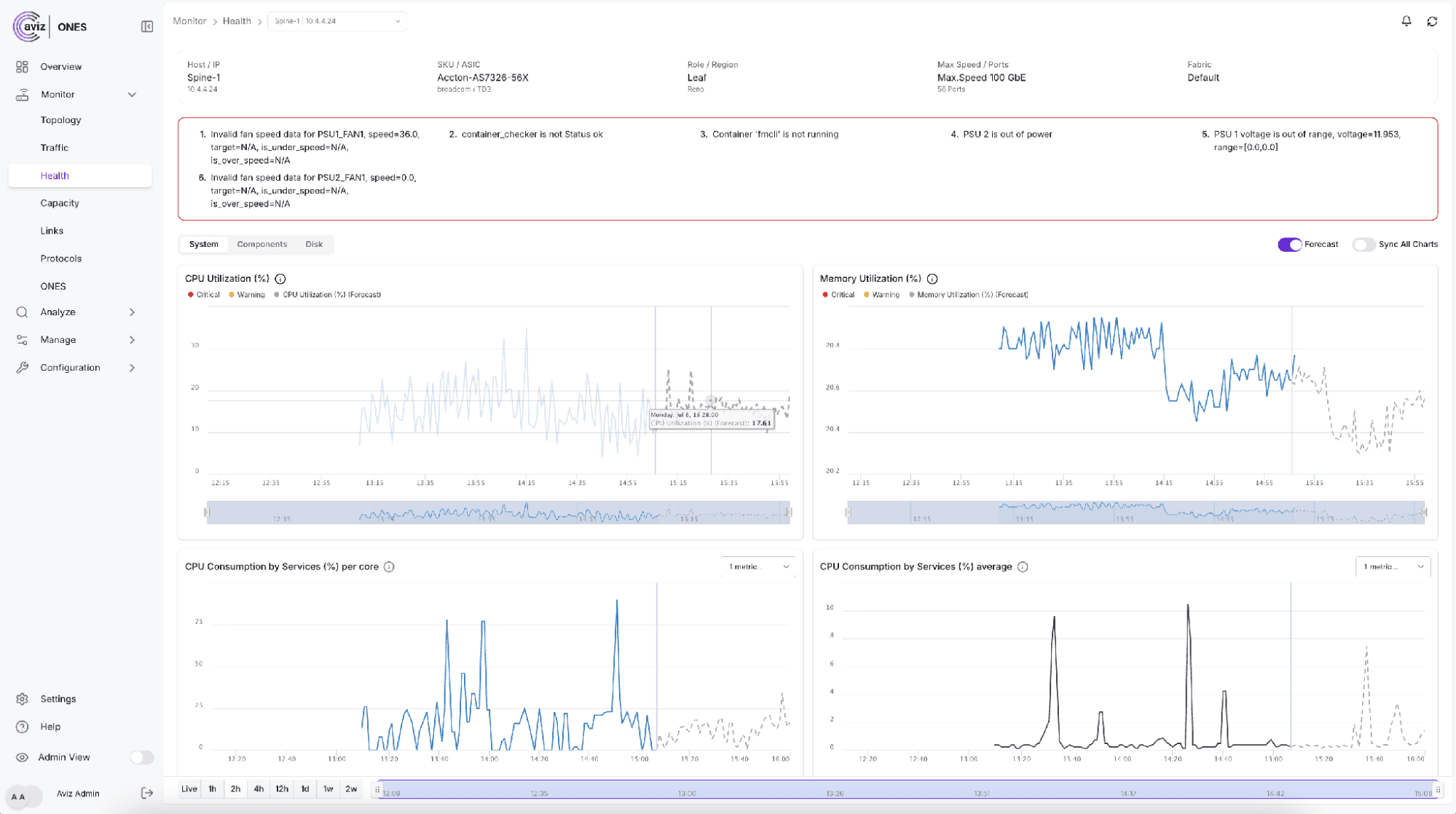
Figure 1: Forecast overlay on a switch Health dashboard. The dashed line projects CPU and memory trends forward from live data.
Why Does ONES Forecast Matter for Your Team?
Turning back the clock to produce something looking ahead has both business and operational value.
Fewer Surprises: Catch a trend in a memory leak or disk usage before it blows over into a production incident.
Better Resource Planning: Understanding your equipment, network, and storage capacity lifespan will help you avoid emergency purchases and budget adjustments, making procurement a breeze.
Improved Delivery Predictability: Teams meet deadlines. Infrastructure risk and last minute panic are a thing of the past.
Smarter Prioritization: By seeing where things are headed as something goes wrong, teams can start prioritizing attention on things that matter. You don’t need to pay the same level of attention to everything.
Shared Understanding: Since the forecasts are live on shared dashboards that the rest of engineering, ops, and leadership use, everyone is on the same page regarding the road ahead.
What Are the Real-World Scenarios for ONES Forecast?
Planning Maintenance Before It’s Urgent: Let’s take another example from the platform team at “company”. They see the CPU usage on a core switch has been growing steady over the weeks. With Forecast they can see where it will end up and they can proactively plan a maintenance for when they have availability. Instead of the incident resolution trigger happening during work hours by an alarm.
Avoiding Unplanned Hardware Failure: If we forecast at a component level on the PSU, say the PSU’s voltage or current, or even its fans speed, we can capture hardware degradations in its earliest stage. We won’t get a notification of a dying PSU because it brings a machine down, we are going to see trends, giving us the lead-time to plan an upgrade on our system.
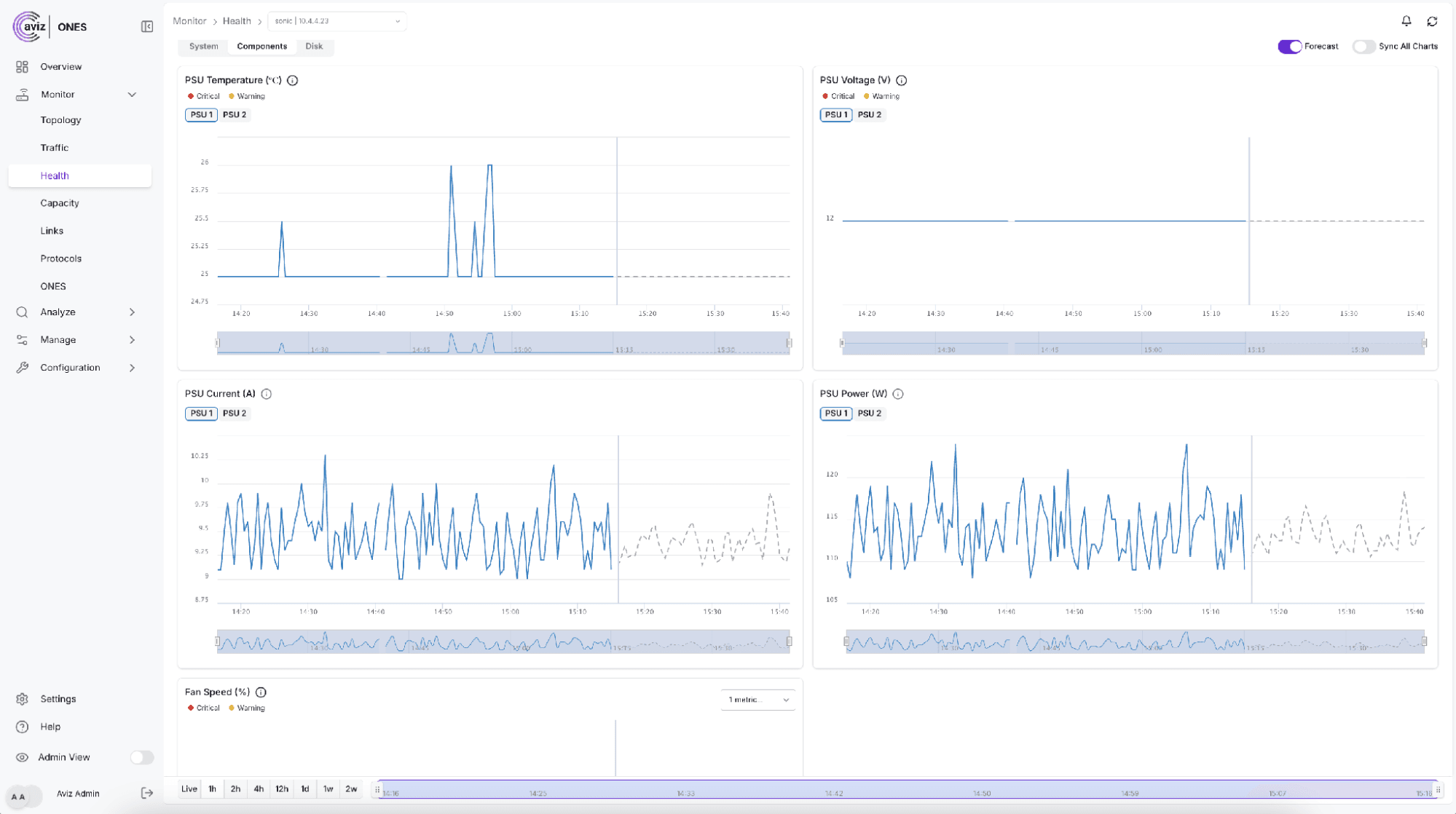
Figure 2: Component-level forecasting for PSU voltage and current, alongside temperature trends.
Right-Sizing Capacity Ahead of Growth: Network utilization, RoCE queue performance, traffic patterns and much more can be anticipated within networks that handle high throughput or AI/ML workloads, verifying that your network will sustain your growing traffic volumes and provide actionable data for upgrades.
Extending Storage Life: The disk health and endurance projections offer the storage teams an accurate forecast of the time a drive is likely to need a replacement, making procuring and provisioning for future rollouts ahead of time rather than responding to a disk failure.
How Can ONES Forecast Help Teams Keep Pace With AI-Driven Infrastructure?
Modern infrastructure is more distributed, more stressed, and running more demanding workloads, from AI to HPC. Meanwhile, engineering teams are expected to achieve more with the same people, and unplanned downtime is costing us more than ever. In this context, a two or even three-step look into the future is valuable. Data-driven forecasting doesn’t eliminate the need for good operational decision-making; it makes for better informed operational decision-making.
Conclusion
Infrastructure teams have tons of past network and system data. Now they need to leverage it to see issues before they happen.
ONES Forecast offers an advanced look right from their existing monitoring workflow. Based on trends in system health, components, storage, traffic, capacity, optical links, and AI/ML layers, teams can proactively identify problems, plan maintenance, upgrades, and resource needs accordingly.
Forward-looking capabilities give modern infrastructure teams a chance to step from reacting to predicting, building out plans with confidence.
Frequently Asked Questions
What is ONES Forecast?
ONES Forecast is a predictive analytics feature introduced in ONES 4.3 that uses your existing monitoring data to project short-term trends across infrastructure areas including CPU, memory, storage, network bandwidth, PSU health, RoCE performance, capacity, and optical links.
Does ONES Forecast require additional configuration or new workflows?
No, ONES Forecast is built directly into the monitoring pages your team already uses, and predictions appear as a simple toggle that overlays a dashed trend line on existing charts with no new screens or exports required.
What infrastructure signals does ONES Forecast cover?
ONES Forecast covers a broad range of signals including system health metrics like CPU and memory, component health like PSU voltage and fan speed, disk usage and endurance, network traffic, RoCE and high-performance fabric counters, routing table capacity, and optical transceiver data.
How can ONES Forecast help prevent unplanned downtime?
By projecting where a metric is heading before it reaches a critical threshold, teams can schedule maintenance proactively, replace degrading hardware ahead of failure, and avoid production incidents triggered by issues like memory leaks or full disks.
Can ONES Forecast support capacity planning?
Yes, by anticipating network utilization, storage endurance, and traffic growth trends, teams can make informed procurement decisions, right-size resources before demand spikes, and avoid emergency purchases or last-minute budget adjustments.
Is ONES Forecast useful for AI and high-performance computing environments?
Yes, ONES Forecast includes RoCE traffic and queue congestion metrics specifically relevant to AI and ML workloads, helping teams verify that their network infrastructure can sustain growing high-throughput demands.
Where do forecast predictions appear within ONES?
Forecast predictions are displayed directly on your existing ONES dashboards, including the Health, Traffic, Capacity, and Links pages, so engineering, operations, and leadership teams all share the same forward-looking view without switching tools.
Discover how Aviz ONES brings network operations, observability, orchestration, and automation together for modern infrastructure environments.


