




The Hidden Throttle on AI: Networking Is the Conveyor Belt
 April 21, 2026
 AI Factory
Continuing to my second post on my book - Deciding the Future: Building New Networks for the AI Era
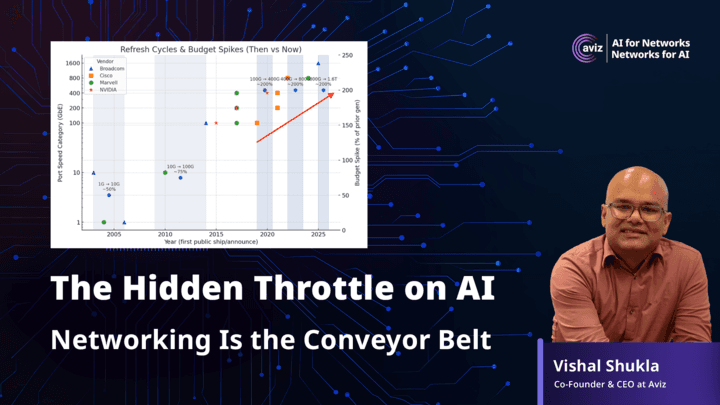
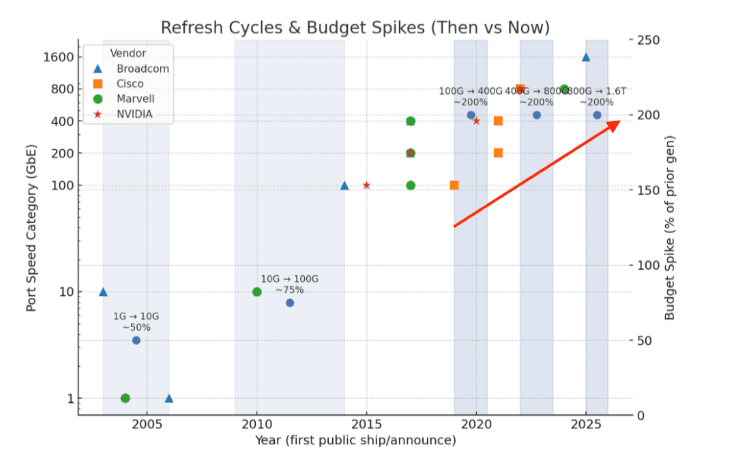
The picture here shows that how the networking vendors who use to innovate at the cycle of 5 to 7 years, are now innovating at the cycle of 3 years. The refresh cycle which use to be 5-7 years is now at 3 years. This is a clear sign of AI Era. No matter you are deploying GPUs or not - your networks are already carrying the traffic - sourced from, or destined to - for an AI system.
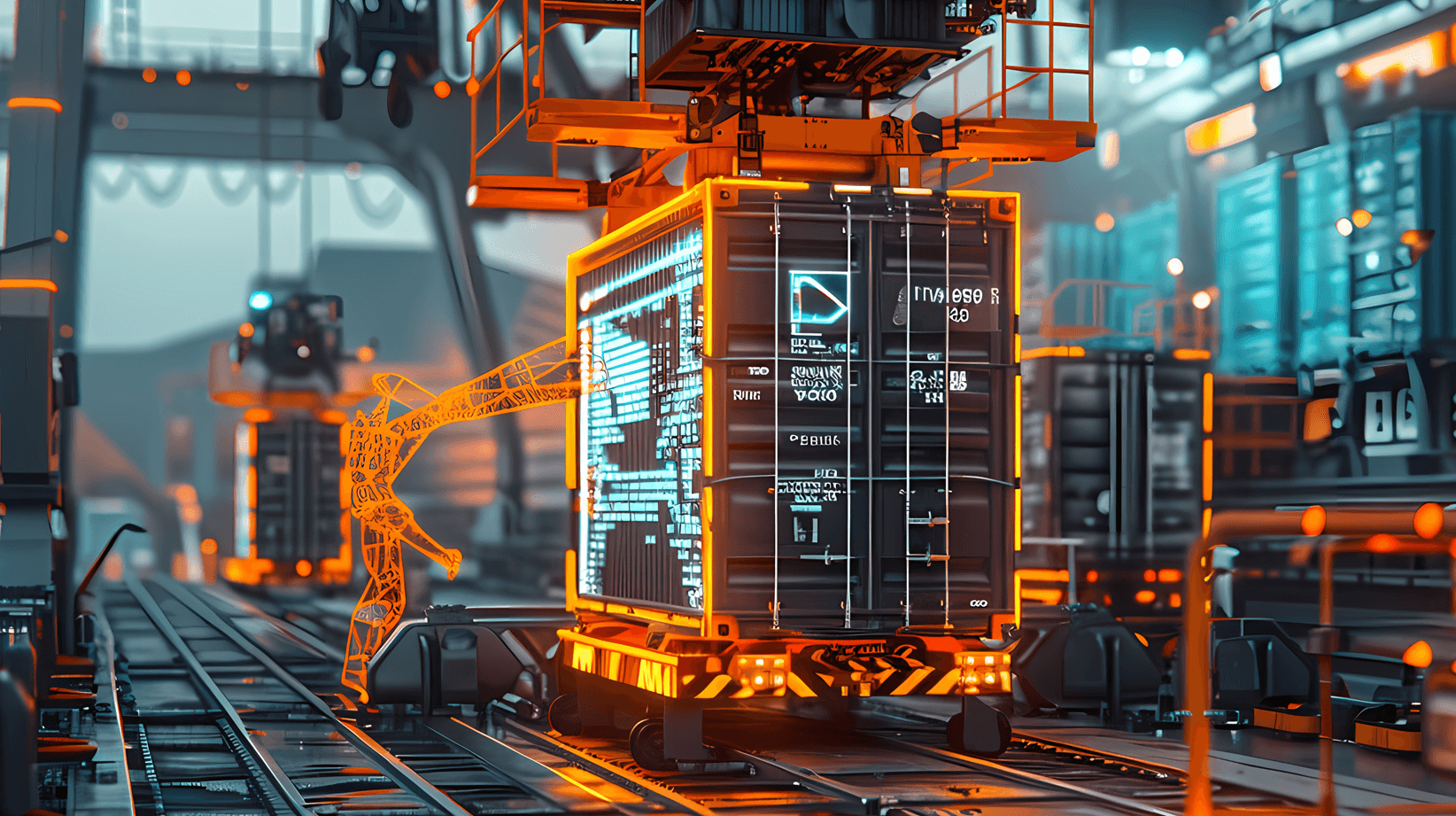
When I describe AI infrastructure to non-network leaders, I often use the factory analogy embedded around this image: data is the raw material, GPUs are the robots, and the network is the conveyor belt. If the conveyor is narrow, congested, or fragile, the robots wait.
That is why network design is no longer a back-office discussion. The cost of idle GPUs, delayed inference, and inconsistent user experience often hides inside the network path. In the AI era, the invisible parts of infrastructure become the most strategic ones.
A line that stayed with me came from Chuck Robbins (CEO of Cisco), mentioned at their Partner Summit, Cisco highlights a massive AI opportunity: “There is no AI without a network, and no AI without a secure network.” This line fits this picture because The market is already spending against this reality: switching demand is rising because AI traffic is pushing the fabric harder.
When the network improves, every CPU, GPU, workflow, and model above it has a better chance to create business value.
Frequently Asked Questions
1. Why are networking innovation and refresh cycles shortening in the AI era?
Networking vendors that once innovated on 5 to 7 year cycles are now innovating every 3 years. The infrastructure refresh cycle has also changed to 3 years, showing the increased strain AI-driven traffic puts on modern networks.
2. How do networks carry AI traffic even without GPU deployments?
Even without deploying GPUs, networks are already handling traffic that comes from or goes to AI systems. AI workloads create east-west and north-south traffic patterns that affect network fabrics, regardless of GPU presence.
3. How does the factory analogy explain AI infrastructure for non-network leaders?
In the factory analogy, data is the raw material, GPUs are like robots, and the network acts as the conveyor belt. When the network becomes narrow, congested, or fragile, GPUs have to wait, which lowers overall system efficiency.
4. Why has network design become a strategic discussion in AI infrastructure?
Network limitations create hidden costs such as idle GPUs, delayed inference, and inconsistent user experiences. In the AI era, these unseen infrastructure issues directly affect business outcomes, making network design a strategic priority rather than just an administrative concern.
5. What market signals highlight the importance of secure networks for AI?
According to Chuck Robbins, who spoke at a Cisco partner summit, there is no AI without a network and no AI without a secure network. Market spending reflects this truth, as AI traffic is putting more pressure on switching fabrics and increasing the need for network upgrades.
If these thoughts resonate with you and you’d like to explore the topic further, let’s connect.


