





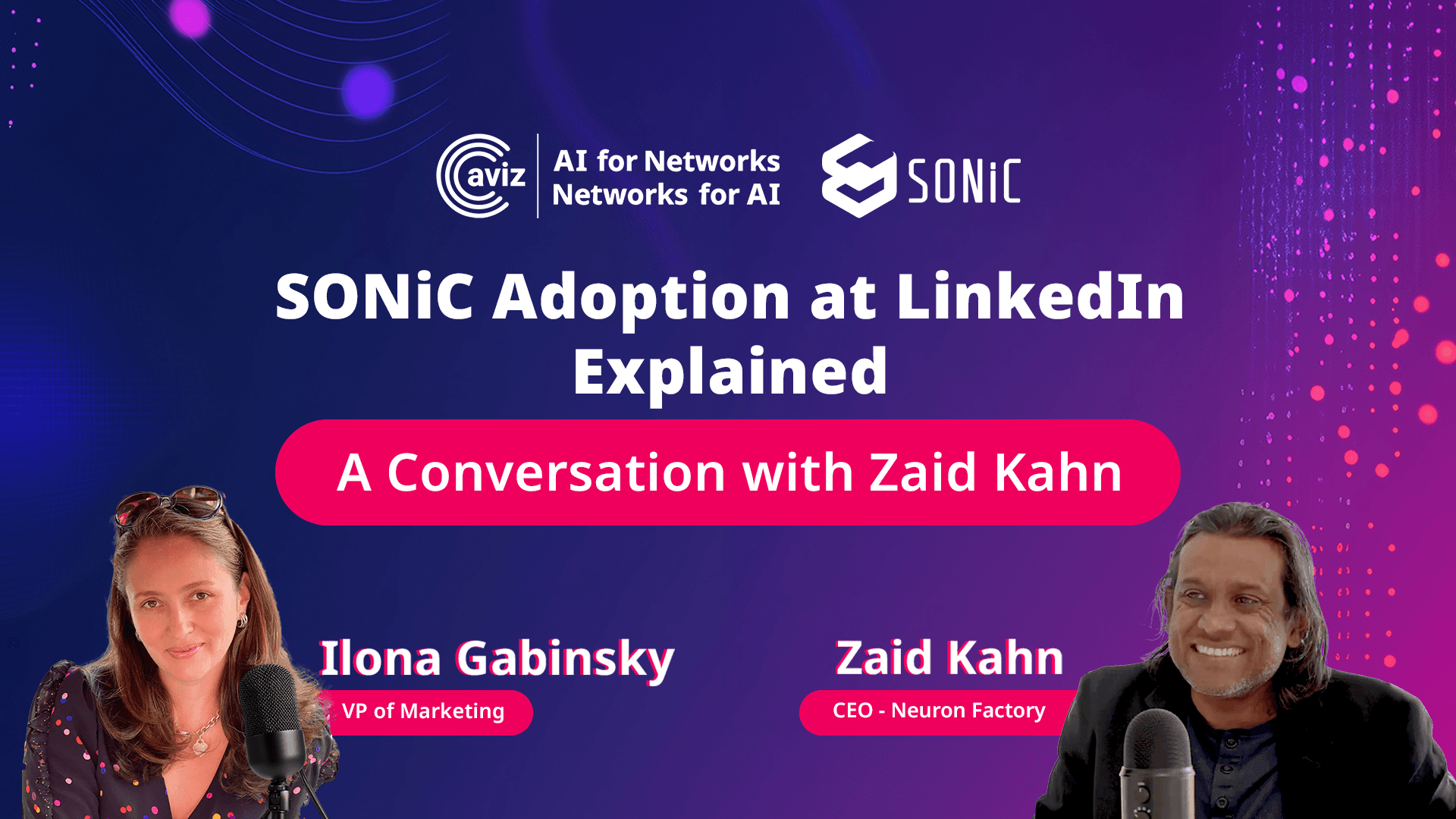
SONiC Adoption at LinkedIn Explained: A Conversation with Zaid Kahn
 February 3, 2026
 ONES & SONiC
Introduction
In this episode of the Aviz Networks podcast, Ilona Gabinsky, host at Aviz Networks, speaks with Zaid Kahn, CEO of Neuron Factory and former Vice President at Microsoft. Zaid brings deep experience leading large-scale infrastructure and AI teams at LinkedIn and Microsoft and was one of the earliest pioneers of adopting SONiC in production environments.
The conversation focused on how SONiC was first adopted at LinkedIn, the technical and cultural challenges of moving away from proprietary networking, and why open networking became critical for scale, reliability, and long-term control.
What this episode was about
The discussion explored why LinkedIn began evaluating SONiC when proprietary networking limited visibility, debugging, and operational control. Zaid shared how real production issues like microbursts, lack of telemetry, and vendor lock-in pushed the team toward open-source networking.
The episode also covered how leadership buy-in was achieved, why starting small was critical, and how SONiC gradually scaled into a reliable production platform.
Key insights from the conversation
- Proprietary switches limited visibility and made critical issues like microbursts difficult to debug
- Vendor software bugs impacted reliability even when unused features caused failures
- SONiC enabled teams to gain control over telemetry, debugging, and operational outcomes
- Leadership buy-in was achieved by starting with small deployments and proving stability over time
- Cultural change required educating engineers and rewarding both success and failure equally
Why this episode mattered
- Showed how open networking solved real production problems, not just cost concerns
- Demonstrated that SONiC adoption succeeded through gradual, controlled rollout
- Highlighted the importance of community and ownership in open-source success
- Explained how financial benefits scaled significantly over time
- Offered practical guidance for enterprises considering SONiC today
Closing perspective
This episode illustrated how SONiC adoption at LinkedIn was driven by the need for reliability, visibility, and long-term control. By embracing open-source networking, teams were able to solve problems faster, reduce costs, and build a strong community-driven ecosystem that later scaled across the industry.
Frequently Asked Questions
Why did LinkedIn start looking at SONiC when proprietary networking was already in place?
Proprietary switches were limiting what the team could see and debug. Real production problems like microbursts were hard to investigate because the visibility just was not there. Vendor software bugs were also causing reliability issues even from features nobody was using. The team needed control over telemetry and debugging outcomes and proprietary platforms were not giving that to them.
How did LinkedIn get leadership to approve moving to open networking?
They started small. Instead of pitching a full migration, the team ran small controlled deployments and proved stability over time before asking for more. Showing real results from real production environments was what built confidence. Leadership buy-in came from seeing it work gradually rather than from a business case built on projections.
What did SONiC actually give LinkedIn that proprietary networking could not?
Control. Teams could access telemetry directly, debug production issues properly, and own the operational outcomes rather than waiting on a vendor. Microbursts that were previously invisible became traceable. Bugs that were buried in vendor firmware could now be identified and worked around. The team stopped being dependent on someone else's release cycle to fix their problems.
What cultural changes were needed inside the team to make SONiC adoption work?
Engineers had to learn new ways of thinking about networking on an open platform. That took education and time. The approach also required rewarding both success and failure equally so engineers felt safe experimenting rather than avoiding risk. Without that cultural shift, the gradual rollout would have stalled because people would have pulled back the moment something did not go perfectly.
How did SONiC go from a small pilot at LinkedIn to a reliable production platform at scale?
Gradual controlled rollout was the whole strategy. Each deployment proved stability before the next one expanded. Financial benefits scaled significantly over time as more of the network moved across. A strong community-driven ecosystem built around the platform gave teams confidence that the knowledge and tooling would keep growing rather than stagnating.
Was cost the main reason LinkedIn moved to SONiC or were there bigger drivers?
Cost was not the starting point. The episode is clear that reliability, visibility, and long-term operational control were what pushed the team toward open networking first. The financial benefits came later and scaled significantly over time but the original problem was production issues that proprietary platforms could not help the team solve or even properly see.
What practical advice does the episode offer for enterprises thinking about SONiC today?
Start small and prove stability before scaling. Do not try to migrate everything at once or build a business case purely on projected savings. Run real deployments in controlled environments, let the results speak, and use those results to earn the next approval. Rewarding learning from failure as much as success is also called out as critical for getting engineers to actually push forward rather than play it safe.
How did vendor lock-in create real operational risk for LinkedIn beyond just cost?
Vendor software bugs were causing reliability problems from features the team was not even using. When something broke, the team had to wait on the vendor to investigate and release a fix. They had no way to dig into the issue themselves because the software was closed. That kind of dependency on someone else's timeline for your own production reliability is what made lock-in a genuine operational risk rather than just a procurement concern.
Listen to the full episode to learn how enterprises can adopt SONiC confidently with the right strategy and support.


