





ONES 4.3.1 Release – Advancing AI Networking & Intelligent Network Operations
Spectrum-X RA 2.1 | Unified UFM/NMX-C Control | Host-Based Networking | Aviz Service node (ASN) Integration | Predictive Network Intelligence
 August 21, 2026
 ONES & SONiC
Introduction
We are excited to introduce ONES 4.3.1, the latest milestone in the evolution of the Open Networking Enterprise Suite (ONES). This release advances our vision of "Networks for AI and AI for Networks" by unifying control across Ethernet and InfiniBand fabrics, extending predictive intelligence into day-to-day monitoring, and deepening visibility across the GPU, front-end, and storage networks that make up modern AI infrastructure.
Highlights include expanded orchestration support for NVIDIA Spectrum-X RA 2.1 (GB300 and B300 architectures), new UFM and NMX-C integrations that give operators a single control plane and consistent multi-tenancy across both Ethernet (NS) and InfiniBand (EW) fabrics, and ONES Forecast, which brings predictive analytics directly into live monitoring charts. Aviz Service Node (ASN) integration adds a new layer of packet-level telemetry for security and observability, docker-level resource monitoring gives finer-grained visibility into the ONES controller, and enhanced audit logging strengthens security and compliance tracking. Together, these capabilities mark another step toward self-aware, performance-optimized network infrastructure built for AI-driven workloads.
Key Features & Enhancements
ONES Forecast
ONES Forecast is a predictive analytics capability built directly into the ONES monitoring platform. Using historical data for a given metric, it projects how that metric is likely to behave in the near-term future, right alongside the live data you already rely on. Forecasting appears as a simple toggle on the same charts already used today in ONES.
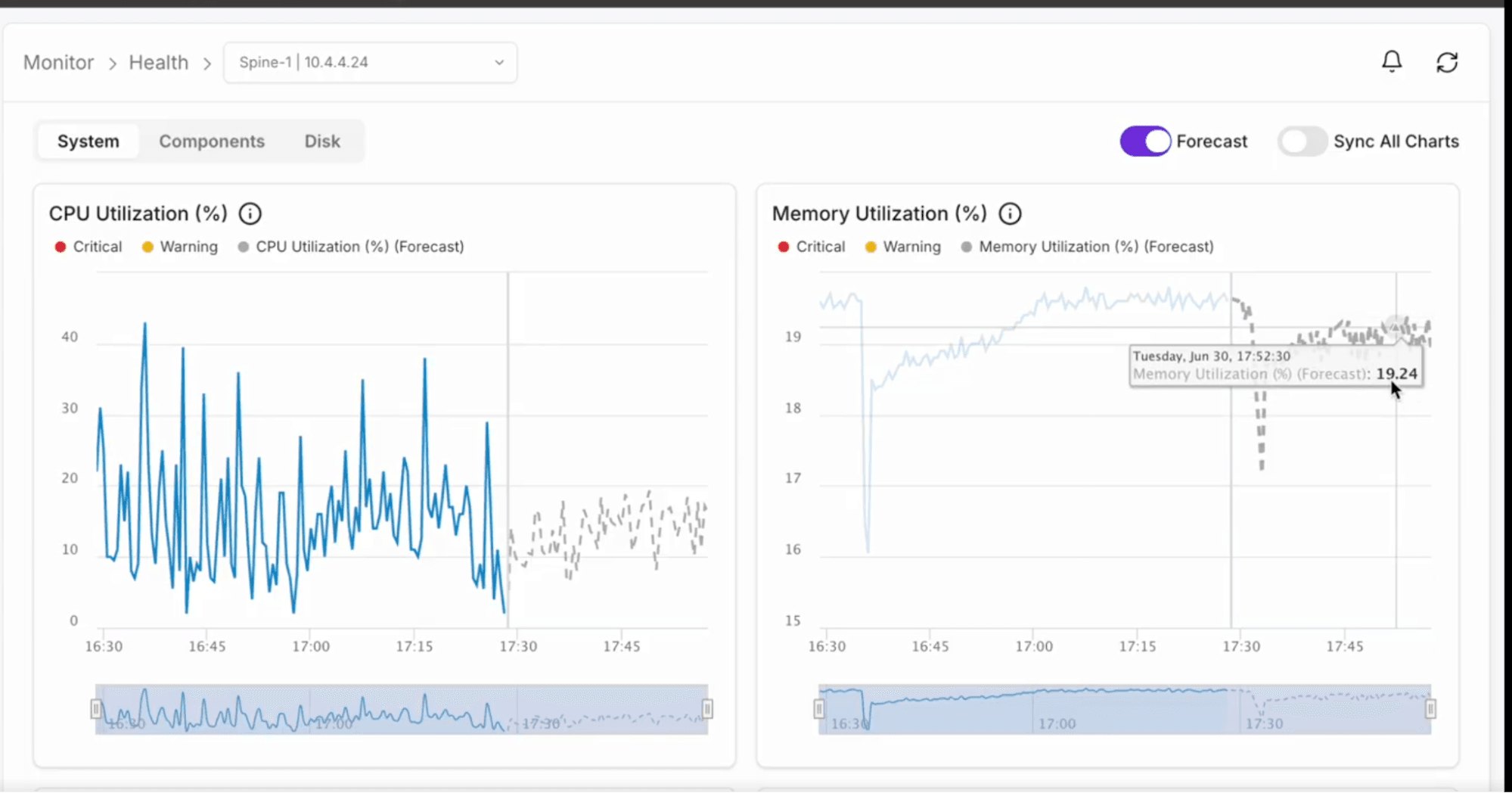
Figure 1: CPU and Memory utilization graphs with forecasting enabled
Audit Logging
Audit logging is a critical security feature that helps track the actions of different users. All user operations, such as navigation, create, delete, and change, are logged on the audit logging page available to admin users. User operations are logged with details such as source IP, time, operation type, description, and user.
The ONES UI provides search and filter capabilities based on time, action type, and interface (API/UI), which help streamline the security audit process. The "View Related" option provides a mechanism to see correlated events that occurred in the time vicinity of a particular event.
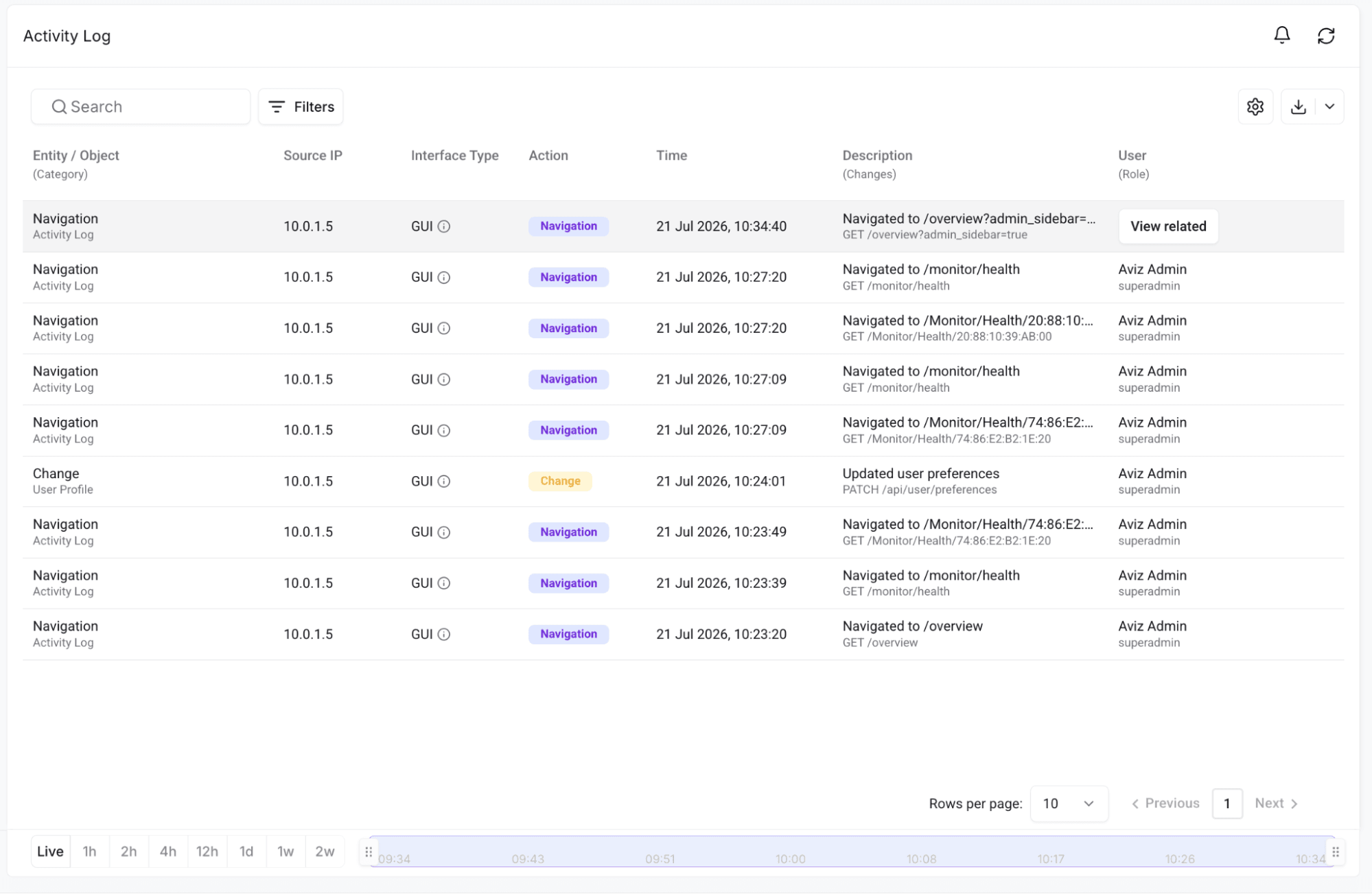
Figure 2: Audit logging page showing the user actions
ASN Integration to ONES
Aviz Service Nodes (ASN) are becoming a popular choice among customers for their packet analytics capabilities (see the Aviz Service Node solution brief). ASN provides a unified packet intelligence layer that transforms raw network traffic into optimized, enriched, and actionable telemetry for security and observability platforms.
ONES 4.3.1 provides the option to configure, manage, and monitor ASN systems from ONES. It offers telemetry capabilities to view the health of ASN nodes as well as statistical data on packets processed, along with orchestration and configuration capability to set up the ASN node per the customer's use case.
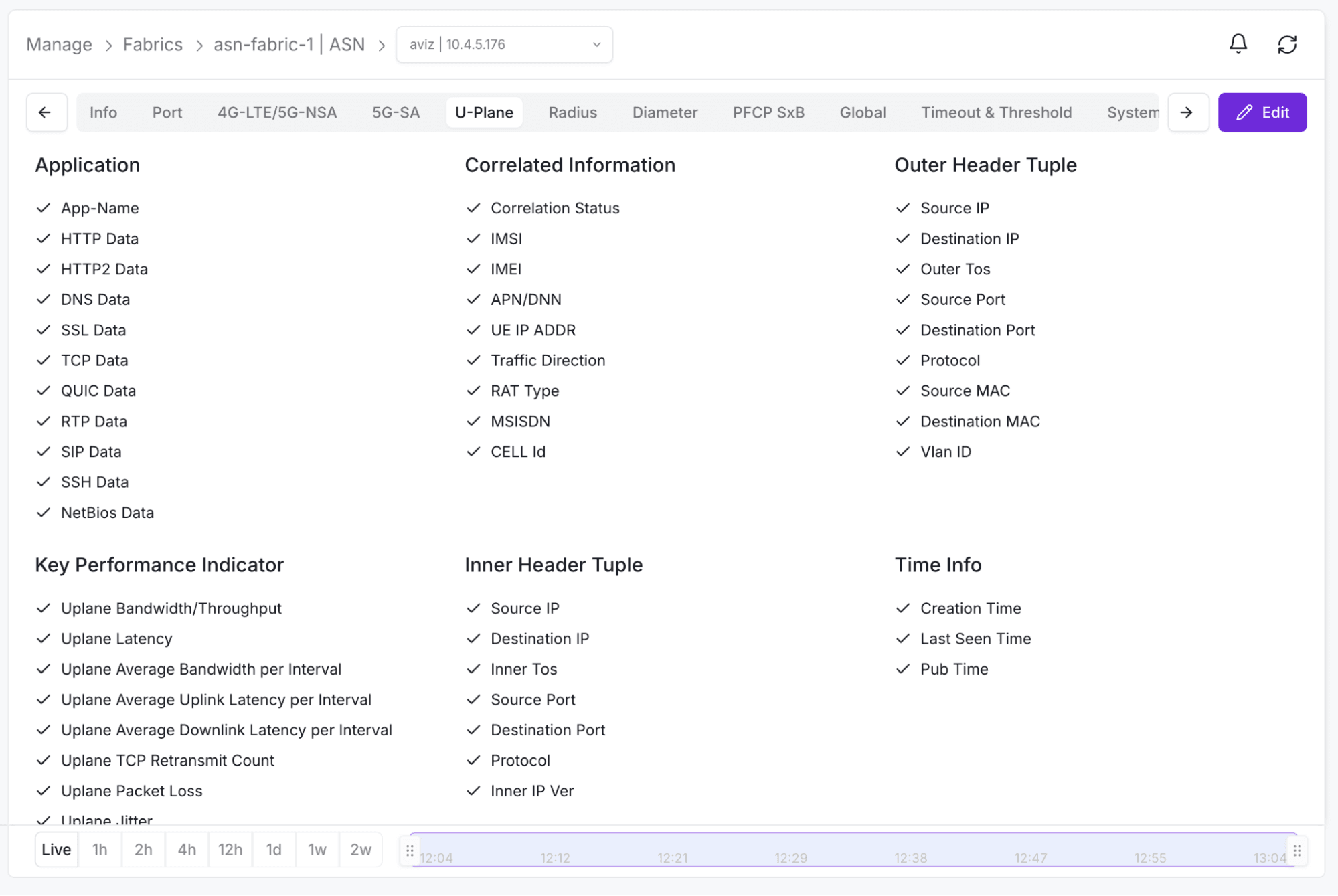
Figure 3: ONES screen for configuring ASN nodes. Snapshot of ASN configuration for enabling the attributes for U-plane meta data export
ONES Controller Resource Monitoring Enhancements
In addition to ONES 4.2's controller-level resource monitoring, ONES 4.3.1 enhances these capabilities to include docker-level time-series graphs. The ONES controller is made up of different Docker containers, such as ones-collector, ones-fm, Kafka pipelines, rule engine, audit service, and license service. With this, users can get a granular view of resource consumption on their ONES server.
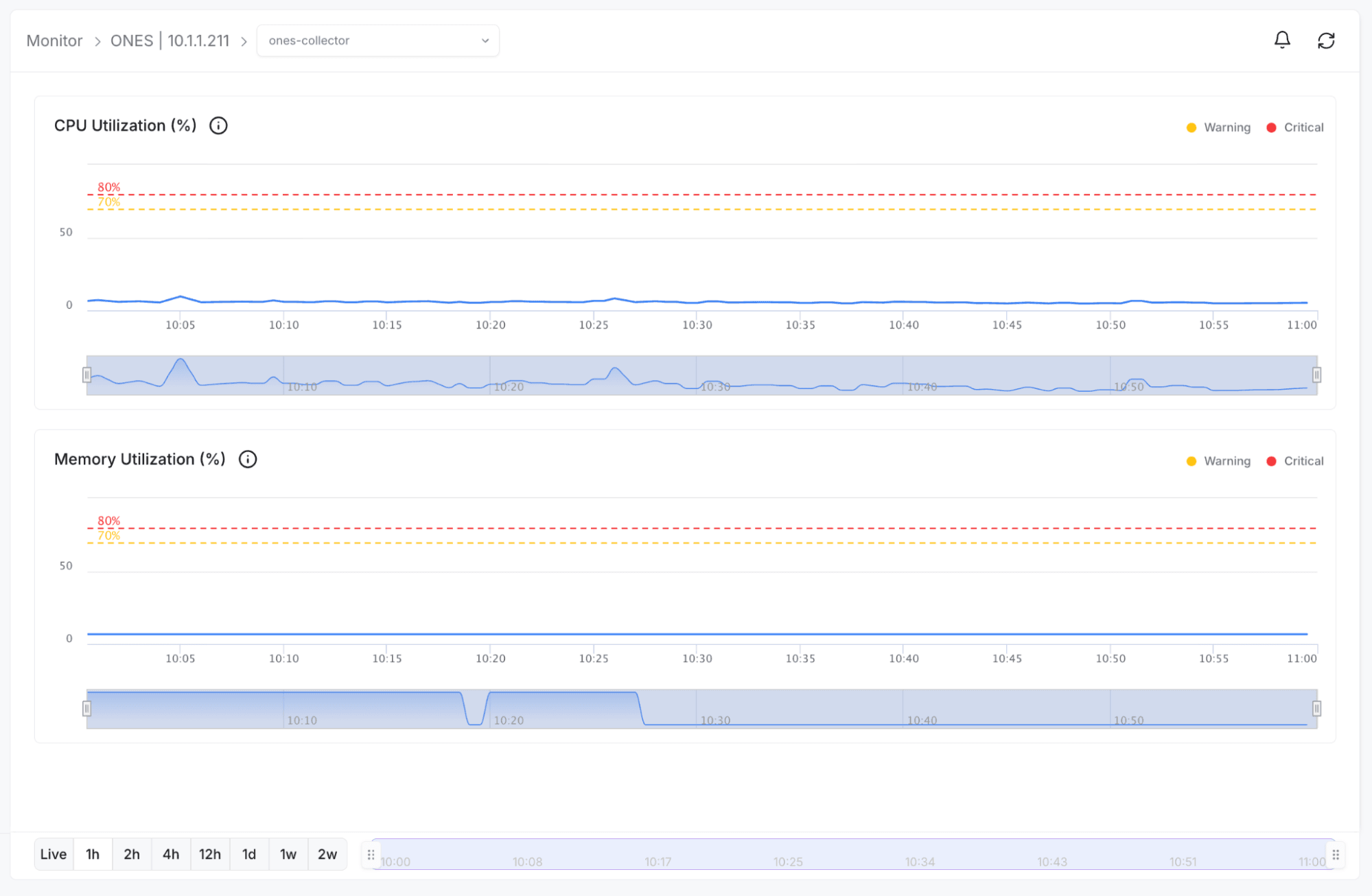
Figure 4: Docker level cpu and memory utilization graphs
Expanded AI Fabric Orchestration for NVIDIA Spectrum-X RA 2.1
ONES 4.3.1 extends orchestration capabilities to support the latest NVIDIA Spectrum-X Reference Architecture (RA 2.1), enabling deployment of next-generation AI infrastructure built on the GB300 and B300 GPU platforms.
Whether deploying GB300 rack-scale systems or B300 clusters in 32-node or 64-node configurations, ONES automates network provisioning based on NVIDIA's recommended reference architecture. Administrators define the deployment, and ONES takes care of orchestrating the underlying AI fabric, reducing deployment time while ensuring consistent, standards-based configurations.
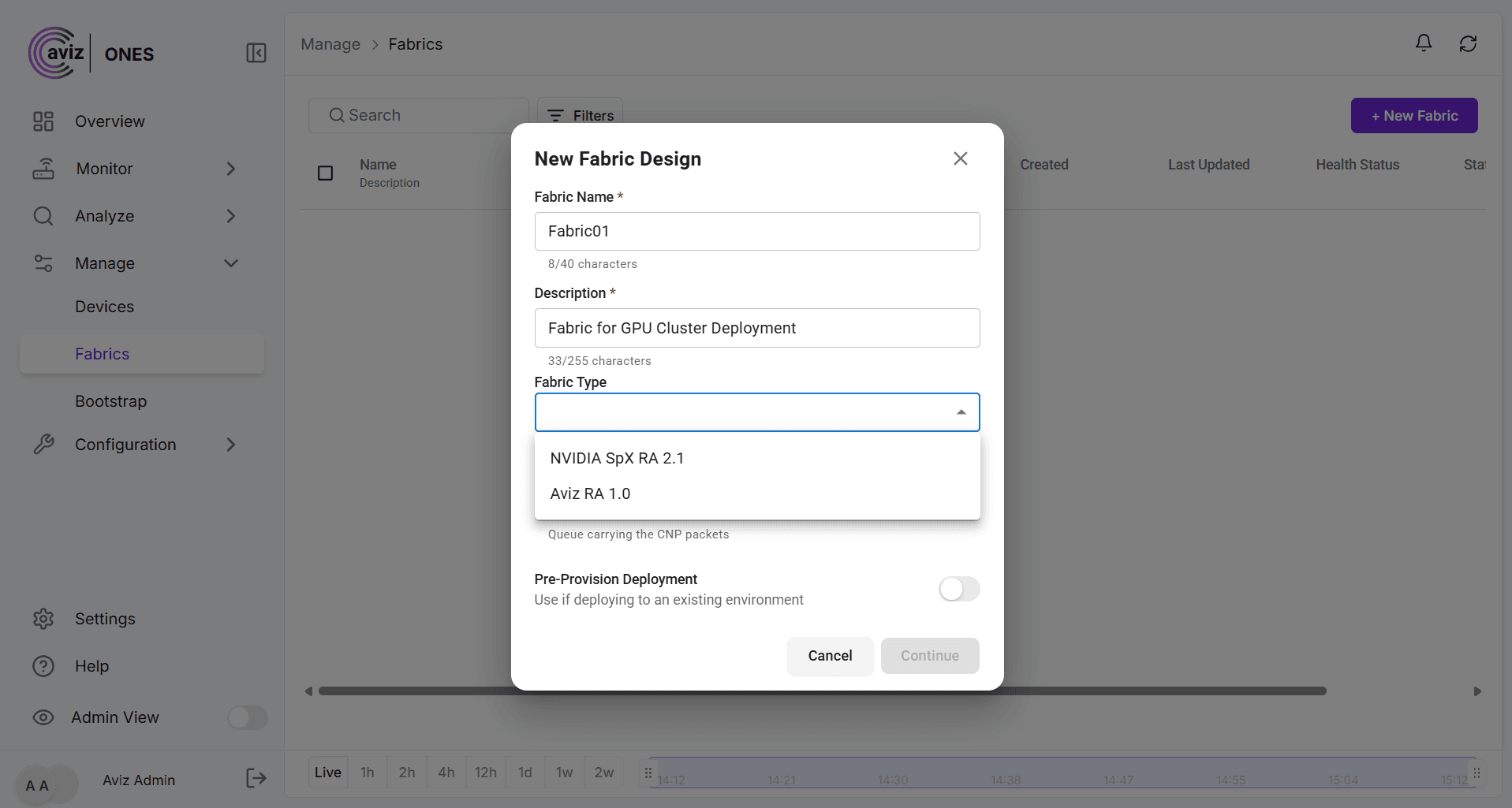
Figure 5: Fabric Type - Nvidia Spectrum-X RA 2.1
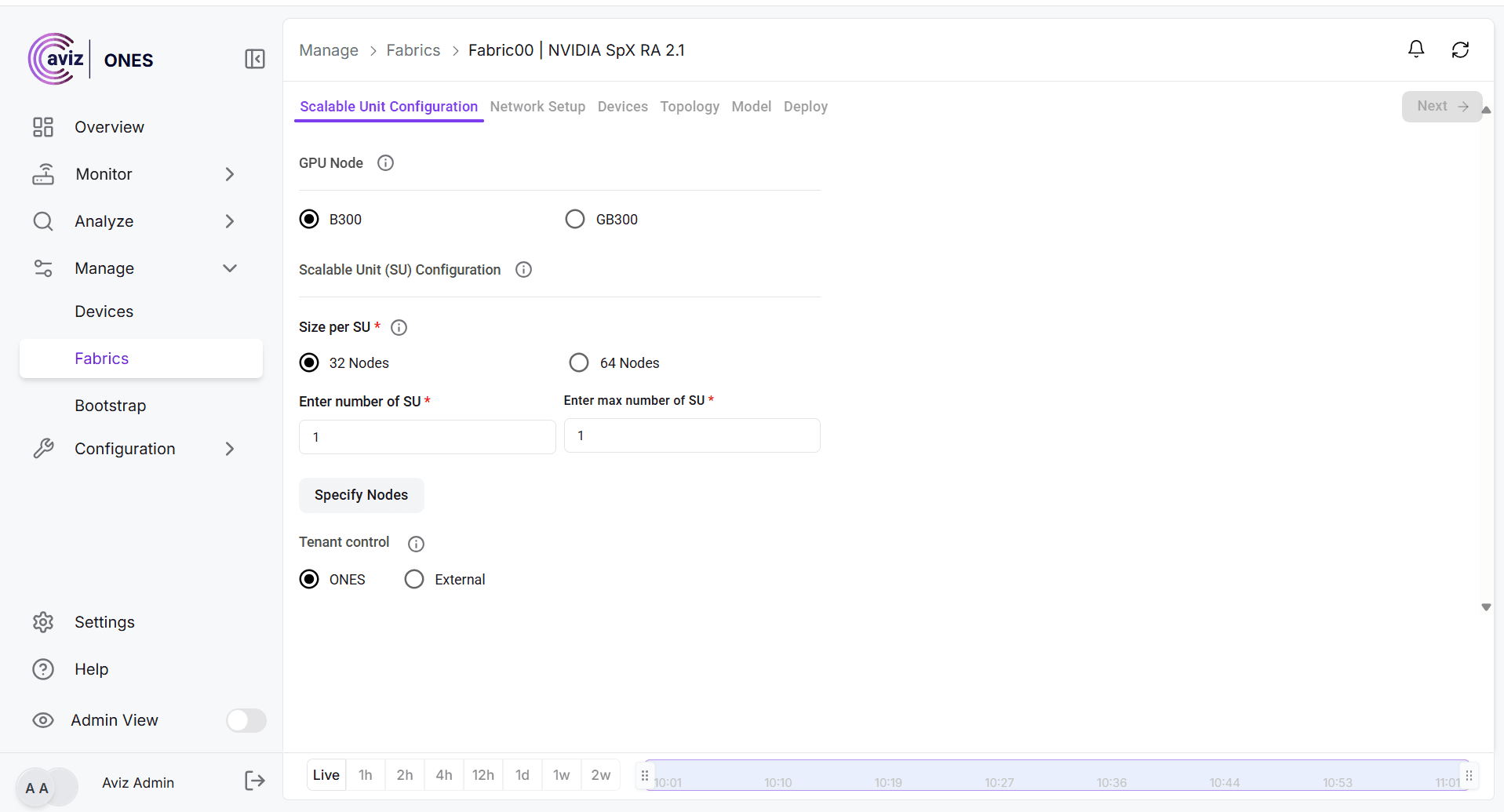
Figure 6: GPU Node : B300 & GB300
Unified AI Fabric Operations
Modern AI environments span multiple networking technologies, often requiring separate management platforms for Ethernet and InfiniBand networks. ONES 4.3.1 brings these environments closer together through two key integrations with the NVIDIA networking ecosystem: NVIDIA UFM and NVIDIA NMX-C integrations.
NVIDIA UFM Integration
ONES now integrates with NVIDIA Unified Fabric Manager (UFM), enabling coordinated management of Ethernet North-South networking and InfiniBand East-West fabrics from a unified orchestration platform.
With this integration, infrastructure teams benefit from:
- Unified orchestration across Ethernet and InfiniBand fabrics
- Consistent multi-tenancy across both networking domains
- Coordinated resource provisioning for AI workloads
- Simplified operations through a single management experience
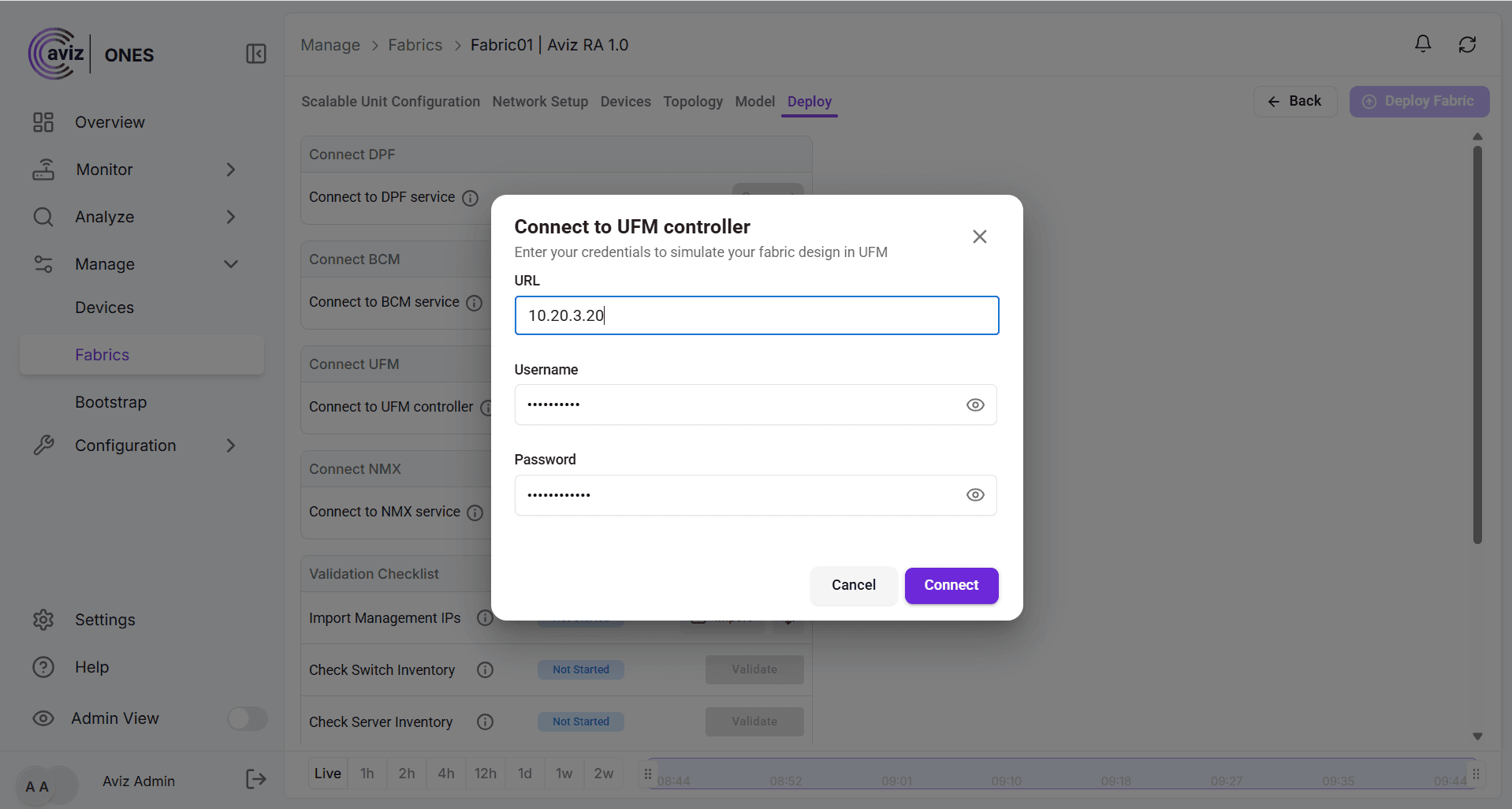
Figure 7: UFM Integration
Rack-Scale Networking with NVIDIA NMX-C
Rack-scale GPU platforms introduce an additional networking layer powered by NVLink. ONES 4.3.1 integrates with NVIDIA NMX-C to simplify orchestration of rack-level GPU connectivity alongside Ethernet and InfiniBand networking.
By coordinating GPU networking resources through a unified workflow, ONES enables organizations to deploy rack-scale AI infrastructure more efficiently while maintaining a consistent operational experience.
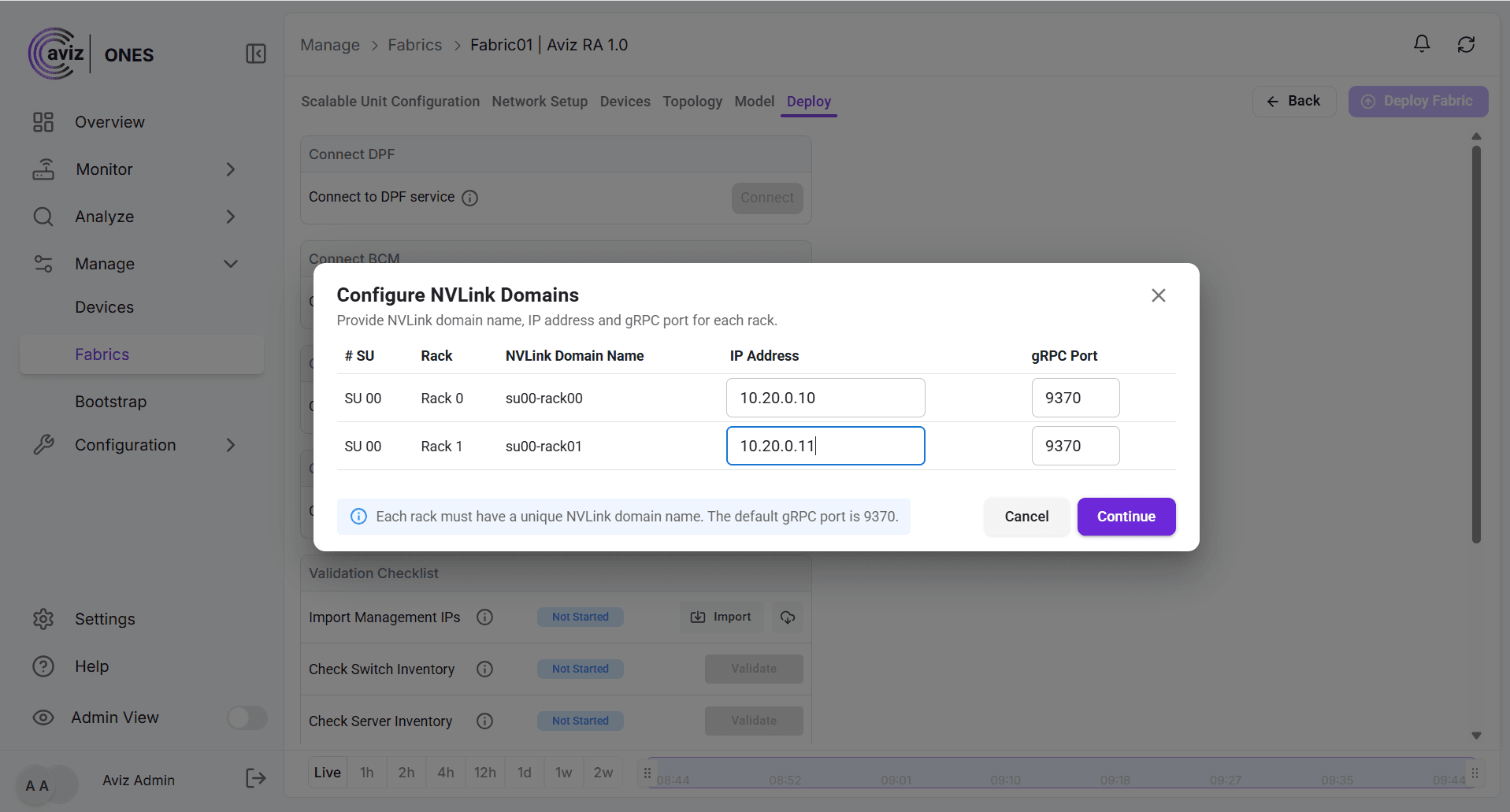
Figure 8: NMXC Integration
Host-Based Networking (HBN) Support
Host-Based Networking (HBN) is a DOCA service that runs as a container on the BlueField-3 DPU's Arm cores. It turns the DPU into a BGP router on the server side, replacing the need for hypervisor vSwitches and enabling a fully L3 underlay fabric without burdening the host operating system.
ONES 4.3.1 introduces support for HBN, extending orchestration capabilities closer to the server infrastructure. ONES automates deployment workflows while maintaining consistent tenant isolation and network provisioning across supported HBN environments.
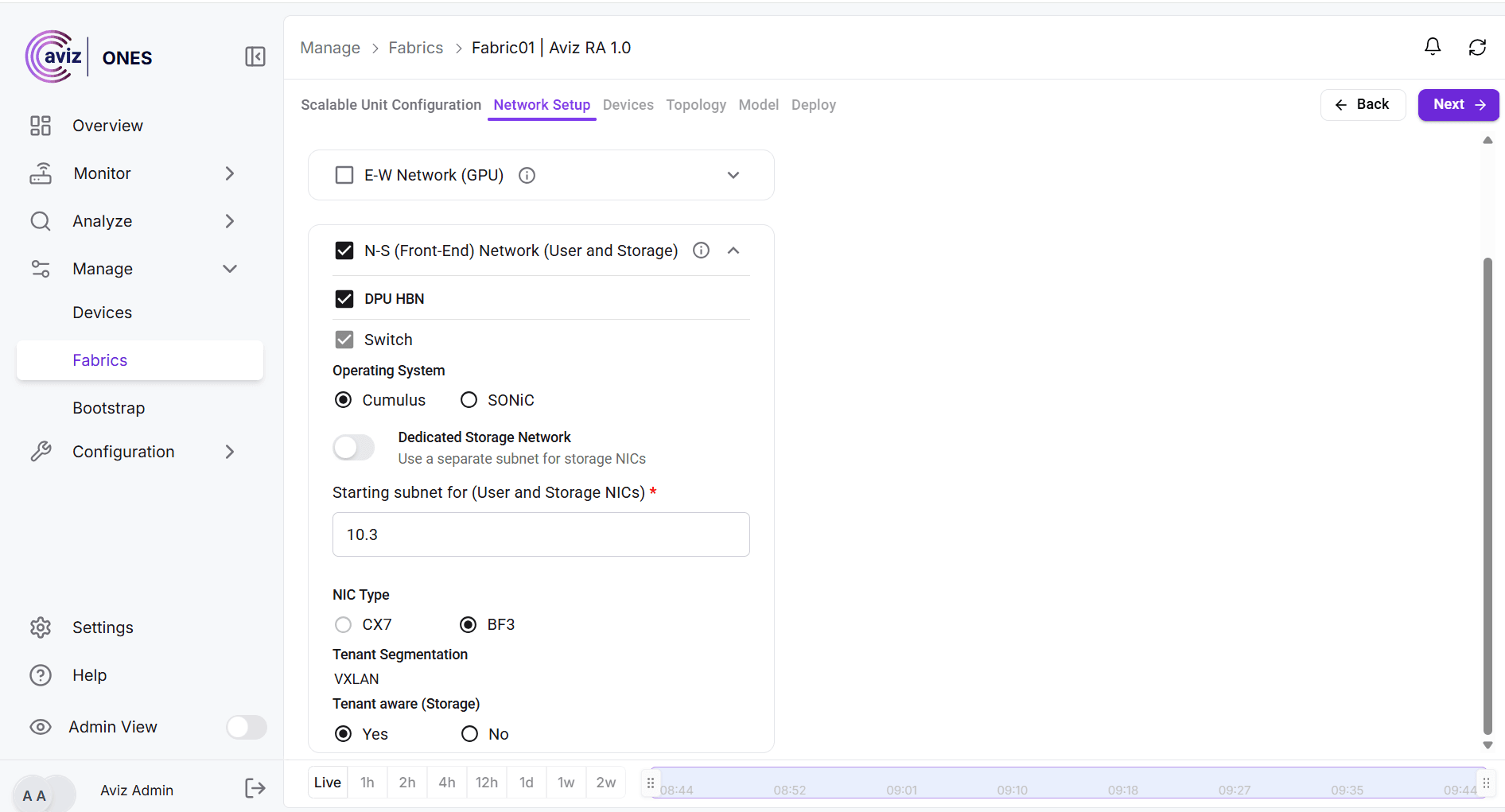
Figure 9: DPU HBN
SONiC Support for North-South Fabric Deployments
ONES 4.3.1 also strengthens support for SONiC-based North-South networking, expanding orchestration capabilities across modern AI infrastructure deployments. These enhancements improve deployment consistency, simplify Day-0 provisioning, and provide a more seamless operational experience across heterogeneous networking environments.
Conclusion
ONES 4.3.1 continues to advance our vision of intelligent, observable AI infrastructure. By unifying control across Ethernet and InfiniBand fabrics through UFM and NMX-C integrations, extending GPU fabric orchestration to support NVIDIA Spectrum-X RA 2.1, extending Host-Based Networking to server infrastructure, and strengthening SONiC networking capabilities while deepening visibility with ONES Forecast, ASN telemetry, and docker-level resource monitoring, this release gives operators tighter control and clearer insight into their modern AI fabrics. Combined with strengthened audit logging for security and compliance, ONES 4.3.1 reinforces our commitment to building scalable, observable, and well-governed network infrastructure for AI-driven workloads.
Frequently Asked Questions
What is ONES 4.3.1?
ONES 4.3.1 is the latest release of the Open Networking Enterprise Suite (ONES), advancing unified control across Ethernet and InfiniBand fabrics, predictive analytics, and deeper visibility across AI infrastructure including GPU, front-end, and storage networks.
What is ONES Forecast and how does it work?
ONES Forecast is a predictive analytics capability built into the ONES monitoring platform that uses historical metric data to project near-term behavior alongside live data. It appears as a simple toggle on the same charts operators already use in ONES today.
What GPU platforms does ONES 4.3.1 support?
ONES 4.3.1 extends orchestration support for NVIDIA Spectrum-X Reference Architecture 2.1, enabling deployments built on GB300 and B300 GPU platforms in 32-node or 64-node configurations.
How does ONES 4.3.1 unify Ethernet and InfiniBand management?
ONES 4.3.1 integrates with NVIDIA UFM to enable coordinated management of Ethernet North-South and InfiniBand East-West fabrics from a single orchestration platform, providing consistent multi-tenancy and simplified operations across both networking domains.
What is ASN integration in ONES 4.3.1?
Aviz Service Node (ASN) integration allows operators to configure, manage, and monitor ASN systems directly from ONES, providing packet-level telemetry for security and observability alongside health monitoring and statistical data on packets processed.
What is Host-Based Networking (HBN) support in ONES 4.3.1?
HBN is a DOCA service running on the BlueField-3 DPU that turns the DPU into a BGP router, replacing hypervisor vSwitches and enabling a fully L3 underlay fabric. ONES 4.3.1 automates HBN deployment workflows while maintaining consistent tenant isolation and network provisioning.
What enhancements were made to controller resource monitoring?
ONES 4.3.1 adds docker-level time-series graphs to controller resource monitoring, giving operators a granular view of resource consumption across individual Docker containers such as ones-collector, ones-fm, Kafka pipelines, and other ONES services.
What does audit logging provide in ONES 4.3.1?
Audit logging tracks all user operations including navigation, create, delete, and change actions, logging details such as source IP, time, operation type, and user. Admin users can search and filter logs by time, action type, and interface, and use the "View Related" option to see correlated events.


