





ONES 4.2.1: Building AI Fabrics Without Full-Scale Infrastructure
 June 25, 2026
 ONES & SONiC
TL;DR
Aviz ONES 4.2.1 introduces Minimal Configuration Support, enabling organizations to deploy and validate AI fabrics in lightweight infrastructure environments. The enhancement allows topology-aware orchestration, multi-tenant networking validation, and AI fabric provisioning using reduced network footprints. This simplifies proof-of-concept deployments, testing environments, demonstrations, and staged onboarding workflows while maintaining operational consistency across AI fabric deployments.
Introduction
AI infrastructure is no longer limited to large-scale production environments. Organizations increasingly need the ability to validate AI fabric orchestration, tenant isolation, and networking workflows within compact environments designed for proofs of concept, demonstrations, development, and onboarding activities.
Traditional AI fabric architectures are often built around predefined deployment models that require multiple network tiers and infrastructure dependencies. While these architectures provide scalability for production environments, they can create unnecessary complexity for organizations operating in lightweight deployment scenarios.
To address this challenge, Aviz ONES 4.2.1 introduces Minimal Configuration Support. This capability enables intelligent AI fabric orchestration in reduced-topology environments while preserving core deployment, networking, and multi-tenancy functionality.
How Does Minimal Configuration Support Simplify AI Fabric Deployments?
Minimal Configuration Support allows ONES to deploy and manage AI fabrics using simplified network topologies that connect directly to compute infrastructure.
Instead of requiring a full-scale production architecture, the orchestration engine dynamically adapts to available infrastructure resources and activates only the workflows necessary for deployment. This provides organizations with greater flexibility when building and validating AI networking environments.
The capability is particularly useful for:
- Proof-of-concept deployments
- Validation and testing environments
- Partner demonstrations
- Compact lab infrastructures
- Incremental infrastructure onboarding
By enabling topology-aware orchestration, ONES supports both lightweight deployments and production-scale AI fabric strategies.
What Intelligent Orchestration Capabilities Are Introduced in ONES 4.2.1?
ONES 4.2.1 introduces adaptive orchestration capabilities that support reduced infrastructure footprints without compromising operational consistency.
Key capabilities include:
- Reduced-topology fabric provisioning
- Flexible deployment validation workflows
- Partial infrastructure activation support
- Automated configuration generation
- Simplified onboarding workflows
These capabilities enable organizations to deploy and operate functional AI fabric environments without requiring a complete production-scale infrastructure.
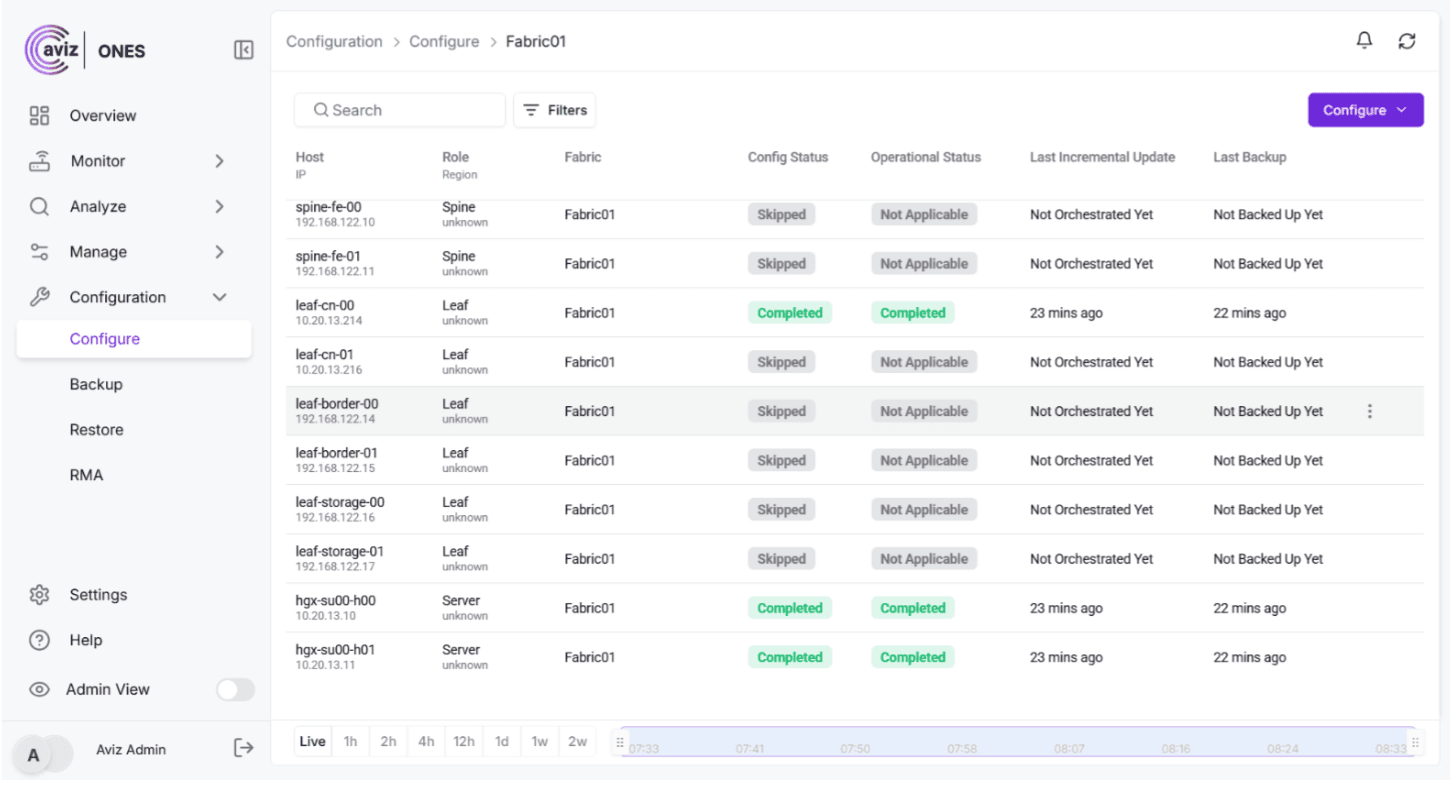
Figure 1: Minimal Fabric Deployment
How Does ONES Support Multi-Tenancy in Lightweight AI Fabric Environments?
A significant advantage of Minimal Configuration Support is the ability to validate and demonstrate multi-tenant AI networking workflows within compact deployment environments.
ONES maintains tenant isolation through several networking mechanisms, including:
- VRF-based segmentation
- VLAN-to-tenant mapping
- Tenant-specific gateway provisioning
- Overlay-based traffic isolation
- Virtual workload segmentation
These capabilities allow organizations to simulate and validate tenant-aware AI infrastructure workflows while maintaining consistent networking behavior across environments of different sizes.
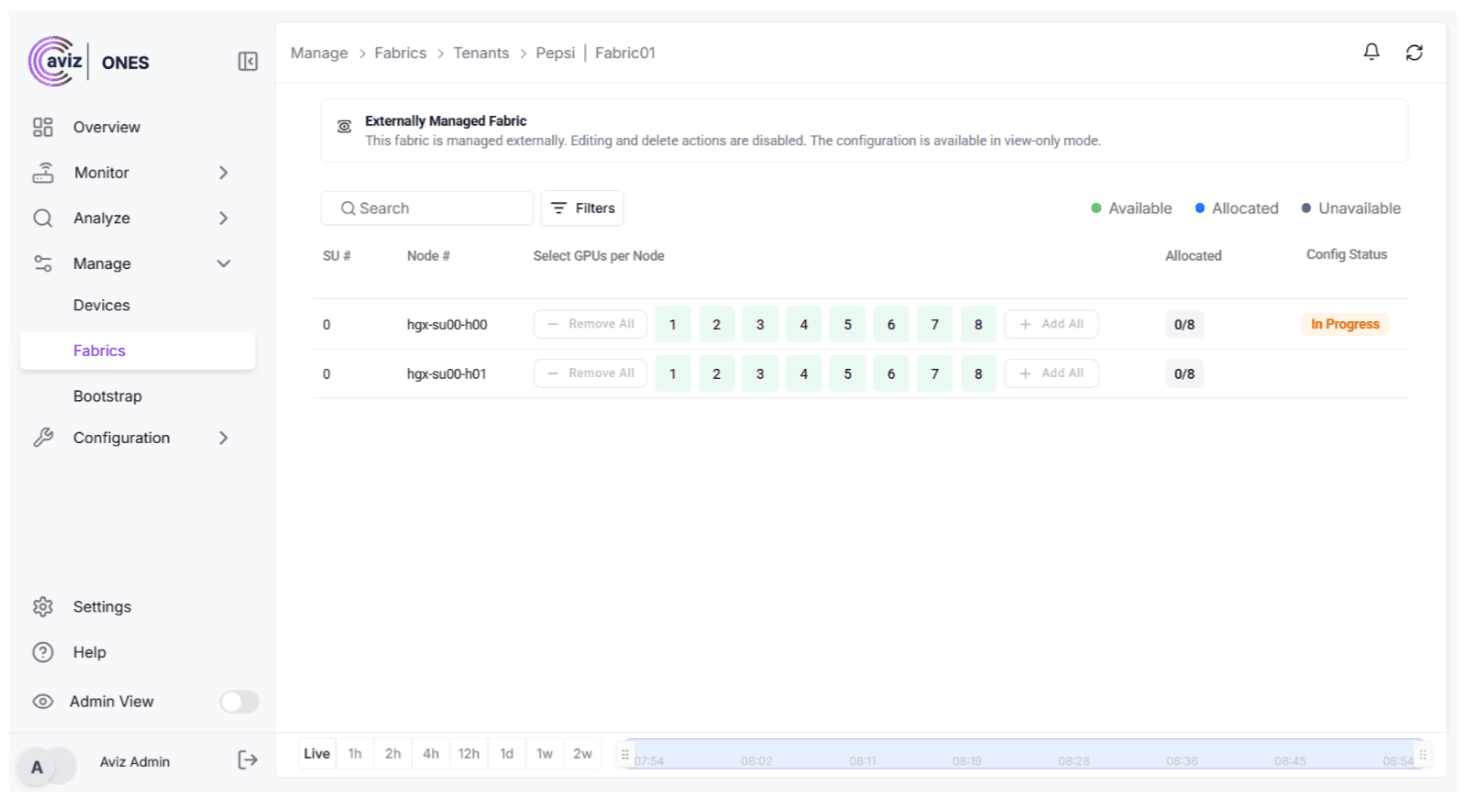
Figure 2: Tenant Isolation Across a Minimal AI Fabric
Why Is Minimal Configuration Support Valuable for Validation and Demonstration Workflows?
Reducing infrastructure dependencies allows organizations to accelerate deployment readiness and simplify operational validation processes.
Minimal Configuration Support helps enable:
- Faster proof-of-concept execution
- Lightweight demonstration environments
- Simplified validation workflows
- Flexible deployment portability
- Efficient infrastructure utilization
This creates a repeatable approach for validating AI fabric orchestration workflows while reducing the complexity traditionally associated with infrastructure deployment.
How Does ONES 4.2.1 Improve AI Fabric Deployment Flexibility?
ONES 4.2.1 expands deployment flexibility by supporting adaptive AI fabric orchestration beyond traditional infrastructure architectures.
Organizations can now deploy, validate, and demonstrate AI fabric capabilities within constrained environments while preserving core networking, orchestration, and multi-tenancy workflows. This allows teams to operationalize AI networking capabilities more efficiently and transition smoothly from validation environments to production deployments.
Conclusion
Minimal Configuration Support in Aviz ONES 4.2.1 enables organizations to deploy and validate AI fabrics without requiring full-scale infrastructure environments. Through topology-aware orchestration, reduced-topology provisioning, and multi-tenant networking capabilities, ONES provides a flexible approach to AI fabric deployment that supports proof-of-concept initiatives, testing environments, demonstrations, and production readiness workflows.
Frequently Asked Questions
What is Minimal Configuration Support in Aviz ONES 4.2.1?
Minimal Configuration Support is a capability introduced in ONES 4.2.1 that enables organizations to deploy and validate AI fabrics using simplified, reduced-topology network environments. It allows the orchestration engine to dynamically adapt to available infrastructure resources and activate only the workflows necessary for deployment.
What types of deployments benefit most from Minimal Configuration Support?
This capability is particularly useful for proof-of-concept deployments, validation and testing environments, partner demonstrations, compact lab infrastructures, and incremental infrastructure onboarding workflows.
How does ONES 4.2.1 support multi-tenancy in lightweight environments?
ONES maintains tenant isolation through VRF-based segmentation, VLAN-to-tenant mapping, tenant-specific gateway provisioning, overlay-based traffic isolation, and virtual workload segmentation. These mechanisms allow organizations to validate multi-tenant AI networking workflows even within compact deployments.
What orchestration capabilities does ONES 4.2.1 introduce?
ONES 4.2.1 introduces adaptive orchestration capabilities including reduced-topology fabric provisioning, partial infrastructure activation support, automated configuration generation, and simplified onboarding workflows. These features allow functional AI fabric environments to operate without requiring full production-scale infrastructure.
How does Minimal Configuration Support improve deployment flexibility?
By supporting adaptive AI fabric orchestration beyond traditional infrastructure architectures, ONES 4.2.1 allows teams to deploy and validate AI networking capabilities in constrained environments while preserving core networking, orchestration, and multi-tenancy workflows. This enables a smoother transition from validation environments to production deployments.
Does Minimal Configuration Support compromise operational consistency?
No, ONES 4.2.1 is designed to maintain operational consistency across environments of different sizes. Organizations can run lightweight deployments while preserving the same core deployment, networking, and multi-tenancy functionality used in production-scale AI fabric strategies.
Discover how Aviz ONES 4.2.1 simplifies AI fabric deployment and validation with intelligent orchestration and lightweight infrastructure support. Learn more about Aviz ONES and AI Fabric orchestration at


