




1. Why did Techevolution move off Pica8?
Pica8 could not reliably support their spine-leaf design with symmetric IRB at scale. Moving to Community SONiC plus Aviz ONES delivered the flexibility, performance, and cost profile they needed.


 August 5, 2025
 ONES & SONiC
As a leading Managed IT Services Provider, Techevolution needed a more adaptive, cost-effective network to meet the demands of modern multi-tenant environments. Their previous solution, Pica8, struggled to support a complex spine-leaf architecture with symmetric IRB—critical for delivering consistent, high-performance services to customers from local governments to large enterprises.
Partnering with EPS Global and Aviz Networks, Techevolution moved to an open, Community SONiC-based fabric managed through Aviz ONES. The upgrade cut both capital and operational costs while improving performance, flexibility, and future scalability.
"Moving to Aviz and SONiC will streamline our operations and significantly reduce our costs. This transition sets a new standard for efficiency and scalability within our network infrastructure"
Techevolution’s success shows how open networking can power reliable, scalable infrastructure for organizations of any size—while lowering TCO and unlocking future-ready capabilities.
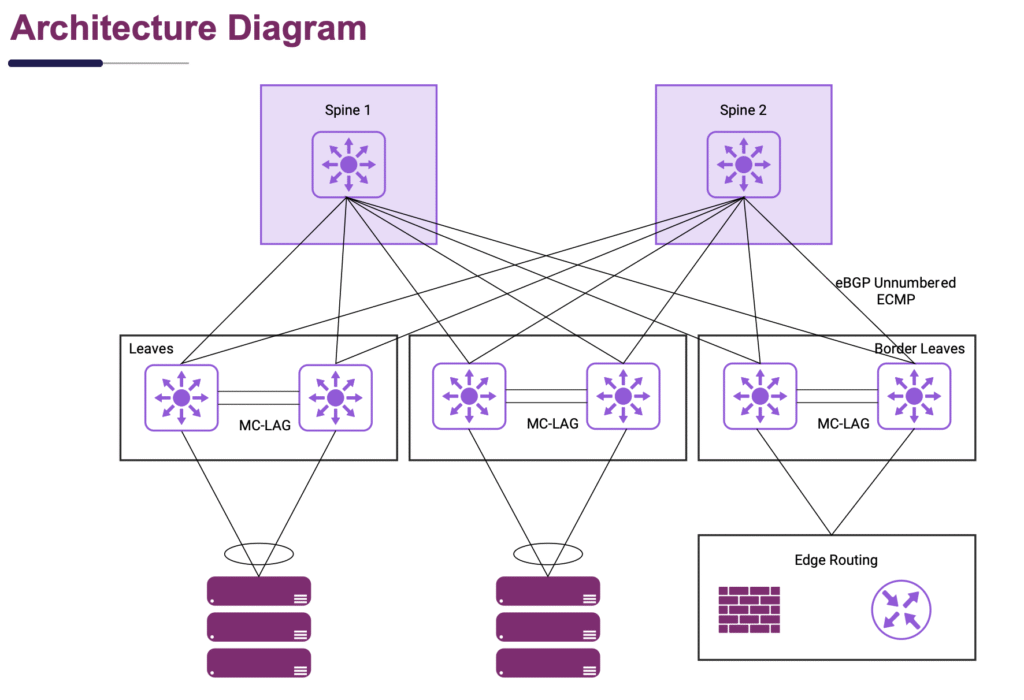
Explore the complete journey and architecture details in the full case study.
Pica8 could not reliably support their spine-leaf design with symmetric IRB at scale. Moving to Community SONiC plus Aviz ONES delivered the flexibility, performance, and cost profile they needed.
Symmetric IRB enables efficient L2/L3 inter-VLAN routing across EVPN-VXLAN fabrics, keeping traffic paths consistent for tenants and improving performance in multi-tenant designs.
SONiC provides an open, hardware-agnostic NOS; Aviz ONES adds enterprise-grade NetOps, lifecycle management, telemetry, and support—combining openness with operational simplicity.
Edge-Core switches running Community SONiC, integrated and managed through Aviz ONES for Day-0 to Day-2 operations.
Open networking lowers license and support overhead (CapEx/OpEx) and avoids vendor lock-in—while ONES streamlines operations to reduce toil and downtime risk.
Yes. EVPN-VXLAN fabrics with symmetric IRB and resilient underlays provide the deterministic performance and segmentation required for modern, latency-sensitive workloads.
Yes. The open NOS plus ONES model is portable across vendors and topologies, allowing gradual expansion without wholesale re-platforming.
Read the complete story and architecture details in the full case study.


