




How Do You Build a Future-Proof Network That Works Today and Tomorrow?
 May 6, 2026
 ONES & SONiC
TL;DR
- Future-ready infrastructure starts with flexible, software-driven foundations.
- Technologies like SONiC enable both cost efficiency today and AI readiness tomorrow.
- The winning strategy: build for current needs while enabling seamless evolution.
Introduction
As AI reshapes every layer of technology, one question keeps surfacing for enterprises: “Where do I even start?”
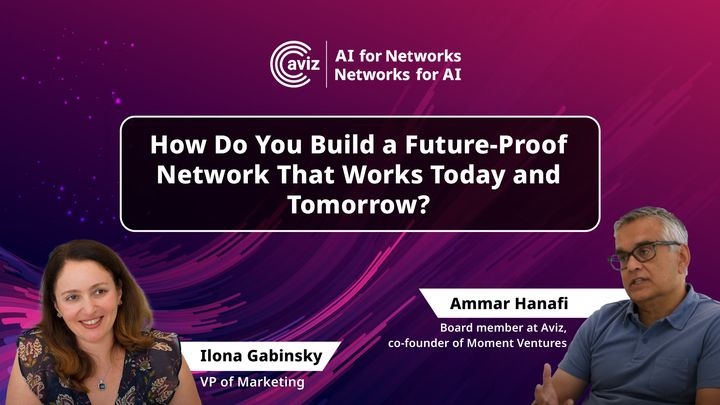
In a recent discussion featuring leaders with experience from companies like Cisco and ecosystems backed by Microsoft, a clear theme emerged: infrastructure decisions made today will define your ability to compete tomorrow.
This blog breaks down how to approach modern networking with a dual lens:
- Solve present challenges (cost, performance)
- Stay ready for future demands (AI, scalability, automation)
If you’re a founder, IT leader, or infrastructure architect, this is your starting point.
What Does “Future-Proof Infrastructure” Actually Mean?
Future-proofing means building systems that evolve without needing to be rebuilt.
Most companies think future-proofing requires predicting the future. It doesn’t. Instead, it’s about choosing adaptable architectures, especially software-driven ones.
Technologies like SONiC (Software for Open Networking in the Cloud) exemplify this approach:
- Decouples hardware from software
- Enables vendor flexibility
- Supports continuous innovation without full replacement
The real shift: from static infrastructure → programmable infrastructure
Where Should You Start If You Want to Adopt an AI-Ready Infrastructure?
Start with your infrastructure foundation, not AI applications.
Many organizations rush into AI tools without preparing their networks. That’s backwards.
Before AI can deliver value, your infrastructure must support:
- High-performance data movement
- Scalability for workloads
- Observability and automation
A practical starting path:
- Modernize networking stack (e.g., SONiC-based systems)
- Introduce observability layers
- Layer AI tools (like network copilots) on top
Think of AI as a multiplier, not a starting point.
How Can You Reduce Costs Today While Preparing for Tomorrow?
Adopt open, software-defined networking to lower costs and increase flexibility.
Traditional networking locks you into expensive hardware cycles. Modern approaches flip this model:
| Traditional Networking | Modern (SONiC-based) Networking |
|---|---|
| Vendor lock-in | Open ecosystem |
| High hardware costs | Commodity hardware |
| Slow upgrades | Continuous software updates |
| Limited flexibility | Programmable + scalable |
This allows organizations to:
- Reduce CapEx immediately
- Avoid costly future migrations
- Experiment and scale faster
Cost optimization and future readiness are not trade-offs anymore,they’re aligned.
Conclusion
The infrastructure conversation is no longer just about performance, it’s about adaptability.
Companies that win in the next 3–5 years will:
- Build on open, flexible platforms
- Prioritize software-driven architectures
- Align today’s investments with tomorrow’s possibilities
The question isn’t whether to modernize , it’s how intelligently you do it.
Frequently Asked Questions
What does future-proof infrastructure actually mean in simple terms?
Nobody can predict exactly where tech goes next. Future-proofing is not about guessing right. It is about building something that bends without breaking. SONiC does that well. Hardware and software stay separate, so swapping one vendor for another does not mean starting from zero. Updates come through software, not expensive hardware replacement cycles.
Where should an organisation actually start when moving toward AI-ready infrastructure?
Not with the AI tools. Most teams get this backwards. They buy AI software before the network underneath can actually support it. Fix the network first. Get observability in place. Add automation. Then layer AI tools on top of a foundation that can handle them. AI is described as a multiplier, and a multiplier needs something solid to work with.
How does SONiC help cut costs compared to traditional networking?
Old networking locks you in. One vendor, their hardware, their pricing, their upgrade schedule. SONiC runs on commodity hardware from an open ecosystem so the upfront cost drops straight away. No more expensive refresh cycles just to keep the lights on. Teams experiment faster, avoid future migrations, and stop paying a premium just to stay on the same vendor's roadmap.
Can an organisation save money today and still be ready for AI tomorrow?
Yes, and the content makes this point clearly. These two goals used to feel like a trade-off. With open software-defined networking they are not anymore. Commodity hardware lowers the bill right now. An open programmable platform means future AI workloads slot in without a painful migration down the road. One decision does both jobs at once.
Why do infrastructure decisions made today affect how competitive a company is in three to five years?
Open flexible platforms keep evolving. Proprietary stacks get expensive and slow to change. That gap compounds fast. Companies on rigid infrastructure pay more to make small changes, react to new technology late, and end up watching competitors move faster with less friction. The infrastructure choice made today is what either opens doors or closes them when AI demands hit.
Why do so many organisations get the order wrong when adopting AI?
AI tools get all the attention so that is where budgets go first. But without a network that handles high-performance data movement, real scalability, and proper observability underneath, AI lands on infrastructure that cannot support it. The results disappoint and teams blame the tools when the real gap was always in the foundation they skipped building.
What is the real shift happening in how infrastructure is built and run today?
Static to programmable. Old infrastructure was built once, changed slowly, and cost a lot every time something needed updating. Programmable software-driven infrastructure keeps improving through updates, handles new workloads without full replacements, and gives teams actual control over network behaviour. That shift is not a minor upgrade. It changes the whole operating model.
Who should be thinking about modernising infrastructure right now?
The content calls out founders, IT leaders, and infrastructure architects specifically. If you are running enterprise infrastructure or designing systems that need to grow with AI workloads, the network conversation is already overdue. Waiting until AI traffic forces the upgrade means doing it in a rush on someone else's timeline instead of your own.
Want to explore how your current network stacks up for AI readiness? Start by evaluating your infrastructure foundation and identifying where flexibility, cost savings, and scalability can align.


