




From Locked Stacks to AI-Native Networks: Standards Drive COGS Down!
 April 28, 2026
 AI Factory
Continuing to my fifth post on my book , Deciding the Future: Building New Networks for the AI Era
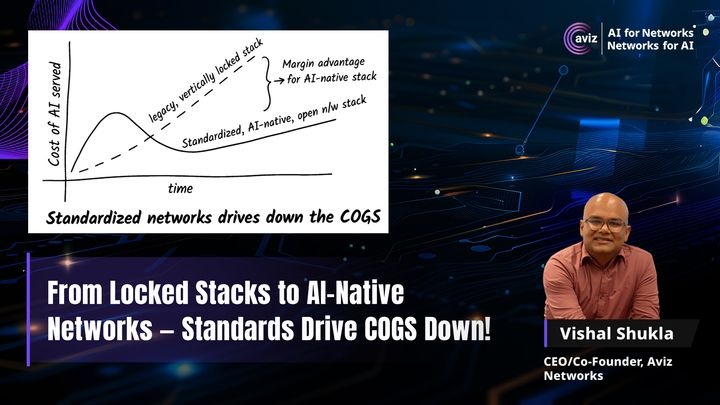
This picture captures a cost pattern I believe will become very important in the AI era. In the legacy networking model, many stacks were vertically locked: proprietary hardware, proprietary operating systems, management tools, support models, and upgrade paths all tied together.
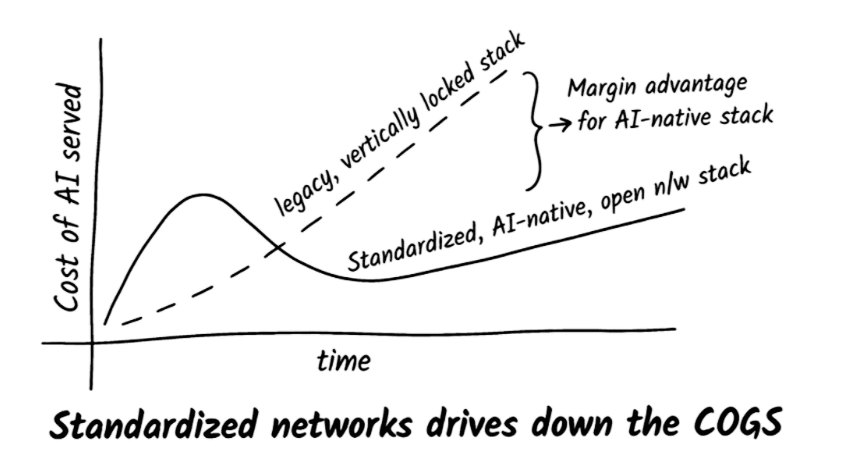
AI changes that equation.
For networks specifically, the change is big because the network is no longer just a connectivity layer. It directly impacts GPU utilization, job completion time, cluster predictability, and ultimately the cost of AI served.
In the fast-changing AI era, standardizing the components that directly drive ROI is a must.
Satya Nadella emphasized this point in his recent earning call , “The key metric we are optimizing for is tokens per watt per dollar, which comes down to increasing utilization and decreasing TCO using silicon, systems, and software.”
In simple terms: Standardization = Leverage.
The leverage to reduce lock-in. Leverage to make automation easier. Leverage to make operations repeatable. Leverage to bring down the COGS.
The AI winners will not only be the companies with the most GPUs. They will be the companies that can serve AI at the lowest sustainable cost.
Bottom line: standardized AI-native networks create a margin advantage.
Frequently Asked Questions
1. Why does network standardization matter so much in the AI era?
In the AI era, the network is no longer just a connectivity layer. It directly affects GPU utilization, job completion time, cluster predictability, and the overall cost of serving AI. Standardizing the components that drive ROI gives teams the leverage to reduce vendor lock-in, make automation easier, keep operations repeatable, and bring down the cost of goods sold.
2. What was wrong with the legacy networking model for AI workloads?
Legacy networking stacks were vertically locked. Proprietary hardware, proprietary operating systems, management tools, support models, and upgrade paths were all bundled together. That kind of lock-in made automation harder, operations less repeatable, and costs difficult to control. AI changes the equation because every layer of that stack now has a direct impact on how efficiently AI can be served.
3. What metric should companies focus on when building AI infrastructure?
Satya Nadella pointed to tokens per watt per dollar as the key metric Microsoft optimises for. In plain terms, that means getting more AI output from every unit of energy and every dollar spent. Hitting that target comes down to increasing utilisation and decreasing TCO across silicon, systems, and software, which is exactly where standardised AI-native networks create a measurable advantage.
4. Will having more GPUs always translate to winning in the AI race?
Not according to the argument in the book. The AI winners will not just be the companies with the most GPUs. They will be the companies that can serve AI at the lowest sustainable cost. A company with fewer GPUs but a more efficient, standardised network stack can outcompete a larger rival by delivering AI output at a lower margin cost over time.
5. How do standardised AI-native networks create a margin advantage for businesses?
Standardisation removes the cost layers that proprietary stacks add: licensing fees, single-vendor support contracts, and upgrade cycles controlled by the vendor. When the network is built on open, standardized components, teams can automate more, switch hardware without rebuilding workflows, and keep operational costs predictable. Over time, lower COGS from the network layer compounds into a real margin advantage against competitors still running locked stacks.
If these thoughts resonate with you and you would like to talk more about this topic, let’s connect


