





From Design to Operations: Simulating an AI Fabric with AVIZ ONES and NVIDIA DSX Air
 August 24, 2026
 AI Factory
Building an AI factory is not simply a matter of connecting GPU servers to high-speed switches. The network must be designed correctly, deployed consistently, segmented securely, and operated with the same level of automation expected from the compute and application layers.
As AI clusters continue to grow, network operations teams are being asked to manage environments that combine high-bandwidth GPU communication, frontend application traffic, storage connectivity, multi-tenancy, and increasingly strict availability requirements. These networks cannot be treated as static infrastructure. They must be operated as programmable systems.
At AVIZ, we believe infrastructure teams should be able to validate the complete operational lifecycle of an AI fabric before production hardware arrives. That includes validating the architecture, provisioning workflow, tenant model, telemetry, alerting, and operational procedures. To demonstrate this approach, we developed an AI fabric simulation using AVIZ ONES inside NVIDIA DSX Air, NVIDIA’s platform for logically simulating a full AI factory.
The lab represents a compact NVIDIA Spectrum-X-based AI infrastructure with separate East-West and North-South network fabrics.
The East-West fabric connects simulated GPU compute nodes through leaf and spine switches. This network represents the high-bandwidth, low-latency path used for GPU-to-GPU communication for distributed AI training and inference. The North-South fabric connects the same compute nodes to frontend, storage, firewall, and external services through compute leaf, frontend spine, border leaf, and storage leaf switches. A dedicated management network provides out-of-band access to the infrastructure, while AVIZ ONES serves as the centralized design, automation, and operational platform. Although the environment is simulated, the operational workflow closely reflects how infrastructure teams deploy and manage a physical AI fabric.
Experiencing the Complete AI Fabric Lifecycle
The lab guides users through three important stages of AI infrastructure operations: Day 0, Day 1, and Day 2.
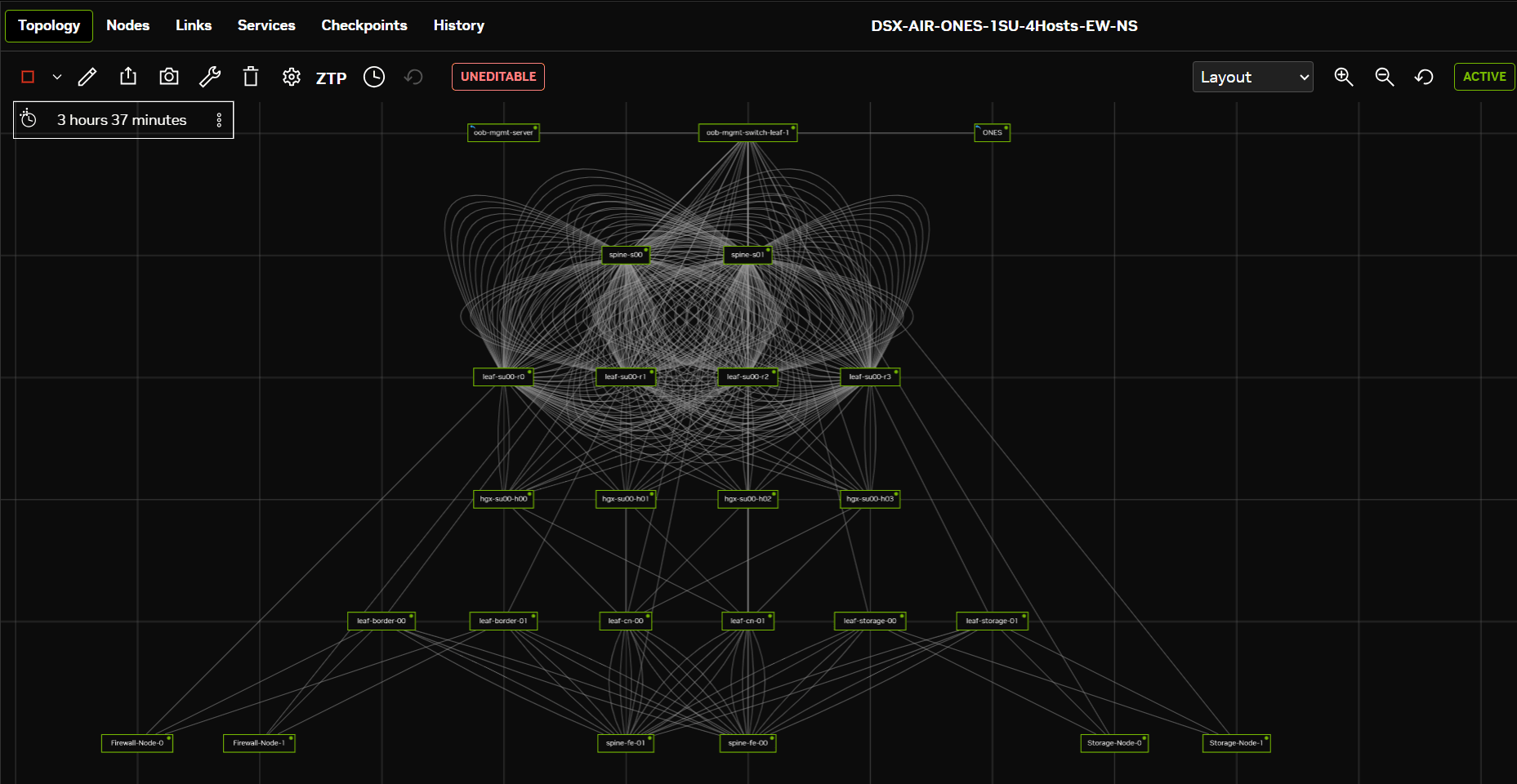
Figure 1: NVIDIA DSX Air with Aviz ONES Deployed
Day 0: Validated Fabric Design and Deployment
The first challenge in any AI fabric deployment is translating a reference architecture into a consistent device-level configuration. The lab uses the NVIDIA Spectrum-X reference architecture as the foundation for the network design. Through the ONES graphical interface, users define the fabric and generate validated configurations for the switches and compute-facing connections.
This approach reduces the reliance on manually developed, device-by-device configurations. More importantly, it allows the network team to validate the design, cabling model, addressing plan, routing relationships, and infrastructure dependencies before the physical deployment begins. This predeployment validation can significantly reduce the risk of discovering architectural or configuration issues during an expensive production rollout.
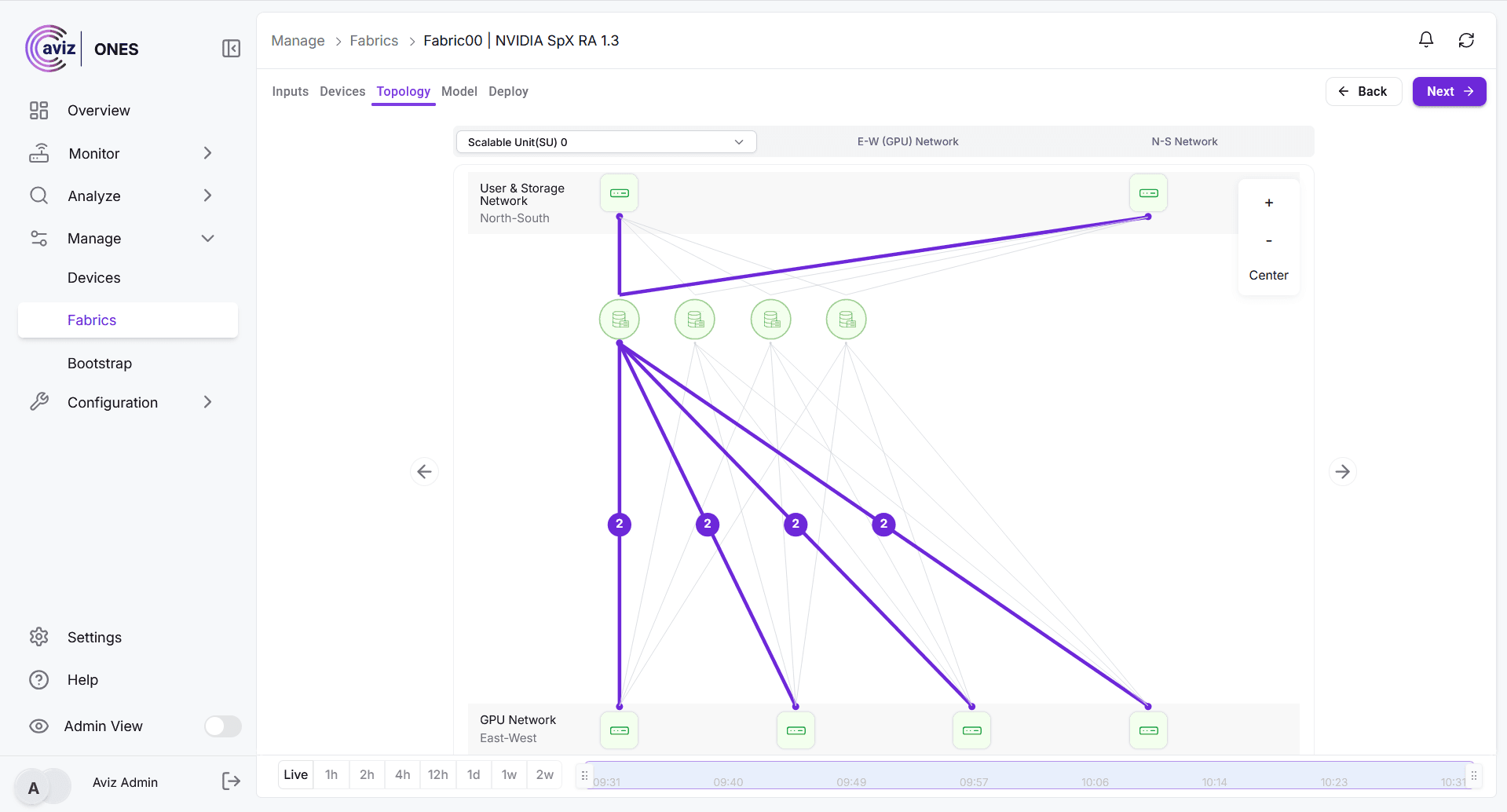
Figure 2: ONES Day 0 in Action During Fabric Design-to-Deploy
Day 1: Multi-Tenant GPU Infrastructure
Most enterprise AI environments will eventually be shared by multiple teams, projects, applications, or customers. The network must therefore understand more than switches and links. It must understand how compute resources are assigned and how workloads are isolated.
In the lab, users create a tenant and allocate GPU resources from the shared AI infrastructure. ONES coordinates the network configuration required to provide tenant connectivity and isolation. This is an important operational shift. Instead of managing the network independently from GPU allocation, the infrastructure can be organized around tenant and workload intent.
The result is a cleaner model in which compute allocation and network segmentation become parts of the same lifecycle.
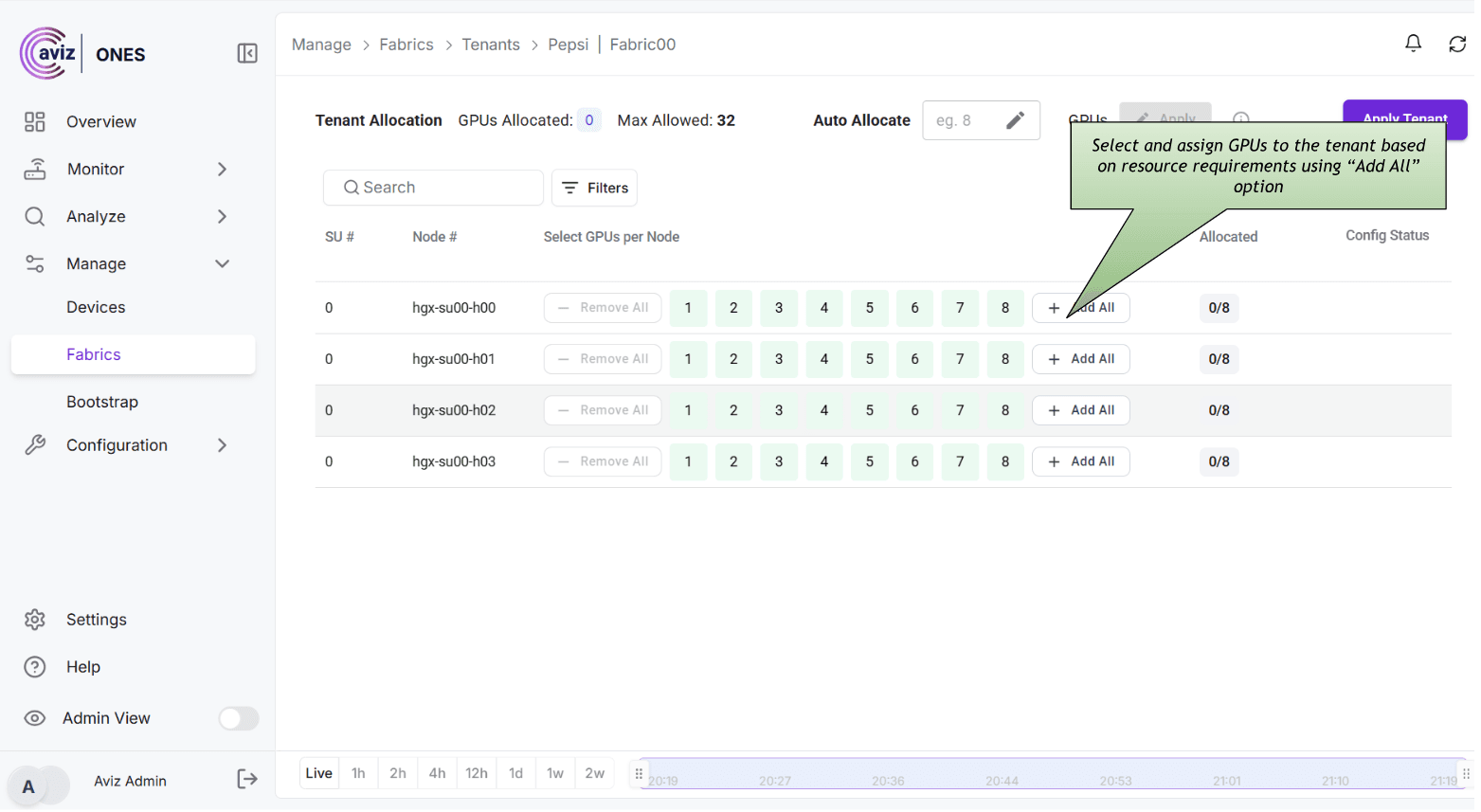
Figure 3: ONES Day 1 Tenant Management
Day 2: Observability, Rules, and Alerts
Deployment is only the beginning. Once an AI fabric is operational, teams need continuous visibility into device health, interface status, topology, utilization, and network behavior. ONES collects agentless telemetry from the network infrastructure using interfaces such as gNMI and NVIDIA NVUE API. Operators can view device inventory, time-series metrics, topology information, and operational status through a centralized interface.
The lab also demonstrates configurable monitoring rules and alerts. This allows teams to move beyond static dashboards and define the conditions that require operational attention. For AI infrastructure, this is particularly important. Network degradation may not result in a complete outage. Instead, it may appear as increased training time, reduced GPU utilization, application latency, storage delays, or inconsistent workload performance. The network operations platform must therefore help teams identify problems before they become expensive GPU performance issues.
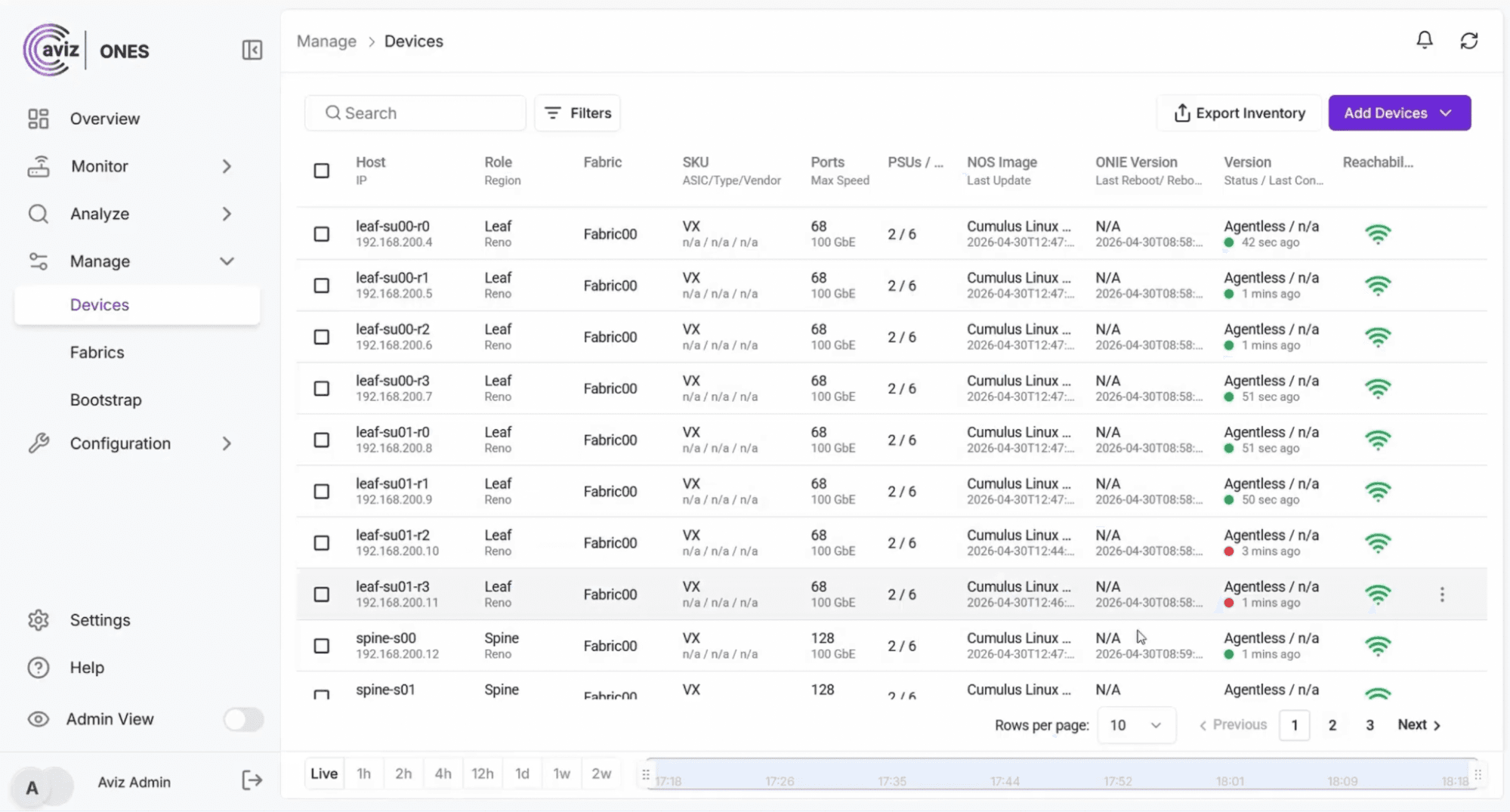
Figure 4: ONES Day 2 Observability
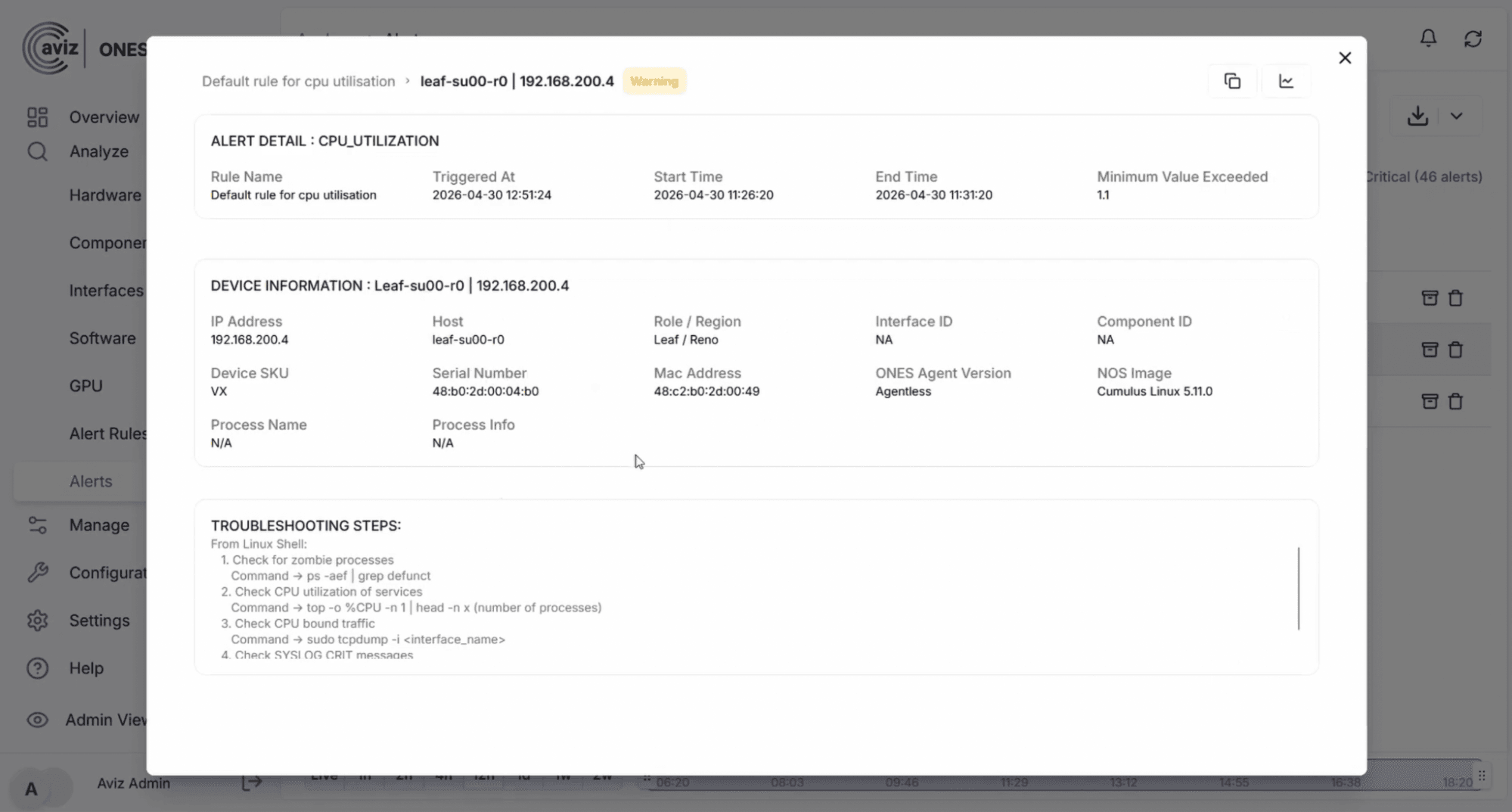
Figure 5: ONES Day 2 Rule Alerts
Why Simulation Matters
AI infrastructure is expensive, and deployment windows are often compressed. Waiting until the physical equipment arrives to validate workflows introduces unnecessary risk.
A simulated environment allows infrastructure teams to answer critical questions earlier:
- Does the proposed topology match the reference design?
- Can the complete fabric be provisioned consistently?
- How will GPU resources be assigned to tenants?
- How will tenant isolation be implemented?
- What telemetry will be available to the operations team?
- Which alerts and thresholds should be established?
- Can APIs be used to integrate the fabric with external orchestration platforms?
By answering these questions before production deployment, organizations can improve operational readiness and shorten the time between hardware installation and workload availability. Simulation also creates a safe environment for training. Network engineers, platform teams, solution architects, and operations teams can learn the workflow without requiring access to a production GPU cluster.
APIs as an Integration Foundation
AI infrastructure rarely operates as an isolated system. GPU schedulers, Kubernetes platforms, cloud management systems, service portals, and IT operations platforms all need to interact with the network. The lab includes ONES REST APIs for tenant lifecycle operations, including creating, retrieving, updating, and deleting tenant resources. This enables ONES to participate in a broader infrastructure automation workflow. A tenant or workload request can originate from an external platform, while ONES translates that intent into the required network configuration and continuously monitors the resulting infrastructure.
The goal is not simply network automation. The goal is coordinated AI infrastructure automation.
Building Operational Confidence Before Production
The key value of this lab is not the individual configuration steps. It is the ability to experience the full operational lifecycle of an AI fabric within a single environment. Users can design the network, deploy the fabric, allocate GPU resources, establish tenant segmentation, onboard devices for monitoring, review telemetry, configure alerts, and explore API-driven operations. That end-to-end workflow provides something that is difficult to achieve through design documents alone: operational confidence. As AI factories become larger and more business-critical, infrastructure teams need tools that bring repeatability, visibility, and policy-driven automation to the network.
AVIZ ONES, running within NVIDIA DSX Air, provides a practical way to experience that operating model before deploying physical infrastructure.The future of AI networking will not be defined only by bandwidth and port speeds. It will also be defined by how effectively the infrastructure can be designed, automated, shared, observed, and operated.
That is the operational problem we are focused on solving at AVIZ.
Frequently Asked Questions
What is AVIZ ONES, and how does it work with NVIDIA DSX Air?
AVIZ ONES is a centralized platform for designing, automating, and operating AI fabric infrastructure. It runs inside NVIDIA DSX Air, NVIDIA's platform for logically simulating a full AI factory, allowing teams to validate the complete operational lifecycle of a network before physical hardware arrives.
What does the AI fabric simulation environment include?
The simulated lab is based on a compact NVIDIA Spectrum-X infrastructure with separate East-West and North-South network fabrics, a dedicated management network, and AVIZ ONES as the centralized operational platform.
What are the Day 0, Day 1, and Day 2 stages covered in the simulation?
Day 0 covers validated fabric design and deployment using the NVIDIA Spectrum-X reference architecture. Day 1 focuses on multi-tenant GPU resource allocation and network segmentation. Day 2 addresses observability, telemetry collection, monitoring rules, and alerting.
How does AVIZ ONES handle multi-tenancy in an AI fabric?
Users can create tenants and allocate GPU resources from shared infrastructure, with ONES coordinating the network configuration needed for tenant connectivity and isolation, making compute allocation and network segmentation part of the same lifecycle.
What telemetry and monitoring capabilities does AVIZ ONES provide?
ONES collects agentless telemetry using interfaces such as gNMI and the NVIDIA NVUE API, giving operators access to device inventory, time-series metrics, topology information, and configurable monitoring rules and alerts through a centralized interface.
Can AVIZ ONES integrate with external platforms and orchestration systems?
Yes, ONES includes REST APIs for tenant lifecycle operations, enabling external platforms such as GPU schedulers, Kubernetes environments, and IT operations tools to interact with the network and trigger configuration changes based on workload intent.
Why does simulating an AI fabric before production deployment matter?
AI infrastructure is expensive and deployment windows are often compressed, so simulation allows teams to validate topology, provisioning workflows, tenant isolation, telemetry, and API integrations before physical hardware arrives, reducing risk and shortening time to workload availability.
Who benefits from using this simulation environment?
Network engineers, platform teams, solution architects, and operations teams can all use the simulation to learn and validate workflows without requiring access to a production GPU cluster.


