




Designing AI Networks at the Speed of Thought: How NVIDIA DSX AIR and Aviz ONES Changed AI Network Design
 February 23, 2026
 ONES & SONiC
Summary
Traditional AI infrastructure followed a build-first, test-later model that introduced risk, delays, and performance uncertainty. NVIDIA AIR and Aviz ONES replace this approach with real-time digital twin simulation. Together, they enable instant design validation, continuous iteration, and near-zero rework, fundamentally changing how AI networks are designed, tested, and deployed.
Introduction
Modern AI networks are complex systems consisting of thousands of GPUs, high-speed interconnects, and massive data flows. A single design or configuration error can result in downtime or hidden performance bottlenecks.
Historically, validation occurred after deployment using physical labs, making testing slow, costly, and risky. Digital twins address this challenge by enabling full-scale virtual validation before production. NVIDIA AIR and Aviz ONES bring this capability directly into the AI network design process.
Limitations of the Build-First Test-Later Model
Traditional infrastructure workflows validated designs only after physical deployment.
Challenges included
- High cost and slow procurement of hardware labs
- Delayed detection of performance and configuration issues
- Limited ability to experiment safely
- Increased risk of production failures
In AI environments, this approach is no longer viable.
NVIDIA AIR as a Digital Twin for AI Infrastructure
NVIDIA AIR provides a cloud-hosted, fully virtual representation of AI and networking environments.
Capabilities include
- True-to-life simulation of switches, links, and configurations
- Execution of the same automation used in production
- Rapid scale-up and teardown without physical hardware
- Risk-free testing of design and configuration changes
Testing becomes an integrated part of every design step rather than a final validation stage.
Aviz ONES for Real-Time Network Design and Simulation
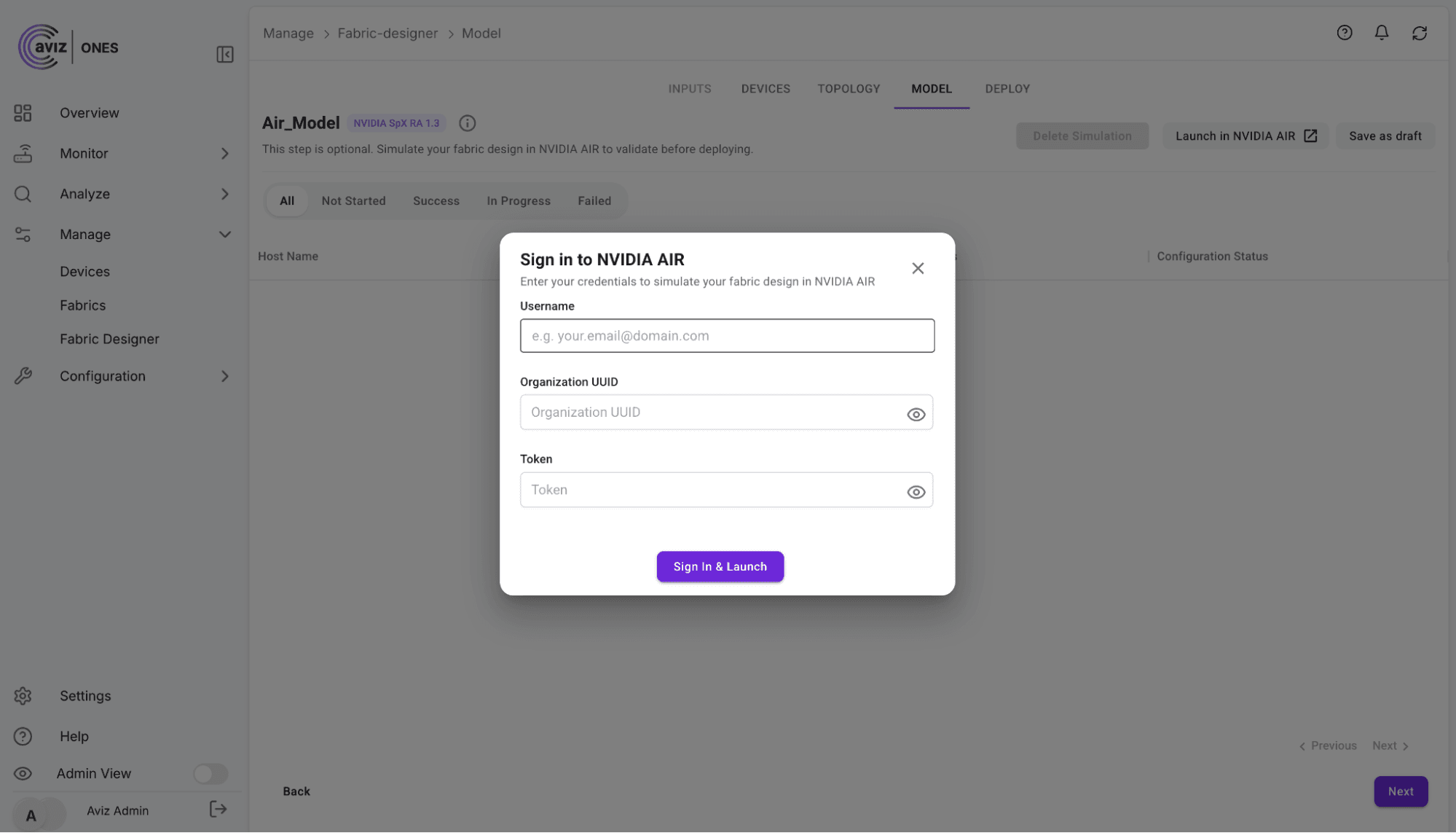
Aviz ONES accelerates digital twin workflows by generating simulation models dynamically during network design.
Key capabilities include
- Instant creation of live simulations inside NVIDIA AIR
- Real-time updates as designs change
- Continuous validation during the design process
Design and validation operate as a single, continuous workflow.
Impact of Real-Time Design Validation
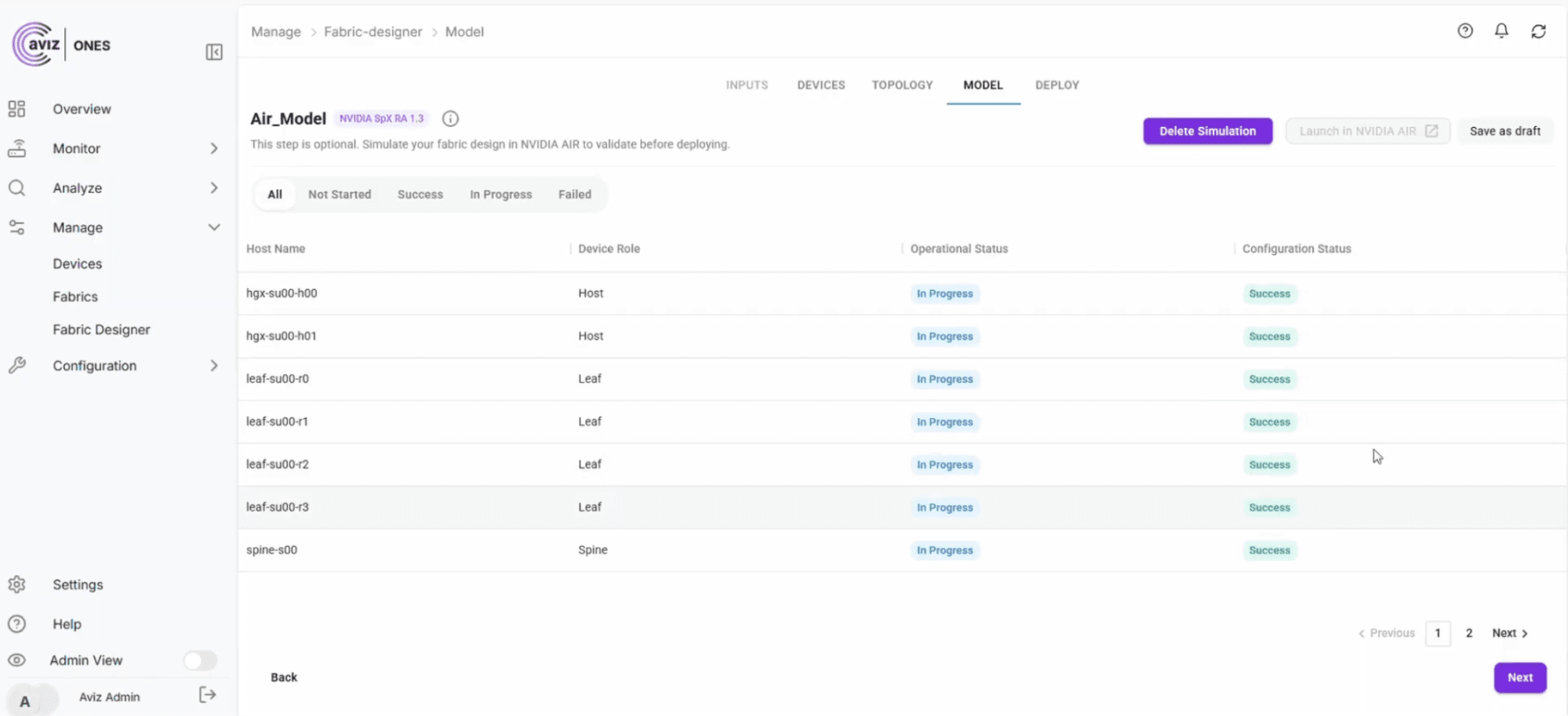
The integration of NVIDIA AIR and Aviz ONES fundamentally changed AI network design outcomes.
Key impacts included
- Immediate feedback on every design decision
- Iterative refinement without traditional lab wait times
- Collaborative design sessions with live testing
- Near-zero rework when moving from concept to deployment
This closed feedback loop reduced risk while accelerating deployment timelines.
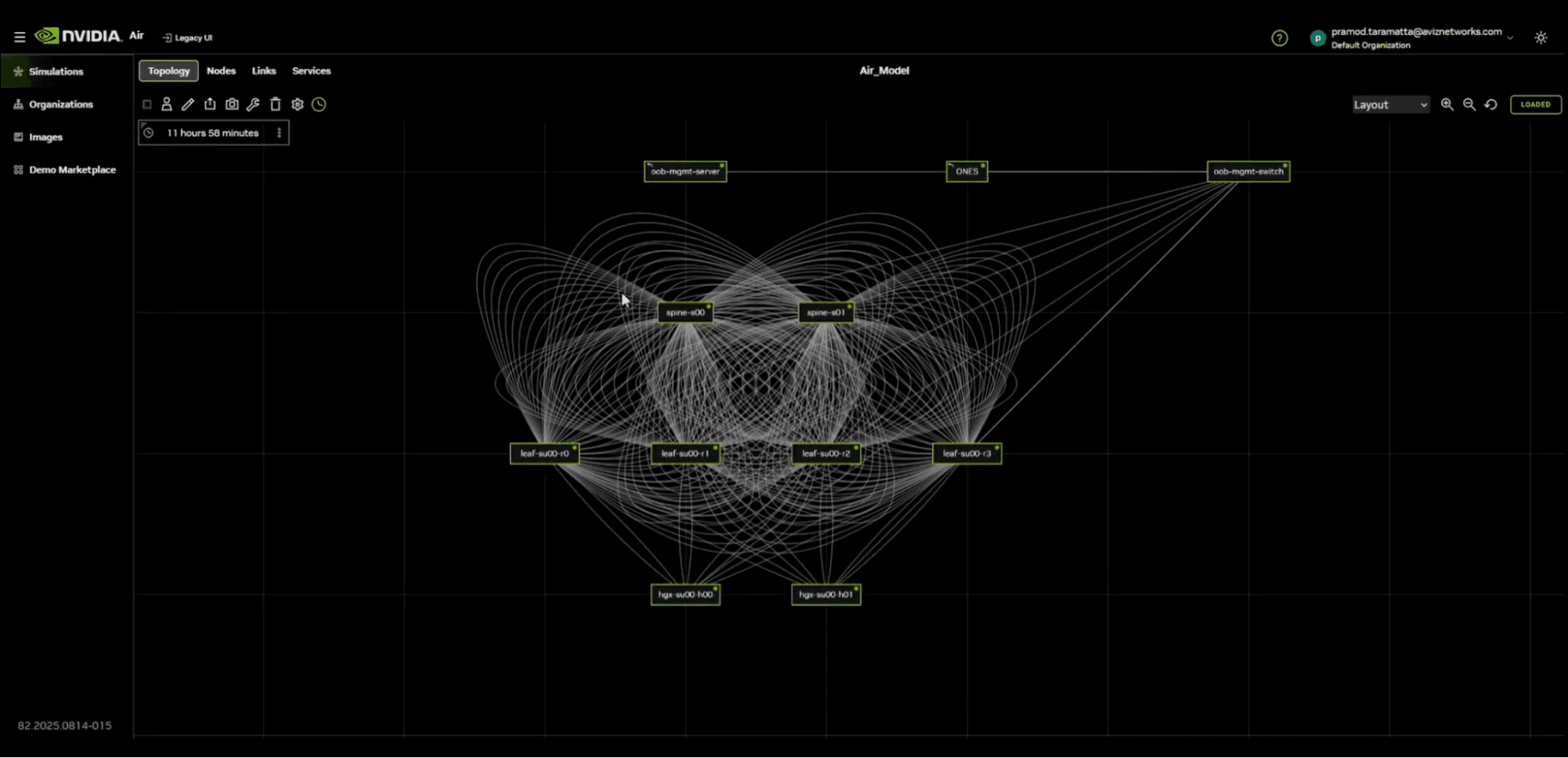
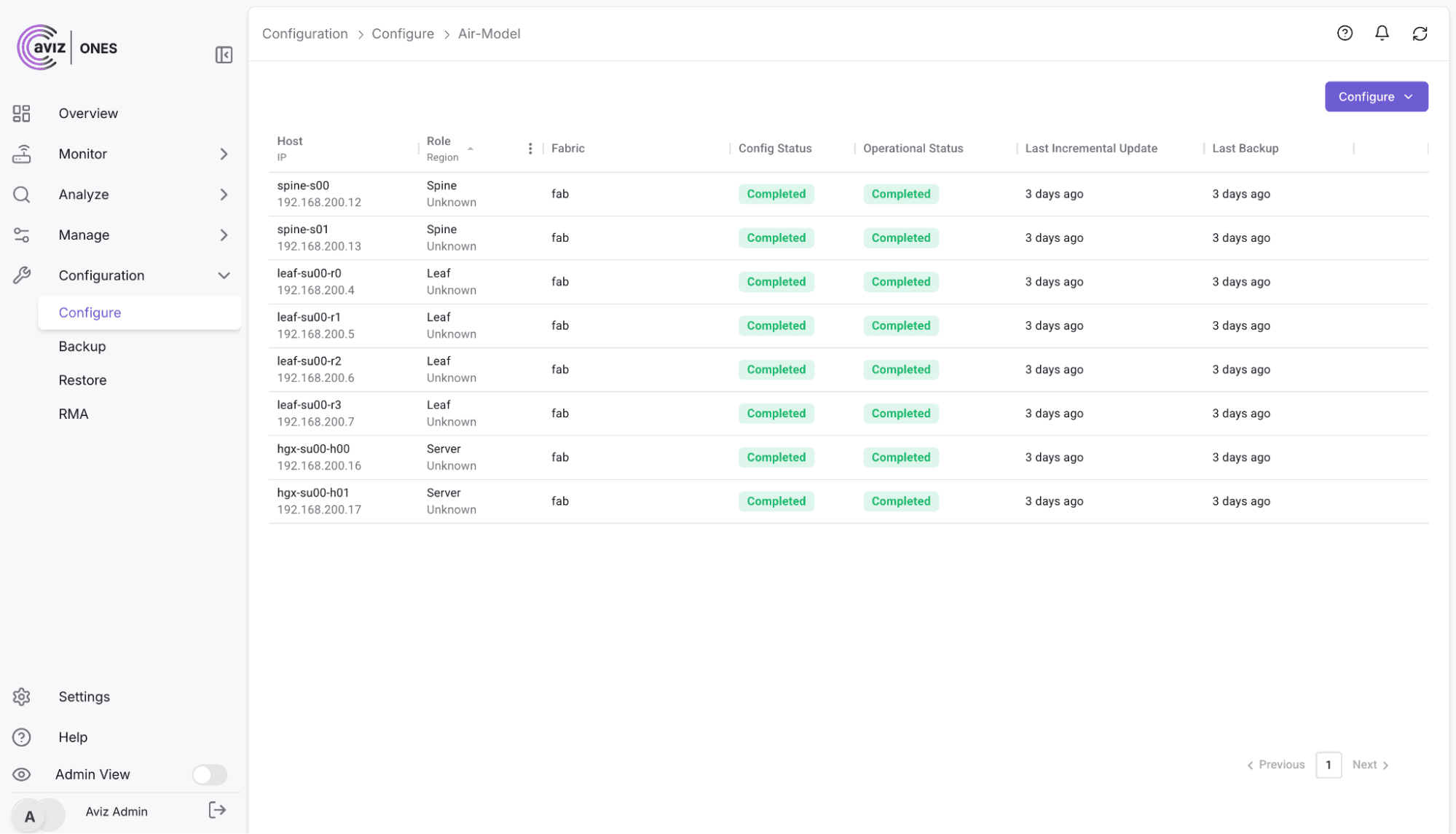
Redefining the AI Infrastructure Lifecycle
Together, NVIDIA AIR and Aviz ONES establish a new operational model for AI infrastructure.
Key differences include
- Real-time explaining and validation instead of static diagrams
- Minutes-long iteration cycles instead of weeks
- Virtual scalability instead of physical constraints
- Global collaboration without location dependency
This approach aligns with the pace of modern AI innovation.
| Feature / Approach | Old Way: Traditional Labs | New Way: NVIDIA AIR + Aviz ONES |
|---|---|---|
| Hardware Needed | Costly, limited, slow to procure | None — everything virtual |
| Design-to-Test Workflow | Sequential, siloed | Real-time validation |
| Iteration Speed | Days or weeks per cycle | Minutes per cycle |
| Scalability | Bound by physical resources | Virtually unlimited |
| Collaboration | On-site only | Globally, asynchronous |
Conclusion
NVIDIA AIR and Aviz ONES replace guesswork with certainty in AI network design. By combining digital twins with real-time orchestration, they enable engineers to design, test, and refine AI networks continuously and safely. The future of AI network design is built on instant validation, continuous iteration, and fearless experimentation.
Frequently Asked Questions
What problem does the NVIDIA AIR and Aviz ONES combination actually solve?
Old AI infrastructure workflows validated designs only after physical deployment. That meant expensive hardware labs, slow procurement, and finding problems too late to fix cheaply. NVIDIA AIR and Aviz ONES replace that with real-time digital twin simulation so teams test before anything gets built and rework drops to near zero.
What is NVIDIA AIR and what can it actually simulate?
NVIDIA AIR is a cloud-hosted virtual environment that creates a true-to-life simulation of switches, links, and configurations. It runs the same automation used in production, scales up and tears down instantly without physical hardware, and lets teams test design and configuration changes with no risk to live infrastructure.
What does Aviz ONES add on top of what NVIDIA AIR already provides?
ONES generates simulation models dynamically inside NVIDIA AIR as the network design changes. Every time a design gets updated, a live simulation spins up instantly and validation runs in real time. Design and validation stop being separate stages and become one continuous workflow instead of a hand-off between two teams.
How much faster is the design iteration cycle with NVIDIA AIR and Aviz ONES?
Traditional lab-based iteration took days or weeks per cycle. With NVIDIA AIR and Aviz ONES, iteration cycles run in minutes. Teams get immediate feedback on every design decision, refine continuously, and run collaborative design sessions with live testing happening at the same time rather than after the session ends.
Why is the old build-first test-later model no longer viable for AI network environments?
AI networks involve thousands of GPUs, high-speed interconnects, and massive data flows. One configuration error can cause downtime or hidden performance bottlenecks that are expensive to find after deployment. Physical lab testing is too slow, too costly, and too limited in scale to keep up with how fast AI infrastructure needs to move.
How does the new approach change collaboration across teams designing AI infrastructure?
Traditional lab-based design required people to be on-site and work sequentially. With virtual simulation, teams collaborate globally and asynchronously. Live testing happens during design sessions not after them. There are no physical constraints on scale and no location dependency slowing the process down.
What does near-zero rework actually mean when moving from design to deployment?
Because every design decision gets validated in real time through the digital twin, issues get caught during the design process not after hardware is racked. By the time a design moves to production, it has already been tested continuously through every iteration. There is nothing left to discover the hard way once the real infrastructure goes live.
How does digital twin simulation change the role of physical hardware labs in AI network design?
Physical labs used to be the only way to validate a design before production. They were slow to procure, expensive to run, and limited by how much hardware a team could get their hands on. NVIDIA AIR removes that constraint entirely. Everything runs virtually, scales without physical limits, and spins up in minutes. Physical labs become optional rather than mandatory.
Explore how Aviz ONES and NVIDIA Spectrum-X accelerate AI network design with real-time simulation, continuous validation, and digital twin driven deployment.


