





Deep Network Observability in the AI Era: Scaling Performance, Telemetry, and Open Infrastructure
 February 2, 2026
 Deep Network Observability
Introduction
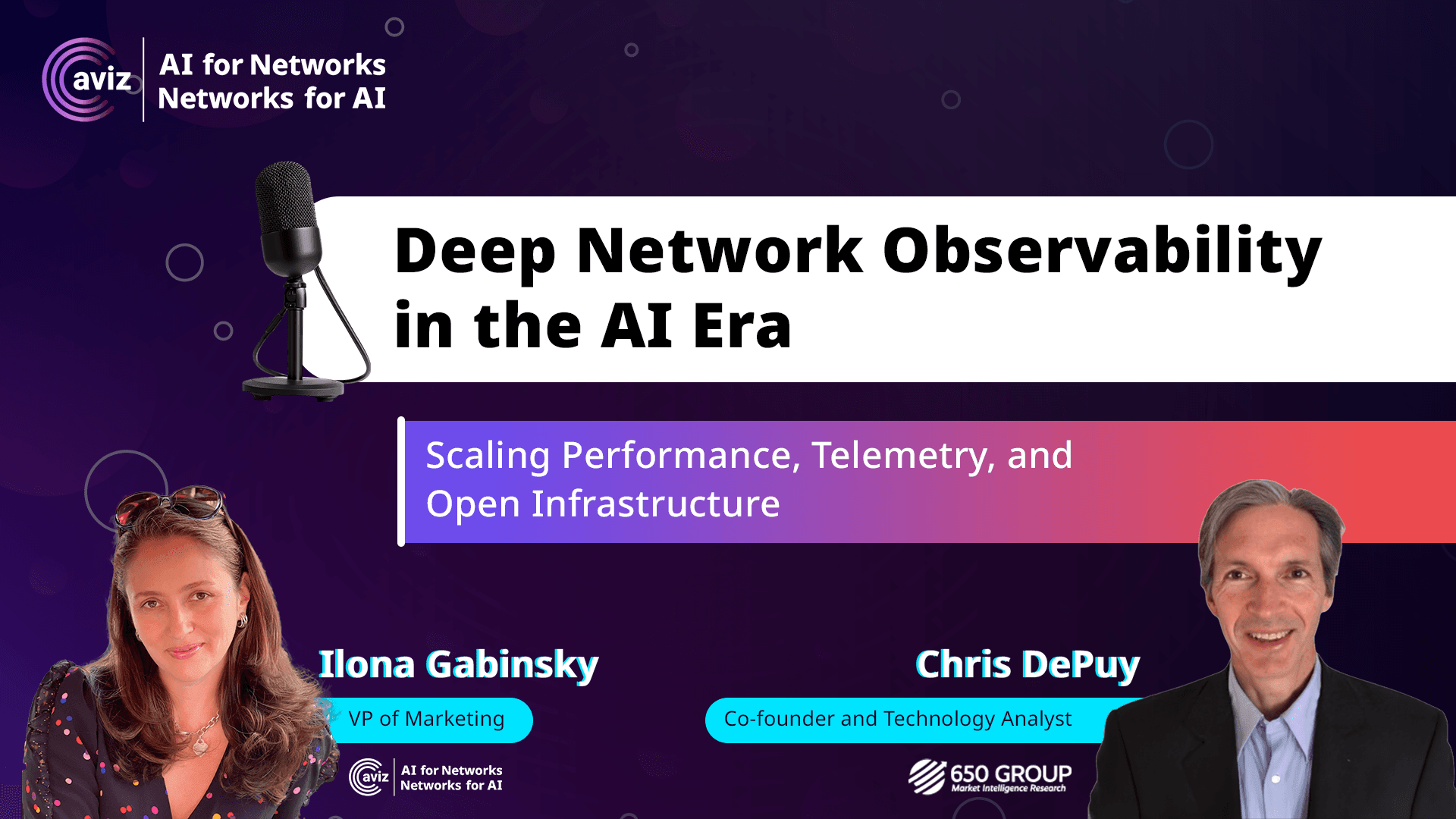
In this episode of the Aviz Networks Podcast, host Ilona Gabinsky, VP of Marketing at Aviz Networks, speaks with Chris DePuy, Co-founder and Technology Analyst at 650 Group, about how network observability is evolving in the AI era and how enterprises are managing growing infrastructure complexity.
Drawing on decades of experience across networking, security, and observability, Chris explains how AI-driven traffic is reshaping telemetry needs and why observability is moving toward software-first, open, and interoperable models as AI infrastructure expands beyond traditional IT.
What this episode was about
The conversation examined how the AI era introduced new computing silos across on-prem, cloud, and AI-specific environments, often developing alongside existing IT systems. It highlighted telemetry as the unifying layer and explained why rising scale, fading perimeters, and higher cloud costs are forcing enterprises to rethink traditional observability architectures.
Key insights from the conversation
- The AI era introduced new infrastructure silos across on-prem, cloud, and AI-specific environments
- Telemetry became the foundational layer connecting increasingly complex computing and networking domains
- Infrastructure scale and performance demands outpaced traditional observability tools
- Manual workflows and fragmented tools failed to scale, driving the need for AI copilots
- Open, software-first observability reduced vendor lock-in and long-term operational risk
Why this episode mattered
- Explained how observability requirements changed in the AI era
- Clarified why scalability and performance were becoming primary decision drivers
- Showed how AI copilots supported real-time insights and operations
- Emphasized the importance of open and interoperable observability platforms
- Provided a risk-focused perspective on cost, lock-in, and long-term flexibility
Closing perspective
This episode delivered a practical view of how observability is adapting to AI driven infrastructure growth. By focusing on telemetry, scalability, AI assisted operations, and open ecosystems, the conversation showed how observability platforms are evolving to support modern, complex network environments.
Frequently Asked Questions
How did the AI era change what enterprises need from network observability?
AI brought new computing silos across on-prem, cloud, and AI-specific environments that often grew up alongside existing IT systems rather than replacing them. Managing all of that together pushed traditional observability tools past their limits. Scale and performance demands outpaced what those tools were built for and enterprises had to rethink how visibility works across a much more fragmented infrastructure.
Why is telemetry becoming the most important layer in modern AI infrastructure?
AI infrastructure spans on-prem, cloud, and AI-specific environments and those domains do not naturally talk to each other. Telemetry is what ties them together into something a team can actually monitor and act on. Without a unified telemetry layer, enterprises end up with fragmented visibility across silos that each require separate tools and separate workflows to manage.
Why did manual workflows and fragmented tools stop working as AI infrastructure grew?
At smaller scale, a team can correlate data from multiple tools by hand and keep up. AI infrastructure does not stay small. As scale grew and traffic patterns became more complex, manual correlation and jumping between fragmented tools became too slow and too error-prone to keep operations running. Something had to change and that is where AI copilots came in to handle real-time insights at a pace humans cannot match manually.
How do AI copilots support network observability operations in practice?
AI copilots handle real-time insights and operations that fragmented manual workflows cannot keep up with at scale. Instead of teams piecing together what is happening across multiple tools, copilots correlate telemetry, surface issues, and support faster decision-making in one layer. The episode positions copilots as the practical answer to the gap between the complexity of AI infrastructure and the capacity of human-driven operations.
Why are enterprises moving toward open and interoperable observability platforms?
Proprietary observability platforms create the same vendor lock-in problem as proprietary networking. As AI infrastructure keeps expanding and new tools emerge, being locked into one vendor's observability stack limits flexibility and drives up long-term costs. Open software-first observability lets organisations swap components, integrate new data sources, and avoid being held hostage to a single vendor's roadmap or pricing.
Why are rising cloud costs pushing enterprises to rethink traditional observability architectures?
Traditional observability architectures were not designed for the data volumes that AI infrastructure generates. Sending all that telemetry to cloud-based tools gets expensive fast. Higher cloud costs combined with the growing scale of AI environments are forcing enterprises to look at where data gets processed and stored and whether the current architecture still makes financial sense as the infrastructure keeps expanding.
What does fading network perimeters mean for observability in AI environments?
Traditional network perimeters gave observability teams a clear boundary to monitor. AI infrastructure does not respect those boundaries. Workloads span on-prem, cloud, and AI-specific environments simultaneously and the perimeter between them keeps getting less defined. Observability platforms built around a fixed perimeter model struggle to give teams a complete picture when the infrastructure itself does not have clean edges anymore.
Why does scalability matter more than features when choosing an observability platform for AI infrastructure?
The episode is clear that scalability and performance are becoming primary decision drivers over feature lists. An observability platform with every feature imaginable but limited scalability breaks down exactly when AI infrastructure growth puts it under real pressure. A platform that scales cleanly and performs reliably at high data volumes keeps working as the environment grows rather than becoming a bottleneck at the worst possible moment.
Watch the full episode
Watch the full episode to explore how deep network observability was evolving in the AI era and how enterprises were navigating performance, complexity, and open infrastructure decisions.


