





Aviz Service Node R2.3 Delivers Fine-Grained Session Intelligence with Dynamic DPI and Multi-NIC Support
 January 22, 2026
 Deep Network Observability

Summary
Aviz Service Node (ASN) Release 2.3 builds on the Telco-grade foundation of R2.2 and introduces deeper session intelligence, advanced DPI capabilities, and greater deployment flexibility. This release enhances subscriber visibility across control and user planes, improves protocol correlation, enables dynamic in-service upgrades, and adds flexible multi-NIC support—empowering both Telco and Enterprise operators with precise, real-time network intelligence.
Introduction
In today's rapidly evolving network landscape, maintaining a competitive edge requires continuous innovation. Building on the proven Telco capabilities introduced in Release 2.2, Aviz Service Node R2.3 goes beyond a routine update. It delivers superior performance, greater precision, and comprehensive visibility into real-time network activity across Telco and Enterprise environments.
This release focuses on fine-grained session awareness, advanced DPI payload extraction, and operational flexibility—helping operators understand not just traffic volumes, but subscriber behavior, applied policies, and session lifecycles.
What's New in Aviz Service Node R2.3?
Direct Answer: ASN R2.3 introduces enhanced subscriber session exports, richer control-plane correlations, advanced DPI payload extraction, dynamic in-service upgrades, and flexible multi-NIC support—enabling deeper visibility and operational efficiency across 4G, 5G-NSA, and Enterprise networks.
Fine-Grained Subscriber and Session Visibility
Active Bearer Session Export for 5G-NSA
Aviz Service Node now provides user-based Active Bearer Session exports for subscriber sessions in 5G-NSA networks. This enables operators to monitor and analyze ongoing dedicated bearers with precise subscriber context, which is essential for accurate traffic management, service assurance, and billing.
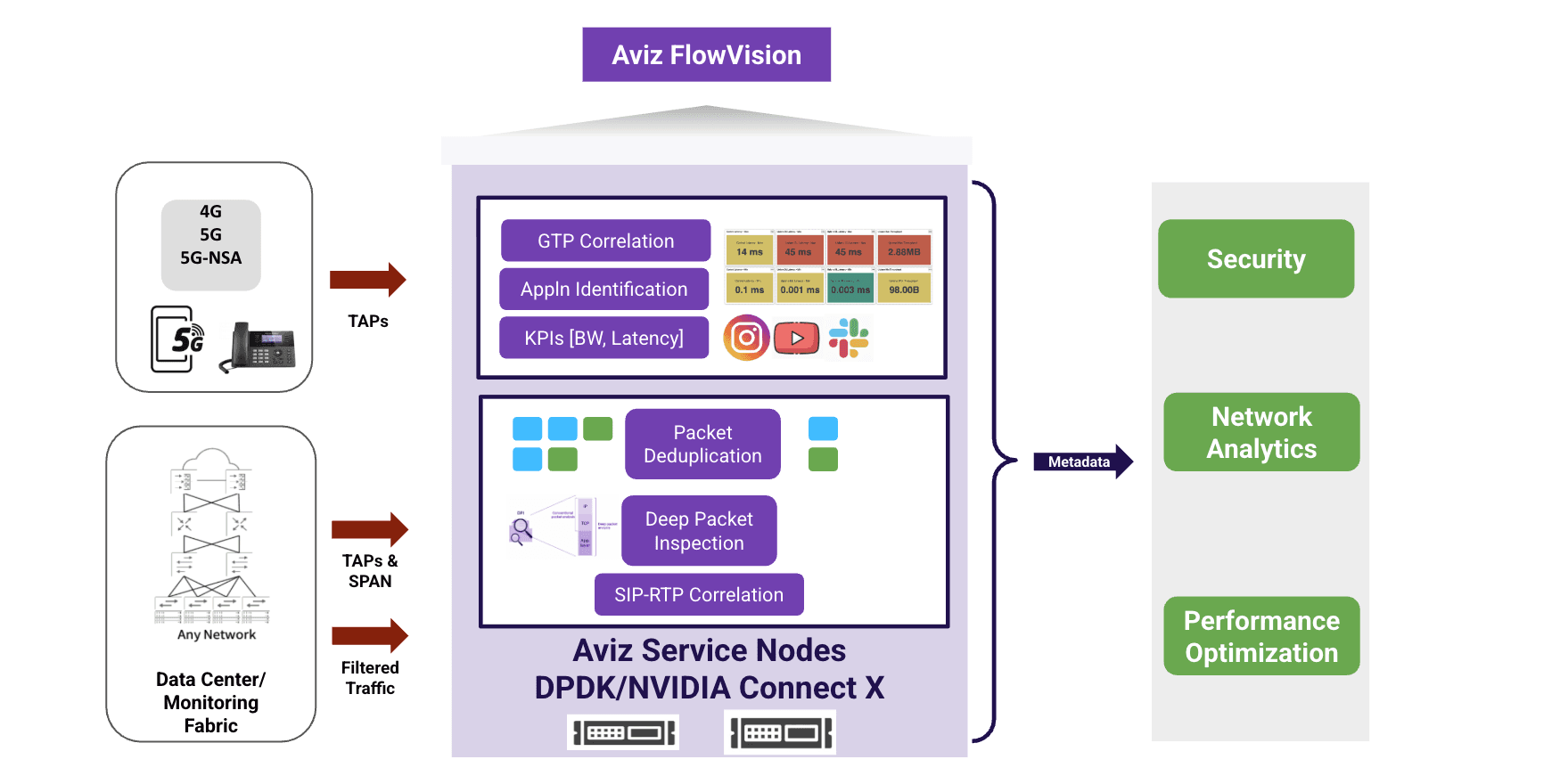
Figure 1: Concise overview of ASN
Unique Identifiers for Kafka Exports
ASN now exports data with a unique identifier, configurable via Flow Vision (FV) or defaulting to the node hostname. This enables reliable end-to-end traceability of per-ASN data across control and user plane sessions, improving integration with Kafka-based analytics and monitoring platforms.
DSCP IP TOS Extraction
ASN supports extraction of DSCP values from the IP Type of Service (TOS) field, including both inner and outer IP headers. This applies to both Telco and Enterprise deployments, enabling better QoS policy enforcement, traffic prioritization analysis, and compliance reporting.
User Session Flow Visibility in Control Sessions
Control-plane subscriber exports now include user session lifecycle events, such as session creation and termination. This bridges control and user planes into a unified view, improving accountability, filtering, and troubleshooting across subscribers with greater granularity.
RADIUS Correlation on Control Sessions
ASN integrates RADIUS subscriber information directly into control-session data for 4G (EPC) and 5G-NSA environments. Authentication, authorization, and accounting details are now available without external correlation, providing richer subscriber context in a single record.
PRIO Cause for Session Deletion Events
ASN captures the PRIO Cause attribute for Delete Session Request and Delete Bearer Request packets. This allows operators to identify priority-based deletions, policy-driven terminations, and resource reclamation events with improved diagnostic precision.
Rulebase Attributes in RADIUS Session Data
ASN extracts Rulebase attribute payloads from RADIUS packets, exposing predefined Policy and Charging Control (PCC) rulebases applied to subscribers. This enables deeper visibility into enforced policies, supporting troubleshooting, service assurance, compliance, and correlation of authentication events with applied rules.
Boot Configuration and In-Service Provisioning
Boot Configuration Support via Flow Vision
ASN supports boot-time configuration through Flow Vision, allowing in-service provisioning without redeployment. This simplifies setup, reduces downtime, and supports both Telco-scale and Enterprise deployments.
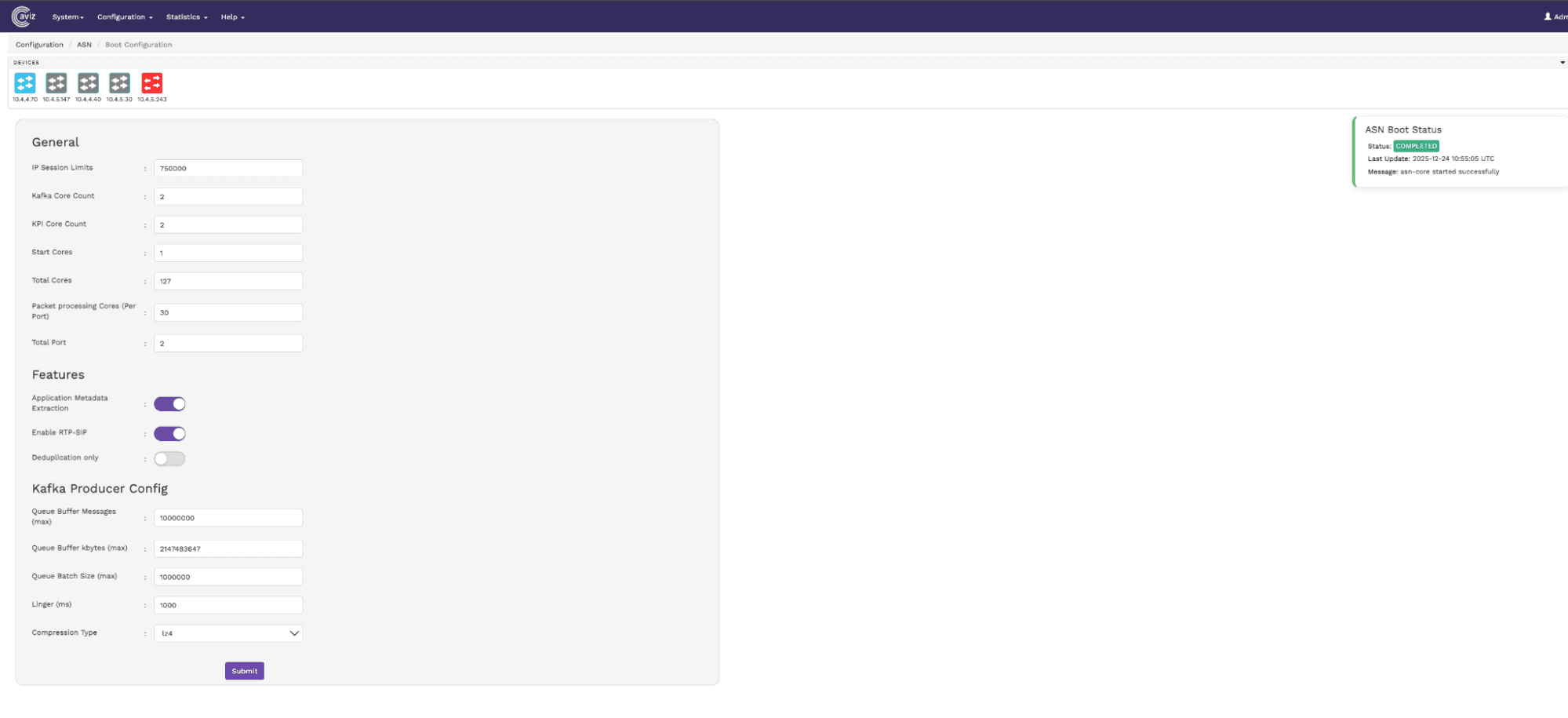
Figure 2: Boot Configuration page of ASN from FV
Advanced Protocol Intelligence and DPI Capabilities
SIP–RTP Protocol Extraction and Correlation
ASN supports extraction and correlation of SIP and RTP protocols, including Call-ID-based associations, audio and media formats, and session parameters negotiated via SDP. This provides end-to-end visibility into real-time voice and multimedia sessions across IP networks.
DPI Payload Extraction
ASN features an advanced Deep Packet Inspection (DPI) engine that enables payload-aware traffic classification and targeted metadata extraction across complex and encrypted application protocols—delivering fine-grained visibility without compromising performance.
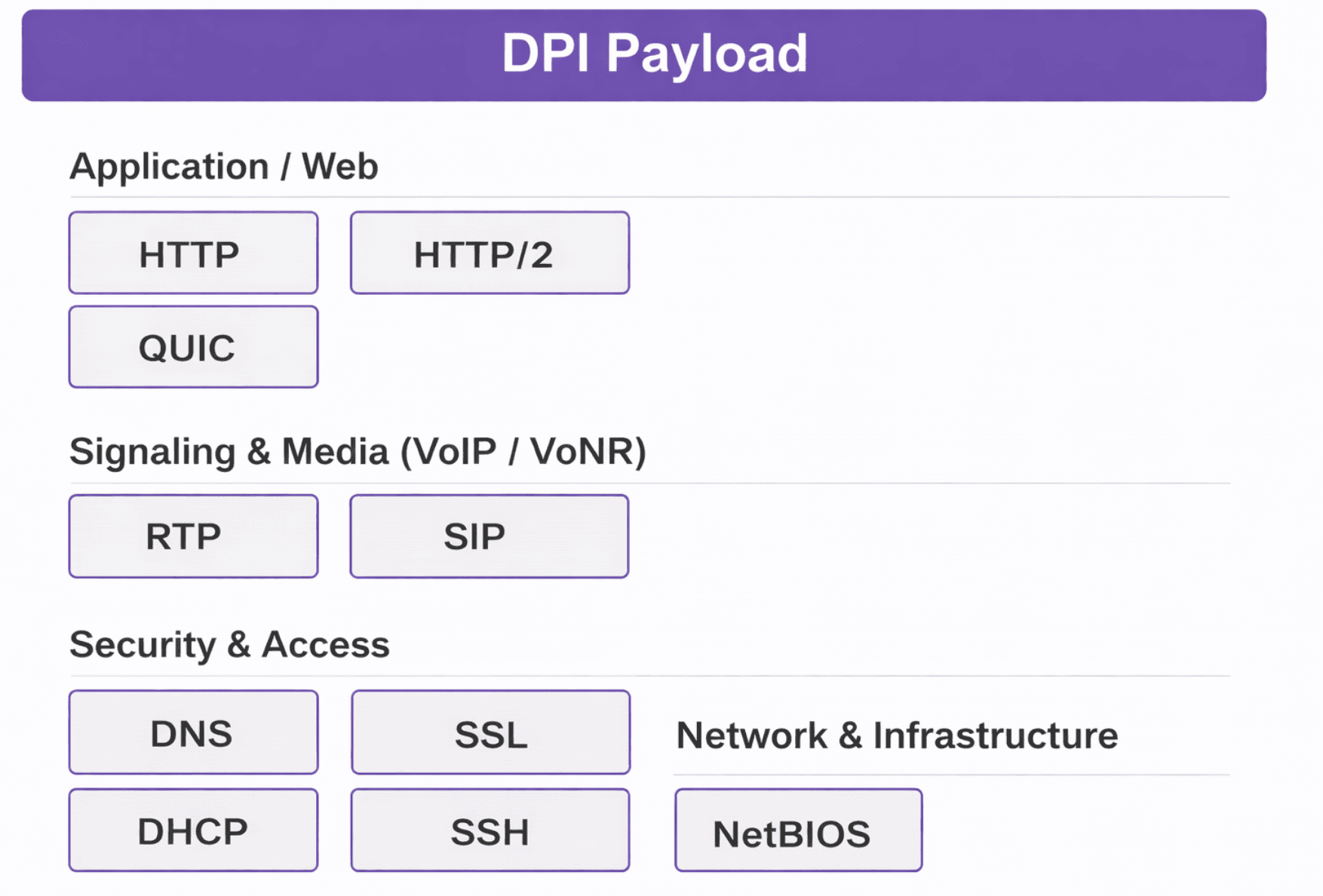
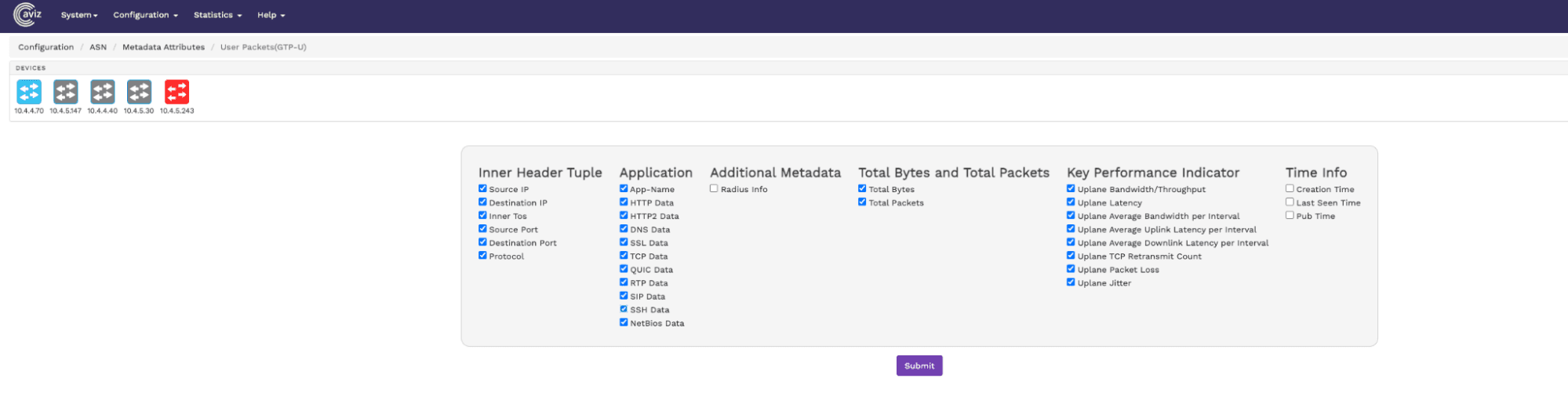
Figure 3: DPI Payload Configuration page of ASN from FV
Hardware Flexibility and In-Service Upgrades
Combined Intel and ConnectX NIC Support
ASN supports multi-NIC configurations using Intel NICs, Mellanox ConnectX NICs, or both simultaneously. Control and user planes can be mapped independently, optimizing throughput, redundancy, and hardware utilization across Telco and Enterprise environments.
Dynamic DPI Upgrade via Flow Vision
ASN enables non-disruptive, in-service DPI upgrades through Flow Vision. DPI engines and signature databases can be updated dynamically, ensuring continuous visibility into new applications and threats without service interruption.
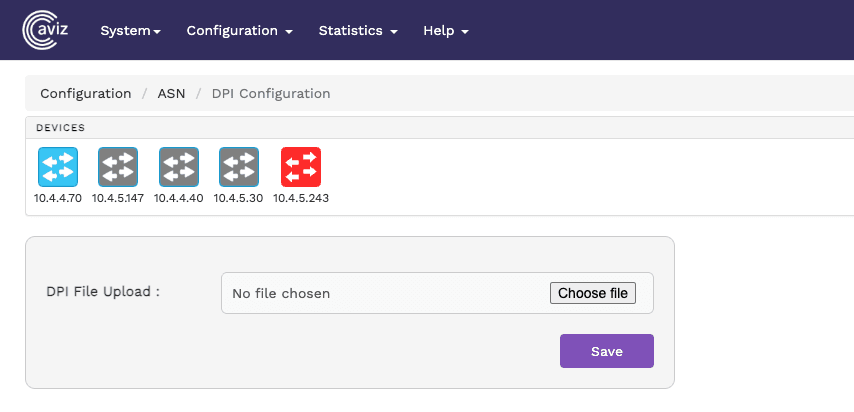
Figure 4: Dynamic DPI Upgrade for ASN from FV
Deduplication and Metadata Optimization
Optimized Dedup Configuration
Deduplication transmit settings and packet statistics reporting are optimized via Flow Vision, particularly for Enterprise environments. This reduces bandwidth consumption and improves duplicate packet handling in high-volume monitoring scenarios.
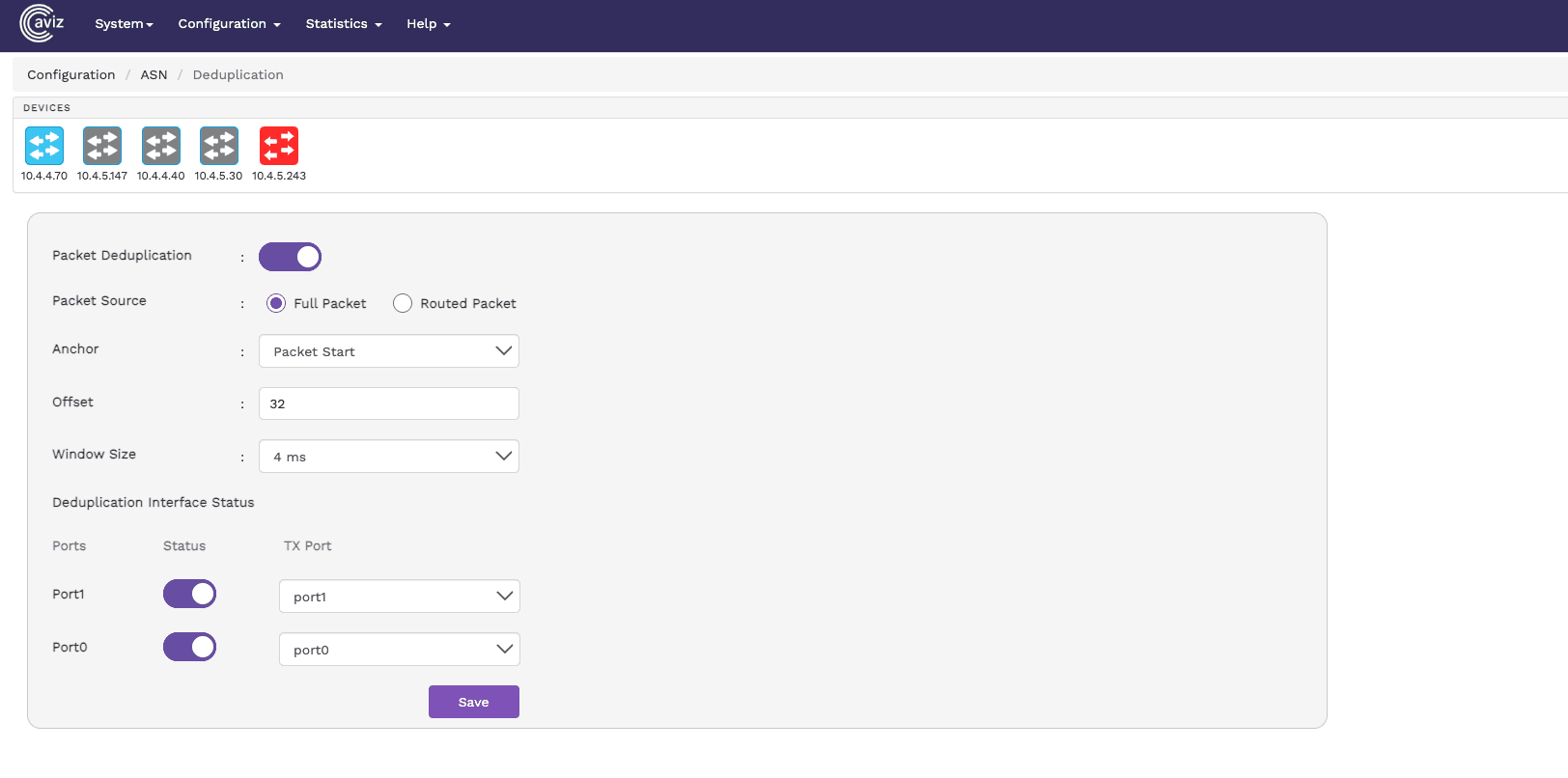
Figure 5: Dedup Config for ASN from FV
Dedup-Only and Metadata Export Skip Boot Options
ASN introduces:
- Dedup-Only Boot Option to maximize performance when deduplication is the primary requirement
- Metadata Export Skip Boot Option to selectively disable application metadata exports, conserving processing resources and bandwidth
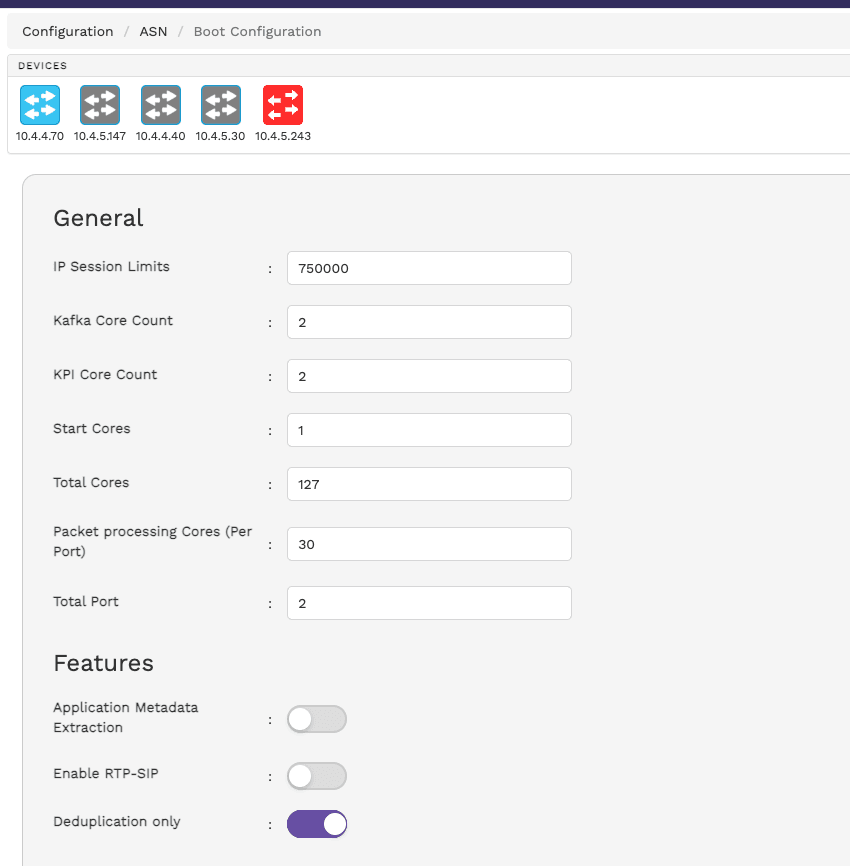
Figure 6: Dedup-only and Metadata Extraction skip for ASN from FV
Conclusion
With Aviz Service Node Release 2.3, Aviz raises the bar for session intelligence, DPI precision, and deployment flexibility. By combining fine-grained subscriber visibility, advanced protocol correlation, dynamic DPI upgrades, and flexible hardware support, ASN R2.3 empowers operators to deliver carrier-grade experiences with enterprise-grade efficiency across modern networks.
If you are looking to gain deeper subscriber visibility, improve session-level intelligence, and future-proof your Telco or Enterprise network operations, Aviz Service Node R2.3 is designed to help.
Frequently Asked Questions
What are the biggest changes in Aviz Service Node Release 2.3?
Five things stand out. Subscriber session exports got deeper for 5G-NSA with active bearer visibility. RADIUS correlation now sits directly inside control session data without external correlation. DPI payload extraction got a serious upgrade for encrypted and complex protocols. In-service DPI upgrades can now run without any service interruption. Multi-NIC support with Intel and ConnectX NICs together gives operators more hardware flexibility than before.
How does ASN R2.3 improve subscriber visibility in 5G-NSA networks?
ASN now exports user-based Active Bearer Session data for 5G-NSA subscribers so operators can monitor ongoing dedicated bearers with precise subscriber context. Control-plane exports also include user session lifecycle events like session creation and termination, which bridges the control and user planes into one unified view. Before R2.3 those two planes had to be correlated separately which made troubleshooting slower and less accurate.
What does RADIUS correlation inside ASN actually give operators that they did not have before?
Previously, linking RADIUS authentication and accounting data to subscriber sessions required external correlation after the fact. ASN R2.3 pulls RADIUS subscriber information directly into control session records for 4G EPC and 5G-NSA environments. Authentication, authorisation, and accounting details are in the same record as the session data. No external system needed to join them together.
How does ASN handle DPI upgrades without taking the service down?
Dynamic DPI upgrades run through Flow Vision without interrupting traffic processing. DPI engines and signature databases update in-service so new applications and threats get visibility as soon as the update applies. There is no maintenance window, no traffic disruption, and no gap in detection coverage while the upgrade runs.
What is the Dedup-Only boot option and when would an operator use it?
When deduplication is the primary job and metadata export is not needed, the Dedup-Only boot option focuses all processing resources on that one task. A separate Metadata Export Skip boot option lets operators selectively disable application metadata exports to save processing and bandwidth. Both options are there for environments where resource efficiency matters more than running every feature simultaneously.
How does multi-NIC support with Intel and ConnectX NICs work in ASN R2.3?
ASN now runs on Intel NICs, Mellanox ConnectX NICs, or both at the same time. Control and user planes can be mapped independently across whichever NIC combination fits the deployment. That flexibility lets operators optimise throughput, build in redundancy, and make better use of whatever hardware is already in the environment rather than being locked to one NIC type.
Why does extracting DSCP values from IP TOS fields matter for Telco and Enterprise operators?
DSCP values tell you how traffic is being prioritised on the network. Extracting them from both inner and outer IP headers in the same flow gives operators a clear picture of whether QoS policies are actually being applied the way they were configured. For compliance reporting and troubleshooting traffic prioritisation issues, having that data already in the session record saves the time it would take to correlate it from somewhere else.
How does capturing PRIO Cause for session deletion events help with network troubleshooting?
Session deletions happen for different reasons and knowing which reason applies changes how the team responds. PRIO Cause in R2.3 tells operators whether a deletion was priority-based, policy-driven, or triggered by resource reclamation. Without that context, teams see sessions disappearing and have to investigate each one manually to figure out why. With PRIO Cause in the record the answer is already there when the ticket lands.
Connect with Aviz Networks to learn how ASN can enhance real-time visibility, DPI-driven insights, and operational efficiency across your network infrastructure.


