





PlugFest 2025

Executive Summary
The 2025 PlugFest represents a significant milestone for network infrastructure standardization, establishing SONiC (Software for Open Networking in the Cloud) as the predominant open-source Network Operating System for contemporary data centers. This vendor-neutral initiative enables users and hardware partners to validate production deployment scenarios, confirming SONiC’s readiness for enterprise-scale implementation.
Why SONiC PlugFest Matters
With AI-driven workloads reshaping data center networks, organizations require interoperability, cost efficiency, and operational flexibility. PlugFest directly addresses critical questions:
-
Critical Question One
What do end users of SONiC need to succeed?
-
Critical Question Two
Is SONiC ready for deployment at scale?
Key Highlights & Industry Impact
-
Broad Industry Engagement
48 companies, spanning retail, e-commerce, healthcare, and data centers, participated—a testament to SONiC’s growing adoption.
-
Vendor-Neutral Testing
Six major network equipment vendors—Cisco, Celestica, Edgecore, Wistron, and others—validated SONiC’s production readiness across diverse deployment scenarios.
-
Five Critical Use Cases Tested
EVPN/VXLAN, RoCE AI Fabric, L3 IP CLOS, Layer 2 Leaf-Spine, Power over Ethernet (PoE)
-
Breakthrough Finding
SONiC supports enterprise-grade Layer 2 (L2) features, and whitebox switches with PoE capabilities are available—disrupting industry expectations.
TCO Analysis: SONiC’s Cost Advantage
PlugFest’s TCO analysis demonstrates that enterprises adopting SONiC-based open networking achieve:
- Up to 40% lower TCO compared to proprietary solutions
- Reduced hardware costs by eliminating vendor lock-in and enabling multi-vendor flexibility
- Lower operational expenses (OpEx) with no NOS licensing costs and reduced support subscription fees
- Future-proof scalability for AI-driven workloads without the high costs of closed-network environments
Collaborative Leadership Driving SONiC Adoption
Aviz Networks contributed its leadership in multi-vendor SONiC fabric management and AI-driven network automation.
“The success of the 2025 PlugFest highlights that SONiC is no longer just an open-source experiment—it is an enterprise-ready NOS,” emphasized Vishal Shukla, CEO of Aviz. With a strong vendor-neutral community, we are proving that SONiC delivers real-world performance, scale, and interoperability, making it the go-to choice for modern AI-driven data centers.
Keysight is powering PlugFest by providing traffic generation to ensure accurate, high-scale testing.
PlugFest showcases the power of automated, large-scale traffic testing in an open networking environment. By leveraging Keysight’s advanced validation tools, we are enabling vendors and users to push SONiC to its limits, ensuring that it meets the demands of hyperscale and enterprise networks alike.
Manodipto Ghose, Product Manager, Keysight
Need for Standardization in a Rapidly Evolving Infrastructure Landscape
WWT is providing guidance on real-world enterprise deployments.
Justin van Schaik, Technical Solutions Architect, WWT
“For enterprises evaluating SONiC, the PlugFest is a game-changer. It allows organizations to see SONiC perform at scale, validate key use cases, and gain confidence in deploying an open, vendor-agnostic solution in their networks. This event is a critical step in the evolution of data center networking.”
-
Hyperscaler Trajectory
Hyperscalers have a history of setting the standard for enterprise adoption with Kubernetes and Arista EOS. SONiC adoption is following the same trajectory. The days of being locked into proprietary NOS solutions are numbered—especially with the increasing demand for AI-driven workloads, automation, and cloud-native architectures.
-
Open-Source Foundation
SONiC’s open-source foundation, vendor-agnostic flexibility, and ability to scale make it a no-brainer for enterprises who want control over their networking stack while keeping costs down. Companies who stick with traditional NOS are risking higher expenses, sluggish innovation, and operational inefficiencies—none of which are sustainable in a competitive digital economy.
-
Transition Timing
The real question isn’t if enterprises will shift to SONiC but how fast they can make the transition without disrupting existing operations. Those who move early will gain an edge in agility, automation, and cost-efficiency, while those who resist will eventually be forced to play catch-up.
SONiC Quality is Proven with Hyperscalers — Why OpenSource NOS is the Best Path for Standardization
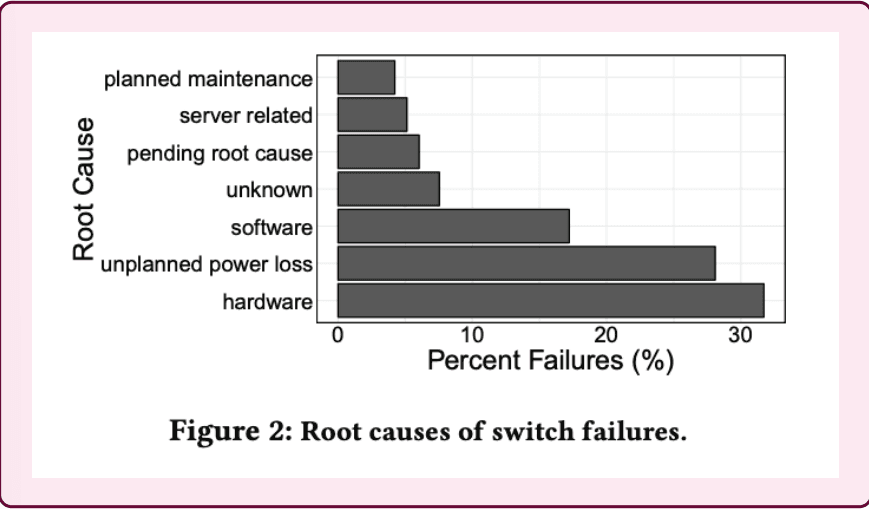
SONiC has proven its reliability and performance in some of the world’s largest hyperscale cloud data centers. A recent research study conducted by Microsoft further highlights its strength in real-world environments.
Microsoft studied over 180,000 switches across 130 data centers worldwide, analyzing signals from their control, data, and management planes over three months to estimate the expected time-to-failure of these switches.
-
Software Contributed to Less Than 20% of Failure
The results were insightful. While hardware failures emerged as the primary cause of switch malfunctions, SONiC software failures accounted for less than 20% of the observed failures. This underscores the robust nature of SONiC in demanding cloud environments, where software stability plays a crucial role in minimizing downtime and maintaining performance.
-
Key Findings Validation
These findings not only validate SONiC’s position as a trusted solution for hyperscalers but also highlight the importance of addressing hardware failure as a key challenge in large-scale data centers. With a proven track record (Singh et al., 2021) in such critical infrastructure, enterprises are exploring and deploying SONiC to leverage the same quality, scale, and savings.
-
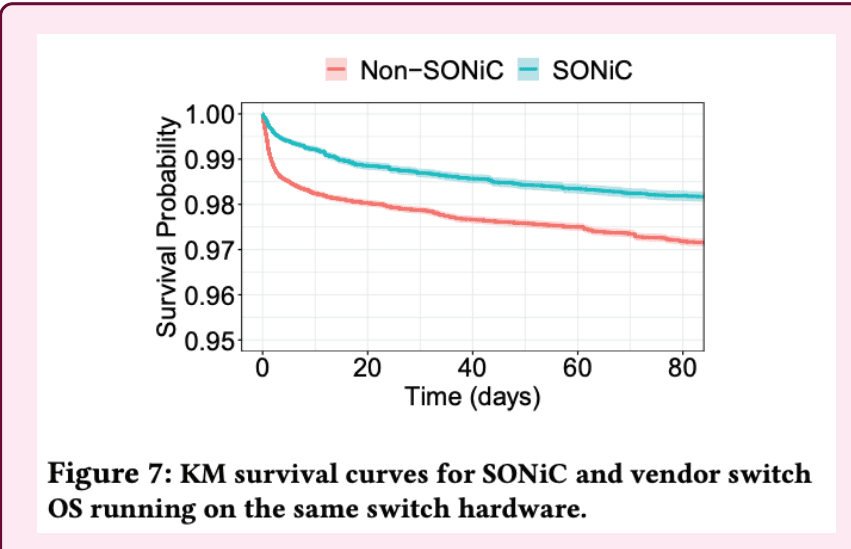
Reliability of SONiC Switches surpassed non-SONiC switches
A key takeaway from the Microsoft report (Singh et al., 2021) is that SONiC switches have demonstrated superior reliability and lower downtime than non-SONiC switches. This finding is particularly important for organizations evaluating SONiC for production environments, as it highlights that SONiC is not only ready for deployment but also excels in maintaining uptime and performance. For customers concerned about the stability of open-source solutions, this data provides reassurance that SONiC is production-grade and can meet the demanding requirements of modern data centers. It proves that SONiC can deliver the reliability and scalability needed for mission-critical applications.
Why Hold This PlugFest?
SONiC has emerged as a transformative force in network operating systems, with its adoption expanding beyond hyperscaler data centers into enterprise networks, campus environments, and edge computing.
PlugFest allows you to qualify if standardization works for you without spending the same level of resources as hyperscalers spent. It provides you with Quality Test Reports, a TCO calculator, and Migration Recipes required to do the transition.
-
Enterprise Challenges
Resources, Quality, Transparency & Go-to-Ecosystem: While SONiC has demonstrated remarkable success with hyperscalers, its adoption in enterprise environments has been hindered by challenges such as limited ecosystem insights, lack of quality transparency, and a shortage of proven use cases. These barriers have slowed its widespread deployment in more diverse settings.
-
PlugFest Solution
By showcasing automated validation of real-world use cases and fostering collaboration between customers, partners, and the SONiC Community, the event helps enterprises navigate the complexities of implementing SONiC. PlugFest provides a critical platform to deliver validated solutions and insights into the quality and reliability of Community SONiC, directly addressing these adoption hurdles.
-
Unified Platform for Open Networking
PlugFest serves as a unified platform that brings together vendors, the community, and prospective adopters, accelerating SONiC adoption across industries. This collaboration ensures the delivery of valuable solutions that enhance the overall quality and scalability of SONiC, driving its broader acceptance and deployment in enterprise environments.
-
2021 PlugFest Foundation
The 2021 PlugFest laid the foundation for standardized testing. The networking landscape has evolved significantly, presenting new challenges with AI Scale and opportunities that 2025 PlugFest aims to address.
-
Need for Vendor-Neutral Validation
The need for comprehensive, vendor-neutral validation has become more critical as enterprises move from SONiC evaluation to production deployment. Organizations require clear, actionable data about feature support, scalability limits, and operational characteristics across different hardware platforms.
-
Ensuring Quality, Reliability and 99.999 SLA
With SONiC’s feature set expanding rapidly, ensuring consistency and quality across implementations has become increasingly important. Users need assurance that features work reliably not just in isolation but as part of complex, real-world networking scenarios.
-
Day-2 Operations Testing
Day 2 operations and resilience testing have emerged as critical factors in production deployments. Organizations need detailed insights into how SONiC performs under stress, during failure conditions, and in ongoing operations.
-
Embracing SONiC by Traditional Networking Vendors
The entrance of traditional networking vendors into the SONiC ecosystem has created new opportunities and challenges. Users need to understand how different vendors’ implementations compare in terms of feature support, performance, and reliability.
Lead the Way with Automation — Fabric Test Automation Suite
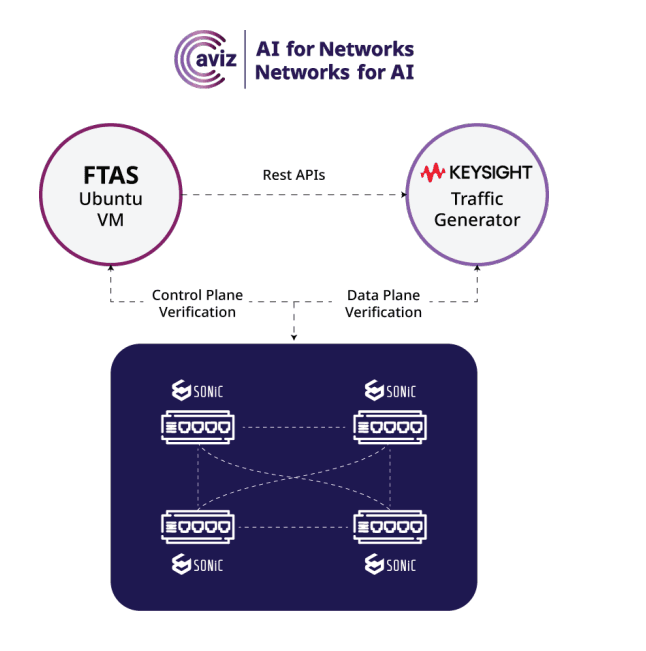
Aviz Networks developed its Fabric Test Automation Suite (FTAS) as a Service, which heavily relies on use case-based automation. FTAS uses a Keysight solution for traffic generation due to its precision, ability to send line rate traffic, measure accurate latencies, and protocol validation.
The Plugfest team conducted extensive tests across 5 critical dimensions: Feature, Scalability, Resilience, Day-2 Operations, and Stress testing.
This comprehensive approach ensures that the PlugFest results reflect real-world deployment scenarios and operational requirements.
-
Automated Production Grade Use Cases Testing
Leveraging Aviz’s FTAS to execute 476 automated test cases - more than four times the coverage of the 2021 PlugFest - simulating real-world deployment scenarios that enterprises encounter in production environments.
-
Comprehensive Platform Coverage
Testing expanded to include major traditional networking vendors alongside established SONiC suppliers.
-
Multi-Dimensional Validation
Introducing new test categories beyond basic functionality, with a dedicated focus on scalability, resilience, Day-2 operations, and system behavior under stress, which are critical aspects for production readiness.
-
Neutral and Transparent Evaluation
Maintaining vendor neutrality while expanding test depth and providing detailed insights into SONiC ecosystem readiness across various deployment scenarios and use cases.
-
Enterprise-Focused Validation and Living Test Suite
Incorporating direct input from 48 companies to ensure test coverage aligns with enterprise deployment requirements, security needs, and operational challenges.
-
FTAS Test Coverage Expansion
FTAS Test coverage has expanded 400% from 105 test cases in 2021 to 476 in 2025, reflecting our commitment to providing the industry’s most comprehensive SONiC validation. This expanded scope ensures a thorough evaluation of features and capabilities that are essential for enterprise adoption while maintaining the neutral, transparent approach that has been crucial to the PlugFest’s success.
On-Demand Repeatable Per-Customer Migration Recipes
One of the key goals of PlugFest is to ensure repeatability and objectivity in testing and validation. When we talk about repeatability, we mean the ability to tailor the results and insights to the specific needs of each customer—almost like crafting a customized solution on-demand while highly leveraging automation.
With PlugFest, customers can expect a unique, per-customer migration recipe that is generated based on their specific network requirements. This personalized approach not only speeds up the adoption process but also ensures that each organization gets the most relevant, actionable insights to help them smoothly transition to a SONiC-based infrastructure.
In just a few minutes, you can receive a detailed migration plan and a roadmap for seamless deployment, making it easier to achieve success with SONiC.
Where is the PlugFest Setup? — Aviz ONE Center
The PlugFest 2025 Open Testing Event is set up at the Aviz ONE Center colo environment in Fremont, California, in collaboration with Keysight.
-
Dedicated Racks per Vendor
ONE Center hosts dedicated racks per vendor, such as Edgecore, Celestica, Cisco, NVIDIA, Supermicro, Wistron, and Keysight
-
Traffic Generation using Keysight
Traffic Generation using Keysight, which brings the economies to testing requirements in ONE Center Test Lab. ONE Center Automation uses Keysight for all its traffic generation needs and automation requirements
-
FTAS Automation
ONE Center leverages FTAS Automation for use case validation
-
CI/CD Framework
ONE Center offers CI/CD framework per-vendor
-
On-Demand SKUs
Many SKU’s available on-demand
-
FTAS Test Framework Evolution
FTAS Test Framework has evolved significantly, having 476 unique test cases across five critical dimensions: feature, scalability, resilience, Day-2 operations, and stress testing. This expanded testing scope reflects the maturing needs of the SONiC ecosystem and the increasing demands of production environments
PlugFest Participants
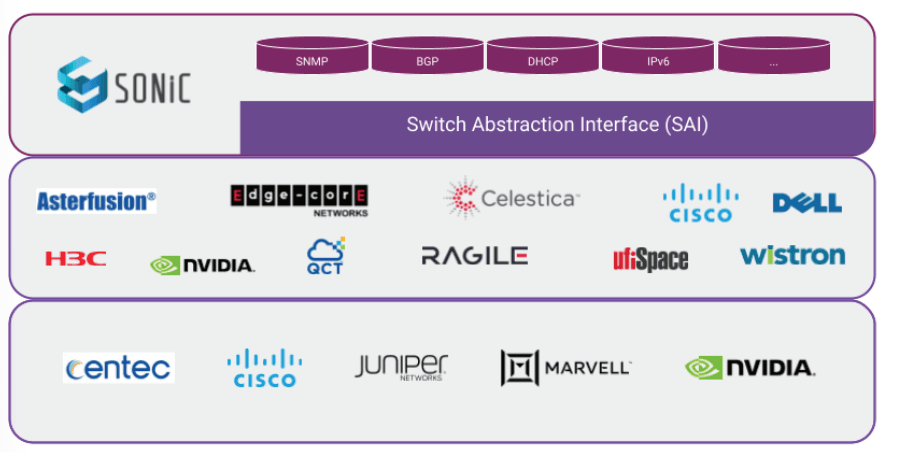
SONiC PlugFest wasn’t just a gathering of developers and engineers; it was a crucible for network hardware, particularly the switches that form the backbone of modern data centers. A crucial element of the event was the participation of vendors who bravely submitted their switches for rigorous quality, scale, and chaos testing, providing the very foundation upon which the testbeds were built.
-
System-Level Testing Gap
Use cases and system-level testing has been a significant gap. This PlugFest presented a unique and invaluable opportunity for vendors to step up and subject their hardware to a third-party validation process. For many, this was a chance to demonstrate not only the quality of their products but also their commitment to the SONiC ecosystem.
-
Understand Customer Needs
Understand what current SONiC customers are looking for
-
Neutral Third-Party Validation
Get a neutral third-party verified report on SONiC validation
-
Showcase Switches
Showcase their switches in a SONiC ecosystem
-
Detailed Private Report
Get a detailed private report to help improve their SONiC implementation
-
Example Tested Platforms
The following is a subset of switching platforms that were tested with hardware and software details - Example Platforms: Cisco (8101-32FH-O, 8102-64H-O), Edgecore (AS5835-54X, AS7726-32X, AS9736-64D), Wistron (6512-32R), Celestica (DS2000/DS3000, DS4000)
Test Environment
All testing was conducted at the Aviz ONE Center in Fremont, California, in collaboration with Keysight, providing:
- Consistent test environment across all platforms
- Automated test execution using Aviz’s FTAS + Keysight traffic generation
- Standardized measurement and reporting methodologies
- Real-time monitoring and analysis capabilities
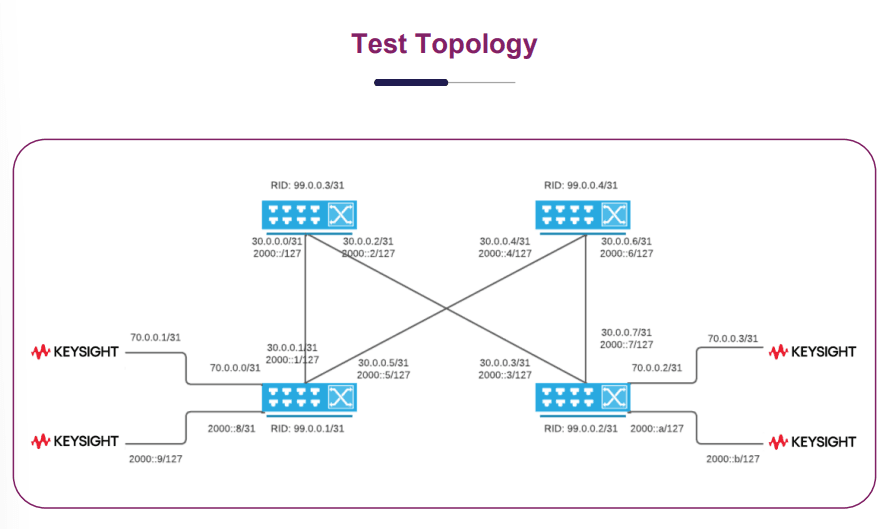
Keysight Automated Traffic Generation
Aviz ONE Center uses Keysight traffic generators
-
Simultaneous Testing Capabilities
Keysight network traffic generators enable simultaneous testing of functionality, scalability, performance, and security throughout the development lifecycle.
-
Automation Essential
The ability to automate traffic generators is essential for properly testing complex network scenarios and protocol sequences.
-
Layer 2/3 Protocol Testing
In real-world deployments, while doing baseline layer 1 testing is critically important, testing with layer 2/3 protocols under different environmental and stressed conditions with Ethernet traffic generators will often uncover issues that affect device performance in deployments.
-
Higher Ethernet Speeds and Optical Reach
As we push the envelope with higher Ethernet speeds and longer optical reach distances, Keysight traffic generators play a critical role in ensuring reliable and deliverable solutions.
Test Report
Testing Dimensions Results
| Category | Agg Min% | Agg Max% | Median |
|---|---|---|---|
| Feature | 83 | 100 | 94 |
| Scalability | 61 | 100 | 98 |
| Stress | 57 | 100 | 100 |
| Resilience | 39 | 100 | 100 |
| RoCE | 94 | 100 | 94 |
Category Breakdown Results
| Category | Agg Min% | Agg Max% | Median |
|---|---|---|---|
| ACL | 88 | 100 | 100 |
| Day-2 Netops | 80 | 100 | 100 |
| Edge | 67 | 100 | 100 |
| EVPN/VXLAN | 94 | 100 | 100 |
| Layer2 Switching | 100 | 100 | 100 |
| Layer2 Scale | 82 | 100 | 100 |
| Layer3 Routing | 100 | 100 | 100 |
| Layer3 Scale | 100 | 100 | 100 |
| Management Scale | 96.5 | 100 | 100 |
Feature Support Status by Platform
| Category | Supported on Platforms (percent) |
|---|---|
| ACL | 100 |
| Day-2 Netops | 89 |
| Edge | 11 |
| EVPN/VXLAN | 44 |
| Layer2 | 100 |
| Layer2 Scale | 100 |
| Layer3 | 100 |
| Layer3 Scale | 100 |
| Management | 77 |
| MCLAG | 70 |
| Platform Ports | 80 |
| QoS | 82 |
| RoCE | 0 |
| Resilience | 39 |
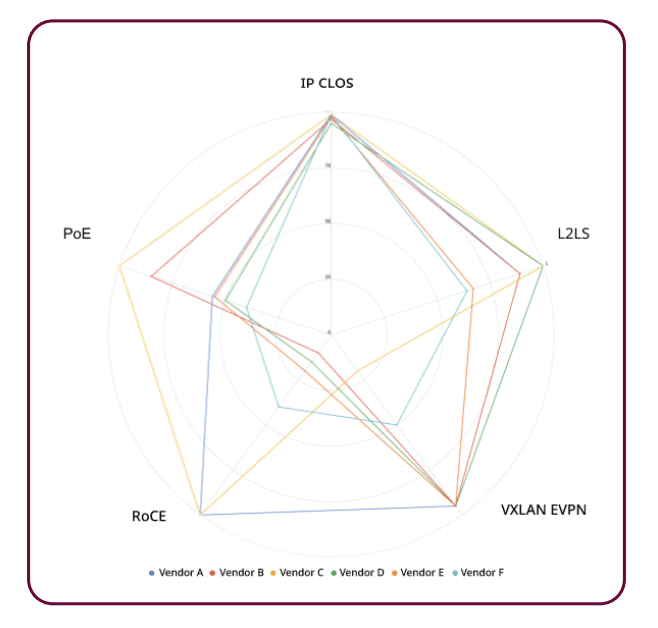
Deployment Classification Results
| Deployment | Agg Min% | Agg Max% | Median |
|---|---|---|---|
| L2LS | 72 | 98 | 91 |
| IP CLOS | 65 | 95 | 95 |
| EVPN/VXLAN | 65 | 98 | 90 |
| ROCE | 65 | 96 | 90 |
| POE | 98 | 98 | 98 |
Platform Classification Results
| Classification | Agg Min% | Agg Avg% | Median |
|---|---|---|---|
| Data | 65 | 96 | 98 |
| Management | 96 | 98 | 98 |
| Edge | 98 | 98 | 98 |
Conclusion
SONiC has demonstrated itself as a highly reliable, efficient, and a standardized solution for scalability, quality, and cost savings in a hyperscaler environment.
As enterprises increasingly adopt SONiC, challenges remain regarding ecosystem insights, quality transparency, and use case validation. PlugFest addresses these challenges through: Comprehensive Quality Test Reports across multiple platforms, automated real-world customer use case validation, collaborative engagement, and actionable data for successful implementation.
By focusing on comprehensive vendor-neutral automated FTAS validation, PlugFest 2025 aims to accelerate SONiC adoption across industries while emphasizing Day-2 operations, resilience, and scalability for enterprise production readiness.
PlugFest Takeaway — How to Achieve Standardization?
PlugFest focused on five broad use cases where customers have widely deployed or are planning to deploy SONiC in 2025. Collecting Results of 400+ test cases across multiple hardware vendors, we concluded that SONiC is running solid at functional, system, scale, reliability, and performance.
-
Use Cases Validated
SONiC is running solid on the following use Cases: L3 IP CLOS, EVPN/VxLAN, Layer 2 Leaf and Spine, RoCE AI Fabric, and PoE - Power over Ethernet.
-
SONiC is Ready for Standardized Deployment
PlugFest Test Results across multiple vendors shows that SONiC is ready for standardized deployment across multi-vendor environment. The interoperability between different hardware platforms, coupled with SONiC’s strong performance in a wide array of use cases, shows that the ecosystem is primed for broader adoption. As organizations look to implement SONiC in their data centers, they can now do so with confidence, knowing that the solution has been rigorously tested for both reliability and performance in diverse environments. SONiC’s readiness for standardized deployment marks a significant step toward its continued growth and success in the open-source networking space.
-
Per-Customer Migration Recipes
PlugFest provides a per-customer SONiC Migration recipe that is generated based on their specific network requirements from repeatable SONiC use cases. This personalized approach helps accelerate the SONiC adoption process.
Risk of Maintaining Status Quo
Adhering to traditional, vendor-locked Network Operating Systems is no longer a viable strategy for modern enterprises. AI advancement is fundamentally shifting network requirements, compelling enterprises to reassess network infrastructure approaches.
-
Rising Costs and Lack of Vendor Flexibility
Continuing traditional paths exposes organizations to rising costs and lack of vendor flexibility, limiting their ability to adapt to changing market conditions.
-
Longer Time-to-Market
Longer time-to-market for deploying new infrastructure delays innovation and competitive advantage in rapidly evolving technology landscapes.
-
Limited AI-Readiness and Automation
Limited AI-readiness and automation capabilities prevent organizations from leveraging modern technologies that drive efficiency and operational excellence.
Driving SONiC Adoption: Your Role in the Open-Source Ecosystem
In any open-source community, the successful adoption of a technology like SONiC relies on the active participation and collaboration of three key pillars: Customers, Vendors, and Enablers.
These pillars play distinct yet interconnected roles in accelerating the adoption of SONiC across industries. In this section, we’ll explore the call to action for each of these groups, emphasizing their individual responsibilities in driving SONiC’s continued growth and success.
-
The Role of Customers
SONiC adoption has seen significant momentum, with many enterprise deployments achieving notable improvements in infrastructure control and significant reductions in Total Cost of Ownership (TCO). As SONiC proves its reliability in hyperscale environments, more organizations are exploring how it can enhance their own networks. However, many are still in the early stages of their SONiC journey. Now is the ideal time to take advantage of the mature and expanding SONiC ecosystem, which has evolved considerably in recent years.
-
SONiC Neutral Vendor - ASIC Choices, Hardware Choices, @Scale
Leverage SONiC use cases and SONiC migration recipes provided by the PlugFest team. This is based on 100+ successful customer deployments.
-
SONiC - Leverage Production-Ready Use Cases Migration Recipes
The quickest way to transition from evaluation to deployment is by collaborating with a neutral SONiC vendor that can provide you choices for ASICs, switches, and features. These vendors offer end-to-end lifecycle support, helping you integrate SONiC seamlessly into your infrastructure without the need to develop extensive in-house expertise. Their support enables you to reduce time-to-value and navigate potential challenges that often arise during the deployment process.
-
Phased Deployment Strategy Overview
A phased deployment strategy for a production network involves gradually integrating a new system or technology, such as SONiC, into the live network environment. Instead of implementing the change all at once, the deployment is broken into smaller, manageable phases.
-
SONiC Pilot or Non-Critical Infrastructure
Begin by deploying SONiC in non-critical areas of the network or on a smaller scale. This could involve isolated test networks or less essential infrastructure. The goal is to gain hands-on experience, test features, and work through initial configurations without affecting business-critical operations.
-
Evaluation and Feedback
As SONiC runs in the pilot environment, collect performance metrics, test scalability, and monitor any issues. Feedback from this phase helps identify challenges and areas for improvement, allowing adjustments to be made before larger-scale deployment.
-
Incremental Rollout
Once the pilot phase has proven successful, expand the deployment to other segments of the network in stages. This might involve adding additional switches or scaling the deployment to other parts of the data center or office network. This phase ensures that the deployment is scalable and can handle increased load without compromising performance.
-
Full-Scale Deployment
After successfully implementing SONiC in a controlled manner, expand to the full production network. This is when the system is fully integrated into the organization’s live environment, and all operations are running on the new system.
-
Ongoing Monitoring and Support
Even after full deployment, continuous monitoring and support are essential to ensure that the network remains stable and that SONiC meets the desired operational standards. A phased strategy may include ongoing performance evaluations and adjustments post-deployment.
-
Accelerating SONiC Adoption
By following these steps, your organization can confidently accelerate its SONiC adoption and benefit from the robust ecosystem to reduce deployment risks. With SONiC continuing to evolve and gain traction, now is the time to leverage its full potential and future-proof your network infrastructure.
The Role of Vendors
The integration of SONiC into mainstream vendor portfolios has transformed the networking landscape. Vendors who embraced SONiC early have gained significant market share, while traditional networking companies have invested heavily to catch up. To capitalize on this momentum, vendors should consider these strategic initiatives:
The Role of Enablers
The ecosystem of enablers has been instrumental in SONiC’s widespread adoption. These neutral organizations bridging hardware vendors and end-users have created the foundation for enterprise-grade SONiC deployments.
Enablers should:
- Expand specialized SONiC professional services focused on migration, integration, and operational transformation, helping organizations overcome technical and cultural adoption barriers.
- Deepen technical capabilities in enterprise concern areas, particularly security compliance, performance optimization, and integration with existing management systems.
- Advance testing and certification methodologies providing objective vendor implementation validation, continuing to raise production-ready SONiC standards.
- Develop training and certification programs addressing skills gaps remaining as significant adoption barriers, creating larger qualified SONiC professional pools.
- Continue community-centric development with increased enterprise use case focus, contributing code and documentation addressing identified customer gaps.
- Foster complementary solution ecosystems through partnerships and integration efforts, creating comprehensive tool environments surrounding and enhancing core SONiC offerings.
How to Work with Aviz?
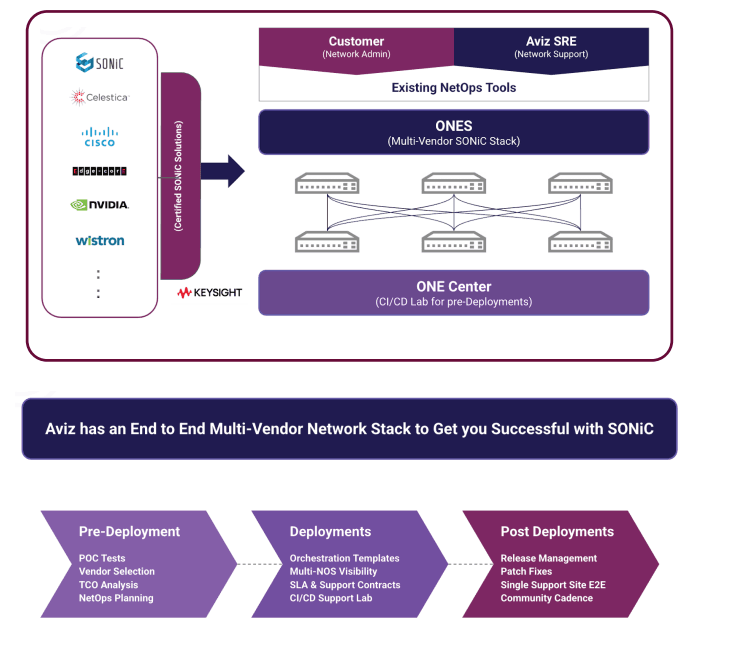
Working with Aviz Networks begins with hardware selection by the customer, followed by collaborative assessment of what is supported on chosen hardware. Aviz provides detailed PlugFest reports outlining specific platform capabilities.
Aviz offers an end-to-end multi-vendor network stack facilitating SONiC success. With certified SONiC solutions, Aviz provides custom SONiC branches allowing customers or Aviz Engineers to check in code, make fixes, and contribute improvements upstream to the broader SONiC community.
Pre-deployment activities include:
- Proof-of-concept tests
- Vendor selection
- Total cost of ownership (TCO) analysis
- Network operations (NetOps) planning
- Migration Templates
About Aviz Networks
Aviz enables SONiC deployments for Data Center & Edge networks. Aviz is an avid SONiC community contributor and works with the vast majority of ASIC & Switch vendors to create deployment-ready SONiC solutions. Aviz further accelerates SONiC adoption by delivering containerized modules for multiple networking use cases, ranging from enabling specific protocols, edge networking functions, and network management to monitoring functions for performance and troubleshooting.
With Aviz, customers can swiftly and successfully transition to SONiC, achieving higher agility and better TCO for network operations. More information is available at www.aviznetworks.com.
About Keysight Technologies
Keysight delivers advanced solutions validating network performance and security while providing dynamic network intelligence and visibility into traffic, applications, and users. Solutions help accelerate innovation connecting and securing the world, bringing tomorrow’s technology products to market faster across the development lifecycle, including design simulation, prototype validation, automated software testing, and deep data analysis.
Keysight’s broad network and security test solution portfolio provides realistic traffic generation, performance optimization, and enhanced security for network equipment and silicon manufacturers, hyperscalers, and enterprise, service provider and cloud environments.
For more information about Keysight Technologies (NYSE: KEYS), visit www.keysight.com.
References
Singh, R., Mukhtar, M., Krishna, A., Parkhi, A., Padhye, J., & Maltz, D. (2021). Surviving switch failures in cloud datacenters. SIGCOMM Comput. Commun. Rev., 51(2), 2–9. https://doi.org/10.1145/3464994.3464996